
About This Worksheet
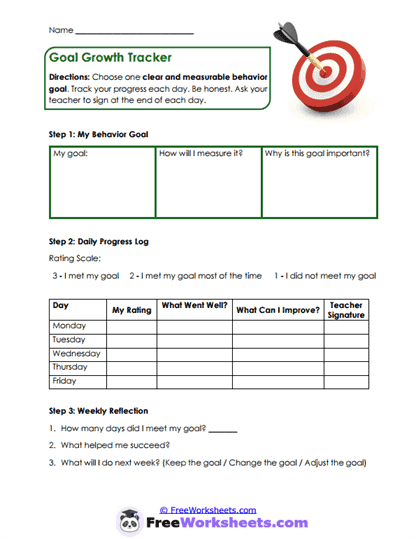
This worksheet is a weekly behavior-goal tracker that helps students work toward one clear and measurable change. It is designed for students in grades 4 through 8 who are ready to rate their progress over several days. Children explain what the goal is, how it will be measured, and why it matters before recording daily results. For example, “I want to behave better” becomes “I will follow directions the first time during four out of five class periods.”
Curriculum and Grade Alignment
The main goal is to teach students how to set a behavior goal and review their progress honestly. Students should already understand the difference between a broad wish and a specific action that can be observed or counted. The next step is using the weekly results to keep, adjust, or replace the goal. This worksheet supports CASEL self-management and responsible decision-making because students monitor their choices, respond to feedback, and make plans based on evidence.
Student Tasks
On this worksheet, students will write one behavior goal, explain how it will be measured, and tell why the goal is important. Each day, they rate whether they met the goal, mostly met it, or did not meet it. Students also record what went well, what could improve, and receive a teacher signature. At the end of the week, they count their successful days, identify what helped, and decide what to do with the goal next week.
Common Challenges and Misconceptions
Some students may choose a goal that is too general to measure fairly. Others may think they must meet the goal perfectly every day in order to show progress. Children may also write the same answer in the daily reflection boxes without thinking about what changed. Teachers can help by choosing one small action, giving examples of useful evidence, and reminding students that gradual improvement still counts.
Implementation Guidance
Teachers can introduce this worksheet during an individual conference and help the student write the first goal. The daily log can be completed near dismissal so the child and teacher can briefly compare their observations. Parents and homeschool educators can use the page for learning routines, respectful communication, task completion, or emotional control at home. Weekly review should focus on which supports worked and whether the goal remains realistic.
Details and Features
The worksheet begins with a three-part goal-planning box covering the goal, measurement method, and reason for improvement. A Monday-through-Friday table includes spaces for ratings, successes, improvement ideas, and teacher signatures. The three-point scale keeps daily scoring simple and easy to understand. A final reflection section helps students decide whether to keep, change, or adjust the goal.