
About This Worksheet
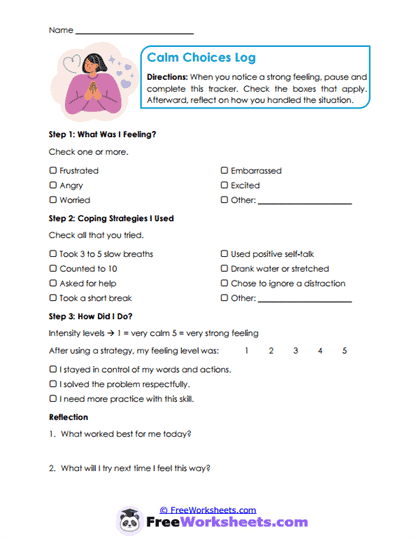
This worksheet is a coping-strategy log that helps students slow down and make safer choices when strong feelings appear. It is designed for students in grades 3 through 7 who are learning to recognize emotions, use calming tools, and think about the results of their actions. Children identify the feeling they experienced, check the strategies they tried, and rate how strongly they still felt afterward. For example, “I yelled when I felt angry” becomes “I took slow breaths and used calm words.”
Curriculum and Grade Alignment
The primary goal is to teach students that strong emotions can be managed with practice and support. Students should already be able to name common feelings such as anger, worry, frustration, embarrassment, or excitement. The next step is choosing a coping tool that fits the situation and deciding whether that tool actually helped. This worksheet strongly supports the CASEL areas of self-awareness and self-management because students identify emotions, monitor intensity, and practice healthy responses.
Student Tasks
On this worksheet, students will begin by checking the feeling that best matches what they experienced. They then mark every coping strategy they used, such as breathing slowly, counting, asking for help, using positive self-talk, taking a break, drinking water, or choosing another distraction. After using a strategy, students rate the strength of the feeling from one to five and review how respectfully they handled the situation. The final reflection asks which strategy worked best and what they will try the next time a similar feeling appears.
Common Challenges and Misconceptions
Some students may think a coping strategy has failed if the feeling does not disappear right away. Others may check several strategies without actually slowing down long enough to use any of them fully. Children may also choose a strategy that does not fit the setting, such as leaving the room without permission. Teachers can help by modeling each option and explaining that the goal is to lower the feeling enough to make a safe and respectful choice.
Implementation Guidance
Teachers can keep copies in a calm corner, counseling office, behavior folder, or student reflection area. The worksheet is most useful after the student has had enough time to settle and can think clearly about what happened. Parents and homeschool educators can use it after arguments, frustrating assignments, disappointing events, or moments of worry. Adults should avoid using the page as a punishment and instead present it as a tool for learning what helps the child regain control.
Details and Features
The worksheet includes a list of common feelings with space for students to add another emotion. A large coping-strategy section offers several practical choices that can be used at school or at home. Students also complete a five-point feeling rating and review three signs of respectful problem-solving. The short reflection questions help children remember a successful strategy and prepare for a future challenge.