
About This Worksheet
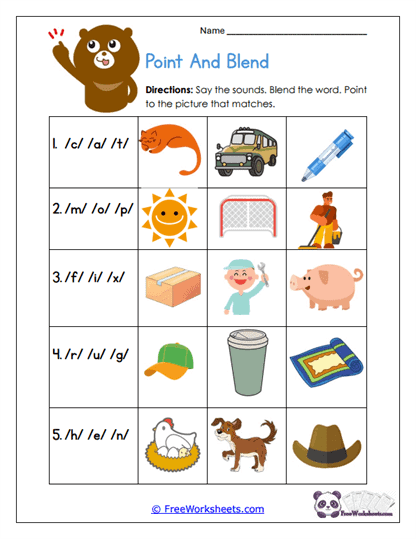
Point and Blend is a Kindergarten phonics worksheet that integrates blending skills with visual word recognition. Students blend segmented phonemes and then identify the matching picture from multiple options. This format requires accurate decoding before visual confirmation, strengthening sound-to-meaning connections. By combining phonemic blending with picture discrimination, students develop deeper comprehension alongside decoding fluency.
The multi-choice picture format increases cognitive engagement. Students must carefully blend the word before scanning visual options. This reduces random guessing and encourages accurate phoneme processing. The structure supports vocabulary reinforcement by linking sounds to real-world objects.
Blending with picture matching builds orthographic mapping foundations. Students begin forming mental connections between phoneme sequences and word meaning. This integration supports smoother reading development in later grades.
Curriculum and Grade Alignment
This worksheet aligns with Common Core RF.K.2 and RF.K.3, focusing on blending phonemes and reading simple CVC words. It also supports TEKS Kindergarten standards related to phonological awareness and decoding simple words. The activity reinforces vocabulary comprehension alongside phonics skills.
The visual discrimination component supports early reading comprehension benchmarks. It ensures students understand the meaning of the blended word, not just its pronunciation. The worksheet is appropriate for mid-to-late Kindergarten phonics progression.
This resource can be used in classroom instruction, intervention settings, or literacy stations. It supports both decoding accuracy and vocabulary development.
Student Tasks
Students read each segmented sound set carefully. They blend the sounds into a complete word. Then, they point to or identify the picture that matches the blended word.
This task strengthens both decoding and comprehension simultaneously. Students must rely on accurate sound blending before making a visual selection. The pointing component reinforces engagement and focus.
Common Challenges and Misconceptions
Students may focus on picture guessing without fully blending the sounds. Others may mispronounce the medial vowel and choose the wrong image. Teachers should emphasize blending first, then pointing.
Some learners may confuse similar vocabulary items. Brief vocabulary review prior to independent work improves accuracy. Modeling one full example increases student clarity.
Implementation Guidance
Use this worksheet during guided phonics lessons or literacy centers. Encourage students to use finger tracking while blending. Provide corrective feedback immediately when misblending occurs.
This worksheet can also serve as a small-group assessment tool. Teachers can observe whether errors stem from blending or vocabulary misunderstanding. Repeated practice strengthens automatic decoding.
Details and Features
Includes five segmented CVC blending items.
Provides multiple picture options for each word.
Integrates decoding with comprehension reinforcement.
Designed specifically for Kindergarten phonics mastery.