
Grade 9 Worksheets
This 9th grade printable worksheet collection provides comprehensive, standards-aligned support across Language Arts, Mathematics, Science, and History/Social Studies to help students successfully transition into high school-level expectations. Designed to strengthen analytical thinking, evidence-based reasoning, reading comprehension, and academic writing, the worksheets reinforce foundational skills while advancing higher-order conceptual understanding across disciplines.
Math
About This Printable Worksheet Collection
9th Grade is where students begin adapting to the pace, workload, and expectations of high school academics. Assignments become more research-based, reading becomes more analytical, and students are expected to support ideas with evidence, think critically, and manage more independent coursework across subjects.
This collection focuses on the skills students need most during the freshman year transition: literary analysis, informational text comprehension, academic writing, Algebra concepts, vocabulary development, research skills, and evidence-based reasoning. The worksheets are designed to help students improve organization, reading stamina, written communication, and analytical thinking while building stronger academic habits for upper high school classes.
Students practice interpreting complex texts, evaluating arguments, organizing essays, solving multi-step equations, analyzing nonfiction passages, and applying reasoning skills across multiple subjects. These printable worksheets help students strengthen both academic confidence and classroom readiness as they move into more advanced high school coursework.
Why Teachers Use This Collection
- Literary analysis practice pages
- Informational text response activities
- Algebra skill reinforcement worksheets
- Evidence-based writing support
- Academic vocabulary development
- Research and citation practice
- Bell ringer classroom activities
- Independent assignment resources
- Test prep review materials
- Freshman skill gap support
Why Homeschoolers & Parents Use This Collection
- High school transition support
- 9th Grade academic review
- Structured independent practice
- Essay writing skill development
- Algebra reinforcement activities
- Printable daily learning pages
- Screen-free academic practice
- Homework and tutoring support
- Critical reading skill building
- Study habit improvement
A Look at the Categories of Worksheets
Math
Graphing Linear Equations
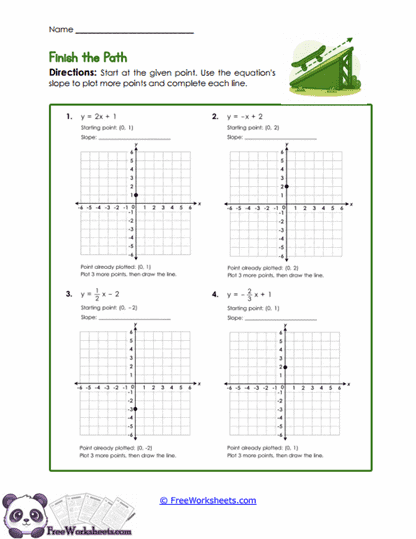
Graphing linear equations helps students visualize the relationship between variables and understand how changes in slope and intercept affect a line. Encourage your child to identify the slope and y-intercept before plotting points and drawing the line. These activities strengthen graphing skills, algebraic reasoning, and the ability to interpret mathematical relationships.
Finding Slope
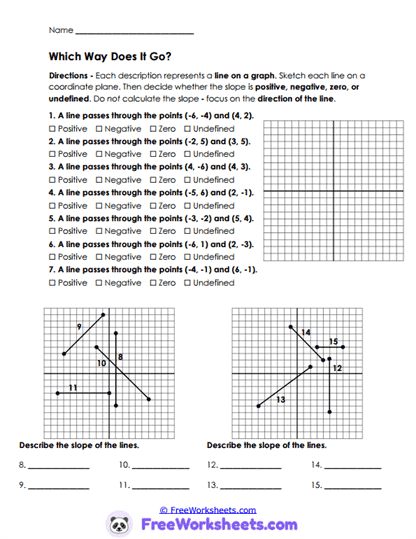
Understanding slope helps students measure how quickly something changes and recognize relationships between variables on a graph. A useful strategy is to practice counting “rise over run” directly on graph paper before using formulas alone. These activities strengthen algebraic reasoning, graph interpretation, and analytical thinking skills.
Linear Equations
Linear equations help students understand how variables and constants work together to represent relationships mathematically. Encourage your child to solve problems step by step and check solutions by substituting the answer back into the equation. These worksheets strengthen algebraic thinking, problem-solving, and mathematical reasoning skills.
Solving Absolute Value Equations And Inequalities
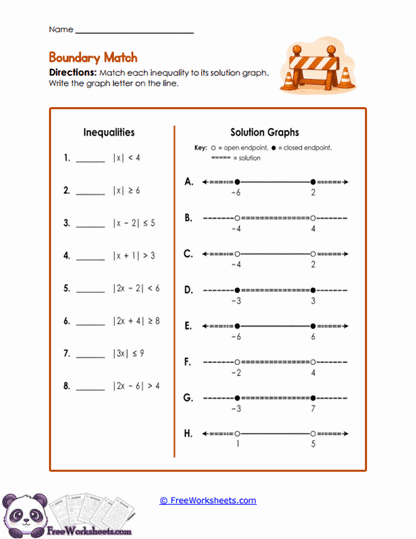
Solving absolute value equations and inequalities helps students understand distance from zero and recognize when a problem may have multiple solutions. A helpful strategy is to isolate the absolute value expression first before considering the possible cases. These worksheets strengthen algebraic reasoning, logical thinking, and multi-step problem-solving skills.
Solving Compound Inequalities
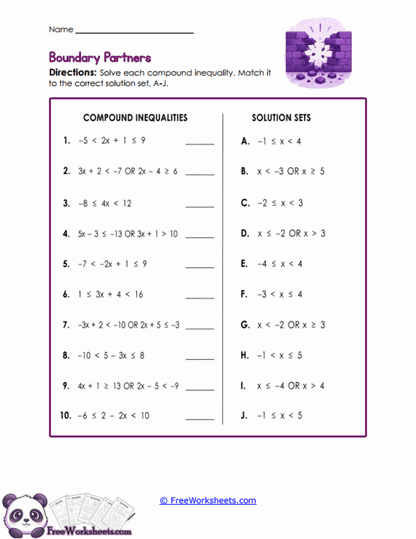
Solving compound inequalities teaches students how to work with two related conditions and determine the values that satisfy both or either condition. Encourage your child to solve each part separately and use a number line to visualize the combined solution. These activities strengthen algebraic fluency, graphing skills, and logical reasoning abilities.
Solving Equations with Variables on Both Sides
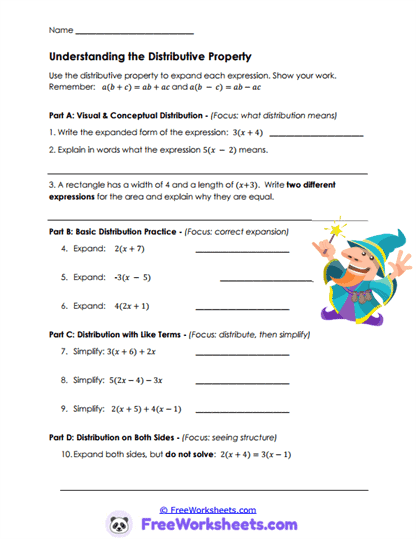
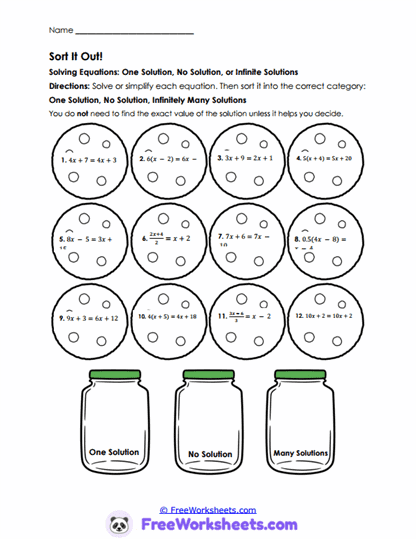
Solving equations with variables on both sides teaches students how to organize information and balance complex mathematical relationships. A helpful strategy is to combine like terms first before moving variables to one side of the equation. These activities strengthen algebraic fluency, logical reasoning, and multi-step problem-solving skills.
Solving Inequalities
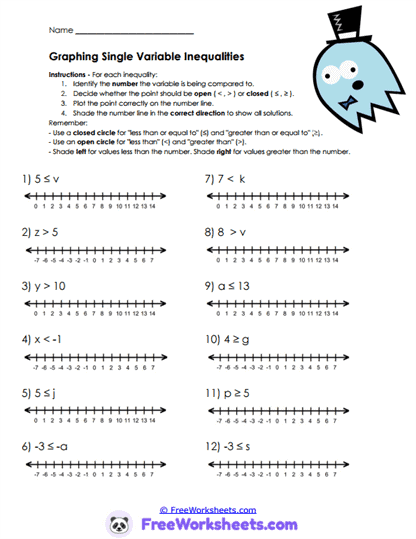
Understanding inequalities helps students recognize ranges of possible solutions instead of looking for just one answer. Try using number lines to visually show how solutions extend above or below certain values. These worksheets strengthen algebraic reasoning, graphing skills, and critical thinking abilities.
Solving Literal Equations
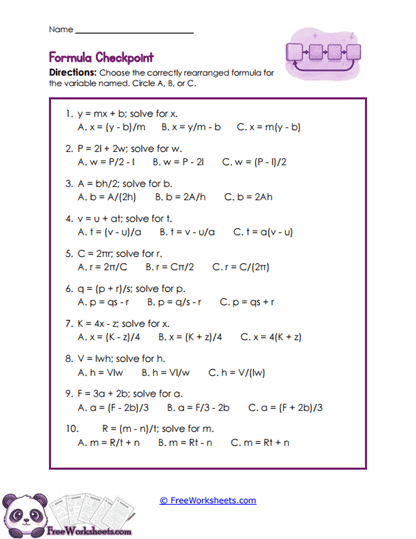
Solving literal equations helps students rearrange formulas and understand how different variables are connected within mathematical relationships. A useful strategy is to treat the variable being isolated as the goal and use inverse operations one step at a time. These worksheets strengthen algebraic manipulation, formula reasoning, and problem-solving skills.
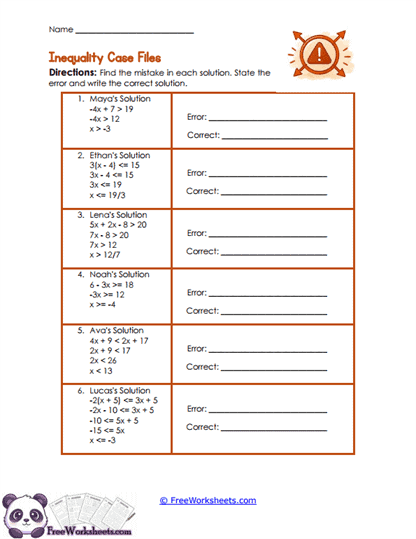
Solving Multi-step Linear Inequalities
Solving multi-step linear inequalities helps students apply several algebraic operations while keeping inequality relationships balanced. Encourage your child to simplify each side first and remember to reverse the inequality sign when multiplying or dividing by a negative number. These activities strengthen algebraic fluency, attention to detail, and multi-step reasoning skills.
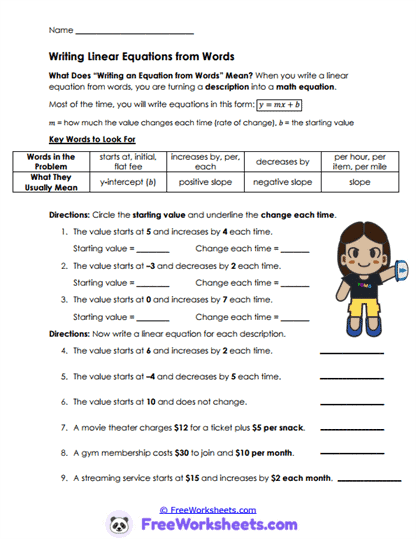
Writing Linear Equations
Writing linear equations helps students translate patterns, graphs, and real-world situations into mathematical models. Encourage your child to identify the slope and starting value before building the equation step by step. These activities strengthen algebra readiness, analytical thinking, and mathematical modeling skills.
Reading
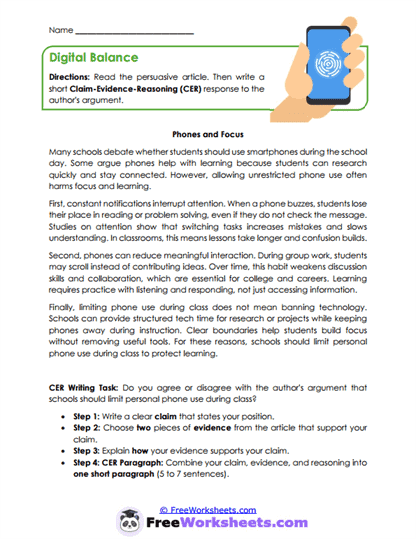
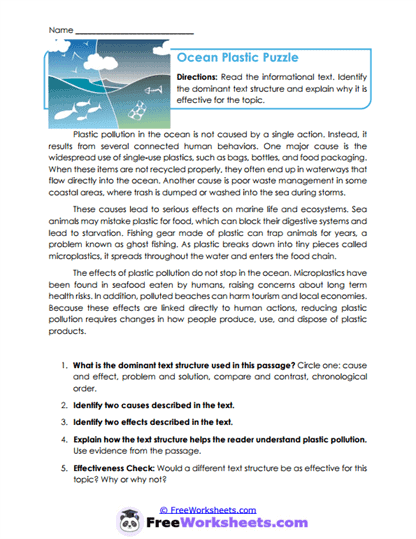
Analyzing Informational Texts
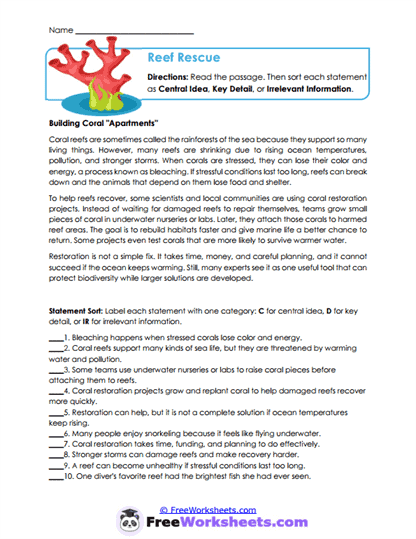
Analyzing informational texts helps students better understand articles, essays, and real-world nonfiction reading. Encourage your child to highlight key details and ask, “What is the author trying to prove or explain?” while reading. These worksheets strengthen critical thinking, nonfiction comprehension, and evidence-based analysis skills.
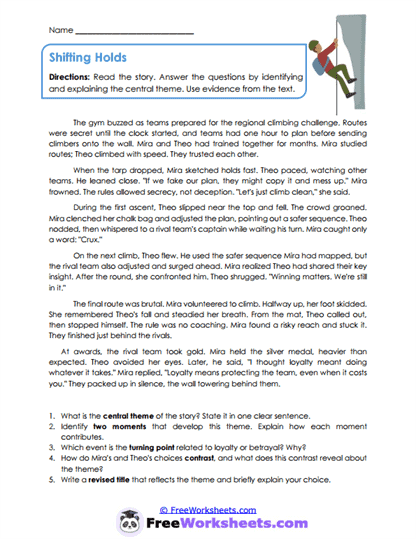
Analyzing Literature
Analyzing literature helps students think more deeply about characters, themes, and the author’s message. A helpful strategy is to ask your child how important events connect to the overall meaning of the story. These activities strengthen literary analysis, comprehension, and critical thinking skills.
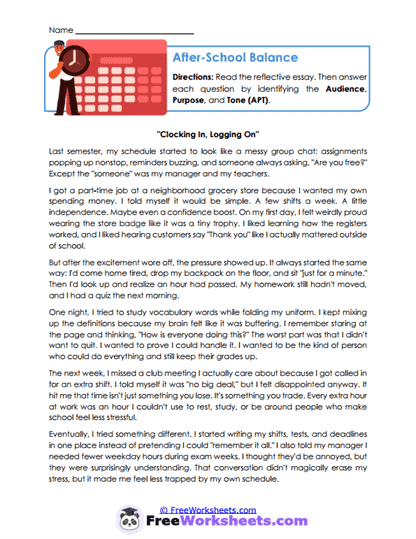
Audience, Purpose, and Tone
Recognizing audience, purpose, and tone helps students better understand how authors shape their writing for different readers. Encourage your child to notice whether the writing sounds formal, persuasive, humorous, or informative while reading. These worksheets strengthen reading analysis, communication awareness, and comprehension skills.
Business Documents
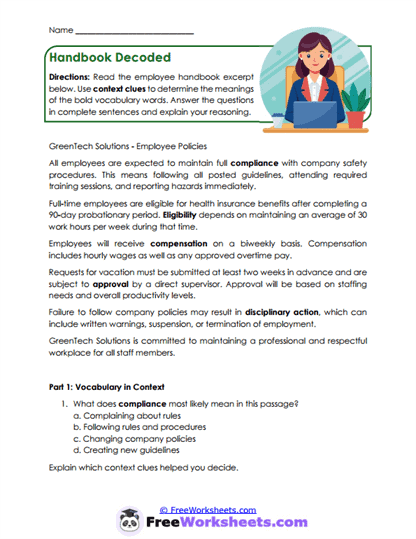
Understanding business documents helps students build practical reading skills they will use in everyday life and future careers. A great strategy is to discuss the purpose of real-world texts like emails, ads, or memos together. These activities strengthen informational reading, communication, and real-world literacy skills.
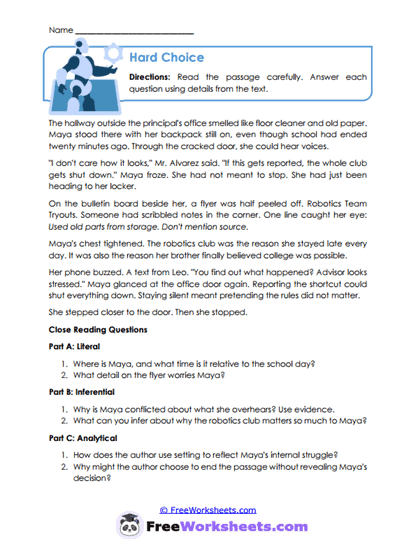
Grade 9 Reading Comprehension
Strong comprehension skills help students analyze ideas, make connections, and explain what they read with confidence. Encourage your child to support answers with specific evidence directly from the passage. These worksheets strengthen critical thinking, comprehension, and analytical reasoning skills.
Grade 9 Reading Passages
Reading a variety of passages helps students become stronger and more flexible readers. A simple strategy is to pause after each section and summarize the author’s main point before continuing. These activities strengthen comprehension, vocabulary, and reading stamina.
Grade 9 Vocabulary
Building vocabulary helps students better understand complex texts and communicate more clearly in writing and conversation. Encourage your child to use unfamiliar words in everyday sentences to help them stick. These worksheets strengthen context clue skills, word analysis, and language development.
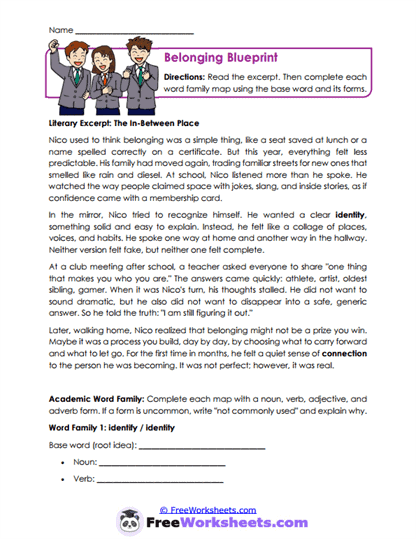
Graphic Organizers
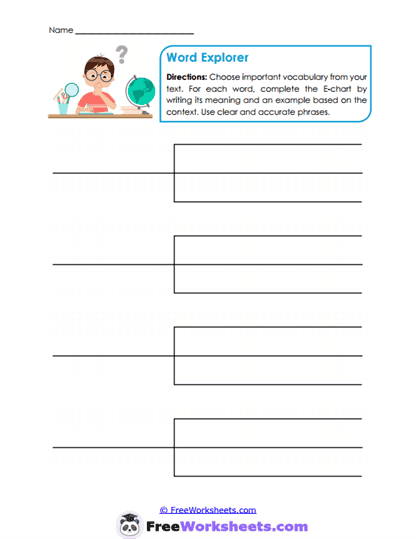
Graphic organizers help students organize information and break down complex ideas into smaller, manageable parts. Try having your child map out characters, main ideas, or cause-and-effect relationships while reading. These activities strengthen comprehension, organization, and analytical thinking skills.
Literary Devices
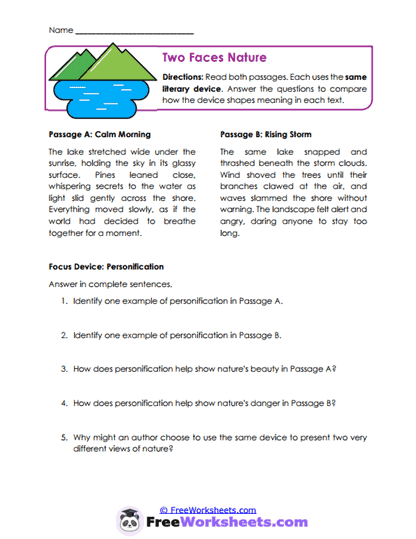
Understanding literary devices helps students recognize how authors create deeper meaning and emotion in writing. Point out examples of symbolism, imagery, or metaphor while reading together to make these concepts feel more natural. These worksheets strengthen literary analysis, figurative language, and comprehension skills.
Main Idea
Finding the main idea helps students focus on the most important message instead of getting overwhelmed by details. Ask your child, “What is the author mainly trying to explain or argue?” after reading a section. These activities strengthen summarizing, comprehension, and organizational thinking skills.
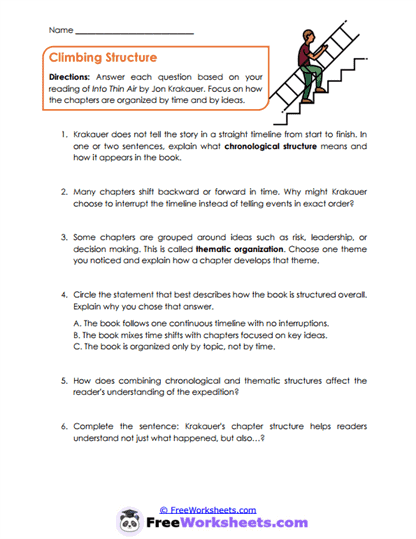
Nonfiction Book Study
Studying nonfiction books helps students organize information, evaluate ideas, and better understand real-world topics. Encourage your child to take short notes on important facts and supporting details while reading. These worksheets strengthen nonfiction comprehension, research, and analytical thinking skills.
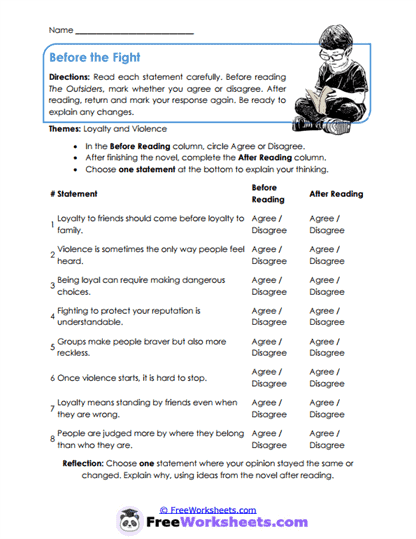
Novel Study
Novel studies help students think more deeply about characters, conflicts, themes, and story development over time. A great strategy is to discuss how characters change throughout the story and what lessons they learn along the way. These activities strengthen literary analysis, comprehension, and discussion skills.