
About This Worksheet
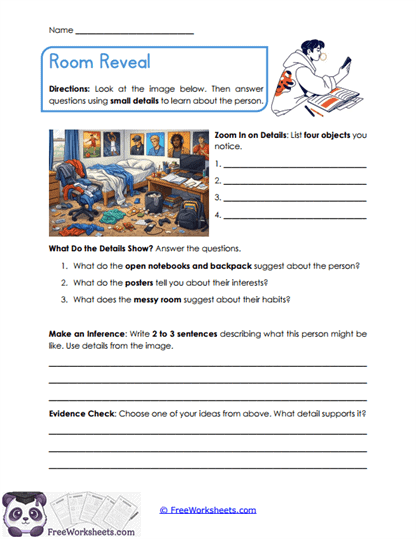
This Grade 7 reading worksheet helps students make inferences about a person by examining the details in a room. The image shows an untidy bedroom with open notebooks, a backpack, posters, clothes, and personal belongings scattered around the space. Students use these objects to form reasonable ideas about the unseen person’s habits, interests, and daily life. For example, open school materials may suggest the person studies there, while the messy floor may point to rushed or disorganized habits.
Learning Goals
The main goal is to help students understand that an inference combines visible evidence with logical thinking. Students should already be able to list objects and describe the condition of a setting. This activity moves them toward explaining what those details may reveal about a person who is not shown. It supports CCSS.ELA-LITERACY.RI.7.1 and CCSS.ELA-LITERACY.RI.7.7, which focus on evidence-based conclusions and interpreting visual information.
Student Tasks
On this worksheet, students will zoom in on the bedroom scene and list four objects they notice. They will explain what the open notebooks, backpack, posters, and messy room may reveal about the person who uses the space. Students then write a two- or three-sentence inference describing what this person might be like. The final evidence check asks them to choose one idea and name the exact visual detail that supports it.
Common Challenges
Some students may make unfair judgments, such as calling the person lazy simply because the room is messy. Others may name objects without explaining what those objects suggest. Remind them that an inference should remain reasonable and should not claim more than the evidence allows. Words such as “may,” “might,” and “possibly” help students show that they are making a supported guess.
Teaching Suggestions
A teacher can model one careful inference by saying, “The open notebook may suggest the person was studying recently.” Students can compare that with an unsupported claim that goes too far. At home, a parent can ask the child which detail gives the strongest clue about interests and which gives the strongest clue about habits. This helps students separate observation from interpretation.
Worksheet Features
The worksheet includes a detailed room image with many objects that can support different reasonable conclusions. Questions guide students from noticing items to interpreting habits, interests, and personality. A final evidence check makes sure every inference is tied to something visible. This page works well for inference instruction, visual literacy, character development, or descriptive writing.