
About This Worksheet
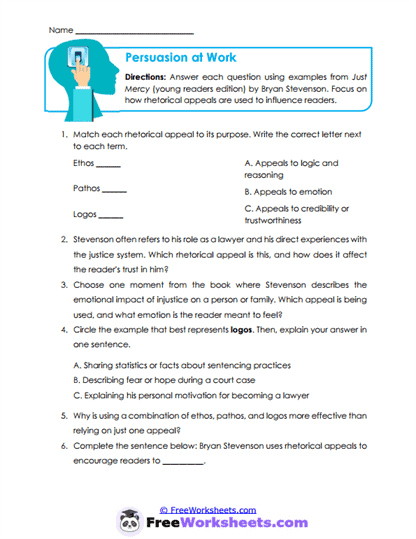
Persuasion at Work is a grade 9 rhetorical analysis worksheet focused on identifying ethos, pathos, and logos in Just Mercy by Bryan Stevenson. It is a high school literacy resource that strengthens understanding of persuasive techniques. The worksheet asks students to connect rhetorical appeals to purpose. For example, sharing sentencing statistics demonstrates logical appeal. This activity builds skills in analyzing argument and rhetorical strategy.
Curriculum and Grade Alignment
This worksheet is designed for Grade 9 and emphasizes analyzing rhetorical appeals in nonfiction texts. The primary learning goal is to evaluate how ethos, pathos, and logos influence readers. Students should already understand persuasive techniques before completing this activity. The next progression skill involves writing rhetorical analysis essays. This resource aligns with CCSS.ELA-LITERACY.RI.9-10.6 and RI.9-10.8.
Student Tasks
On this worksheet, students will match rhetorical appeals to their purposes. They analyze how Stevenson builds credibility. Learners identify examples of emotional and logical appeals. Students explain why combining appeals strengthens argument effectiveness. Each response requires thoughtful explanation and textual understanding.
Common Challenges and Misconceptions
Students may confuse appeals or misidentify examples. Some learners might provide definitions without connecting them to the text. Others may struggle to explain why multiple appeals strengthen persuasion. Teachers can model analyzing a sample paragraph for appeals.
Implementation Guidance
Teachers can use this worksheet during a unit on persuasive nonfiction. It works well as preparation for rhetorical analysis essays. In small groups, students can debate which appeal is most effective. Homeschool educators may guide students in annotating appeals in the text. The worksheet supports advanced persuasive analysis.
Details and Features
The worksheet includes matching, multiple-choice, and short-response questions. Prompts emphasize explanation of rhetorical impact. The layout provides organized response space. The printable format is classroom-ready and easy to distribute. The justice-focused theme promotes meaningful discussion.