
About This Worksheet
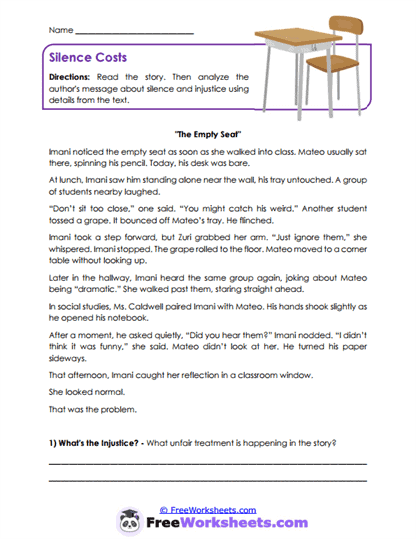
This worksheet is a literary analysis activity focused on identifying theme and injustice within a narrative. It is designed for Grade 8 students learning to interpret deeper messages in literature. The story explores social exclusion and the impact of silence, encouraging students to think critically about fairness and behavior. Students learn that theme is the central message or lesson conveyed through events and characters. For example, a character being ignored becomes evidence of a larger theme about injustice or social responsibility.
Curriculum and Grade Alignment
This worksheet aligns with Grade 8 literature standards that emphasize analyzing theme and its development. Students are expected to identify the central message and support it with evidence. A prerequisite skill includes understanding plot and character actions, while the next step involves evaluating how themes connect to real-world issues. It supports Common Core Standard RL.8.2, focusing on theme analysis. It also aligns with TEKS ELAR 8.7(A), emphasizing interpretation of literary meaning.
Student Tasks
On this worksheet, students will read a story and identify the injustice presented. They will analyze how character actions and events reveal a deeper message. Students are expected to explain their thinking using evidence from the text. Responses must be written clearly in complete sentences. The task encourages thoughtful reflection on both the story and its broader meaning.
Common Challenges and Misconceptions
Students may describe events without identifying the underlying theme. Some might struggle to explain what makes a situation unjust. Others may give personal opinions without connecting them to the text. There can also be difficulty identifying subtle messages in the story. Teachers can support students by modeling how to connect events to larger ideas.
Implementation Guidance
Teachers can use this worksheet during lessons on theme or social issues in literature. It works well as part of a class discussion about fairness and empathy. In class, students can share interpretations before writing responses. Parents and homeschool educators can use this worksheet to encourage meaningful conversations about behavior and values. Discussing the story’s message can deepen understanding.
Details and Features
The worksheet includes a meaningful and relatable story that encourages reflection. It features structured questions focused on theme and injustice. The layout is simple and easy for students to follow. Responses require evidence-based explanations. It is designed for easy printing and flexible instructional use.