
Connecting Fractions To Visuals Worksheets
Seeing fractions represented in different shapes helps children understand that fractional values describe equal parts of a whole. These grade 4 connecting fractions to visuals worksheets have learners shade sections of circles and grids, match written fractions with pictured models, and identify incorrect representations among several choices. The free printable PDFs provide visual practice for students developing fraction recognition and interpretation. Before selecting an answer, encourage children to count the total equal sections and then the shaded sections, connecting each count with the appropriate part of the fraction.
-
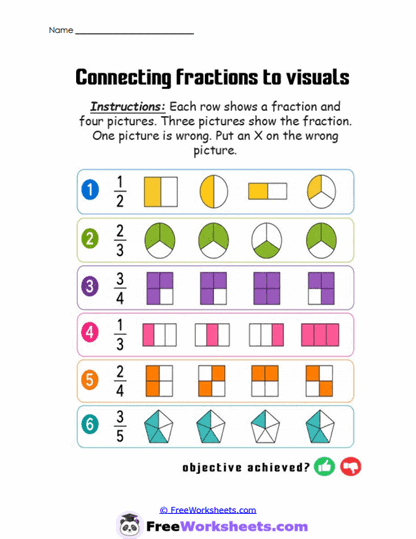
Find the Wrong Model
-
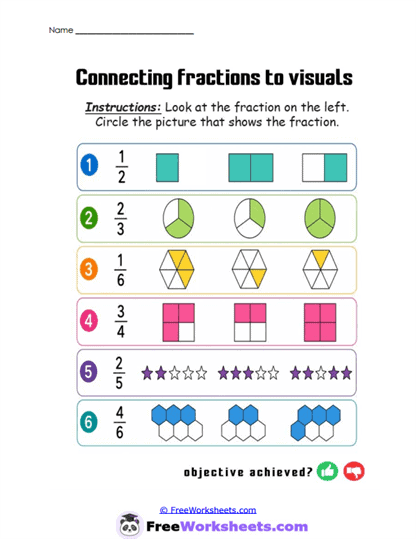
Fraction Choice Match
-
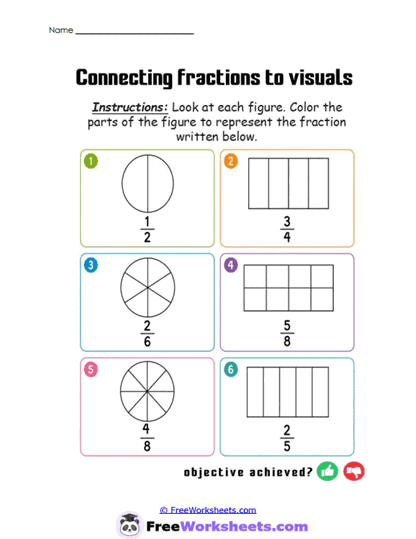
Fraction Coloring
-
-
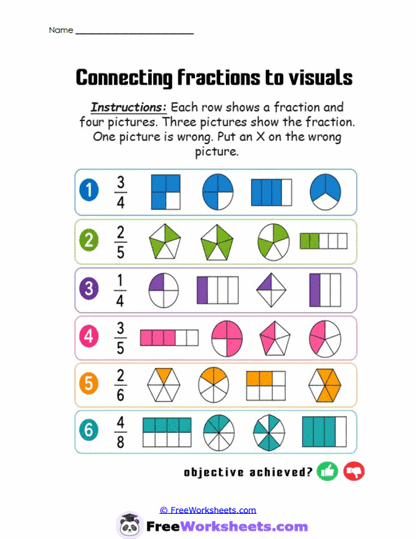
Fraction Error Hunt
-
Fraction Mistake Finder
-
Fraction Model Match
-
Fraction Picture Practice
-
Model Error Check
-
Picture Fraction Review
-
Picture Match Fractions
-
Shade the Fraction
-
Shape Fraction Models
-
Visual Fraction Builder
-
Visual Fraction Choices
-
Visual Fraction Inspector
About This Collection of Worksheets
Connecting a written fraction to a picture helps students understand what the numerator and denominator represent. By counting the equal parts in a whole and identifying how many are shaded, students can see the meaning of fractions instead of relying only on numbers. This visual understanding supports later work with comparing fractions, equivalent fractions, and fraction operations.
The collection includes several kinds of practice. Students color models to represent given fractions, choose pictures that match written fractions, and inspect groups of models to find the one that is incorrect. Shapes include circles, rectangles, bars, grids, polygons, stars, and groups of objects, giving students practice with different ways to represent a fraction.
Teachers can use the worksheets for guided instruction, math centers, independent practice, review, or informal assessment. Parents, tutors, and homeschool educators can work through a model alongside the student, asking them to explain how many equal parts make up the whole and how many are shaded. These questions make it easier to spot misunderstandings and build confidence through discussion.
Paul’s Teacher Tip
Before students begin, model one example by counting the total equal parts and then the shaded parts. Ask them to connect the denominator to the total number of parts and the numerator to the shaded number. Watch for students who judge a model by how much color they see without checking the counts. For additional support, have them point to or mark each section as they count; for an extension, ask them to write the fraction shown by an incorrect model or create a new model for the same fraction.
Worksheet Collection Skill Spotlights
Find the Wrong Model
What Kids Do: Students read a fraction at the beginning of each row, examine four picture models, and identify the one that does not match. They count the equal parts and shaded sections in every model before marking the incorrect choice with an X.
Target Skill: The activity strengthens students’ ability to verify a fraction model by checking both the total number of equal parts and the number shaded. Comparing all four pictures encourages careful reasoning and helps students distinguish mathematical evidence from a quick visual guess.
Fraction Choice Match
What Kids Do: Students read a written fraction and compare it with several pictures in the same row. They count the total equal parts and shaded parts in each option, then circle the model that matches both numbers in the fraction.
Target Skill: This practice builds accuracy connecting symbolic fractions to visual representations. Students use the denominator and numerator to evaluate each choice, developing flexible fraction sense that supports comparing fractions and recognizing that one amount can be shown in different ways.
Fraction Coloring
What Kids Do: Students work through six pictures labeled with fractions, including circles, rectangles, and grids. For each one, they count the equal sections and color the number of parts shown by the numerator, following the same process across different shapes and denominators.
Target Skill: Coloring makes the roles of the numerator and denominator visible: one indicates how many parts are selected, while the other indicates the total equal parts in the whole. Repeated practice reinforces fraction meaning and supports later work with equivalent fractions and fraction comparison.
Fraction Error Hunt
What Kids Do: Students read a target fraction in each row, then check four visual models one by one. They count the total sections and the shaded sections, compare those counts with the written fraction, and mark the single picture that does not represent it correctly.
Target Skill: The error-finding format develops students’ ability to check and explain the accuracy of a fraction representation. It reinforces the importance of equal parts and encourages precise use of the numerator and denominator across varied shapes and grids.
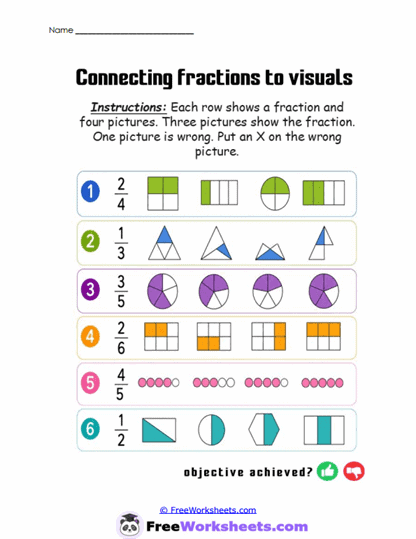
Fraction Mistake Finder
What Kids Do: Students inspect four models for each written fraction, such as 2/4, 1/3, or 3/5. Three models match the target and one does not; students count the parts and shading in every picture before crossing out the incorrect representation.
Target Skill: Students build fluency interpreting fractions in varied visual forms and identifying where a representation fails. Checking every option reinforces attention to both the total equal parts and the shaded amount, while preparing students to compare and explain fraction models.
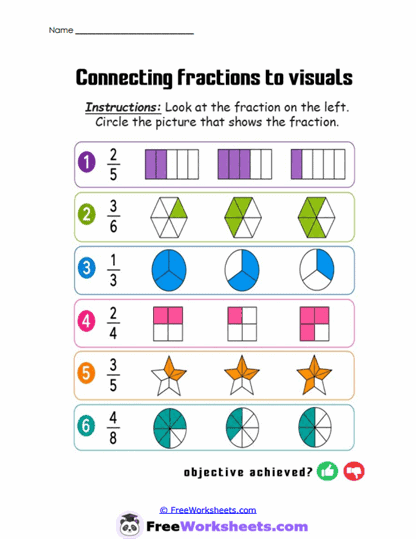
Fraction Model Match
What Kids Do: Students work through six rows, each with a written fraction and three picture choices. They count the equal parts in each model, count how many are shaded, and circle the picture that represents the fraction accurately.
Target Skill: This activity strengthens students’ ability to translate between a fraction written with numbers and a visual model. Comparing options encourages them to use the denominator and numerator systematically and helps develop flexible thinking about fractions represented by different shapes.
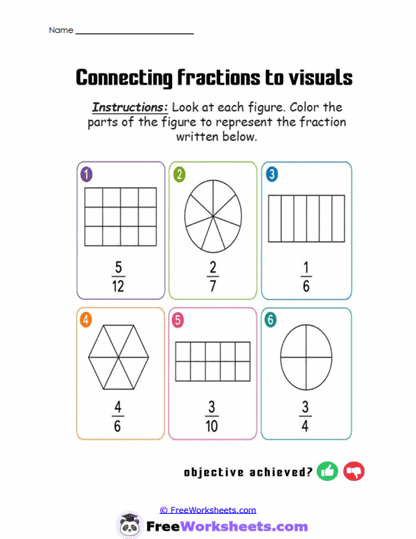
Fraction Picture Practice
What Kids Do: Students read each of six fractions and color the matching picture, using models such as grids, circles, rectangles, and a geometric figure. They count the equal sections before shading the number specified by the numerator.
Target Skill: The worksheet reinforces the idea that a fraction describes a number of equal parts within one whole. Working with denominators from fourths through twelfths helps students become more accurate with visual fraction models and builds a foundation for more advanced fraction work.
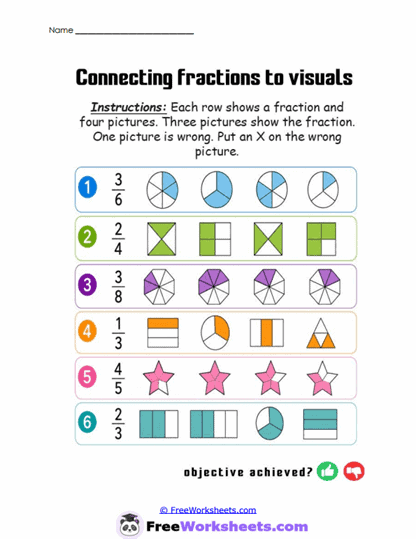
Model Error Check
What Kids Do: Students read a fraction at the start of each row and review four visual representations. They count the total equal pieces and the shaded pieces in each picture, then put an X on the one model that does not match the written fraction.
Target Skill: Students practice checking both components of a fraction rather than relying on the apparent size of a shaded area. The comparison task builds accuracy and reasoning, while reinforcing that different shapes can represent the same fraction when their part counts match.
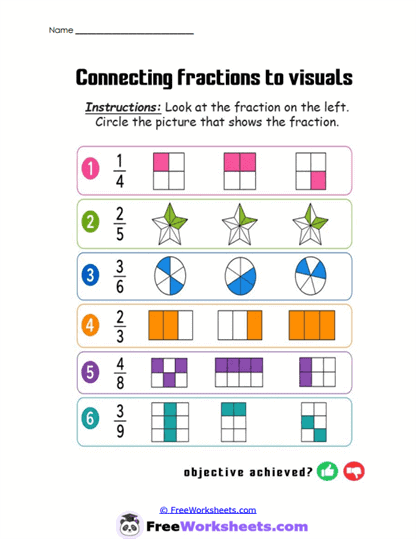
Picture Fraction Review
What Kids Do: Students read a target fraction and compare three pictures in each row, using circles, grids, bars, and other models. They count the equal parts and shaded sections in the choices, then circle the picture that shows the fraction.
Target Skill: This review builds confidence recognizing fractions across different kinds of visual models. Students apply the denominator and numerator to verify a choice, and they gain exposure to fractions such as 3/6 and 4/8 that can support later discussions of equivalent fractions.
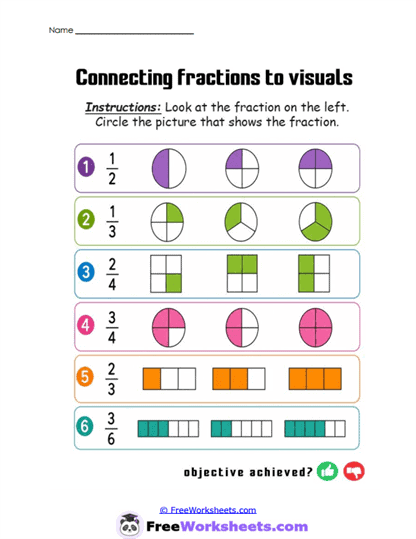
Picture Match Fractions
What Kids Do: Students look at a written fraction beside three colored picture models. They count the total equal sections and the shaded sections in each picture, then circle the model that matches the fraction shown in the row.
Target Skill: The worksheet helps students connect written fractions with visual representations and compare the two accurately. It also offers opportunities to notice equivalent amounts, such as models that show one-half, while strengthening careful counting and fraction recognition.
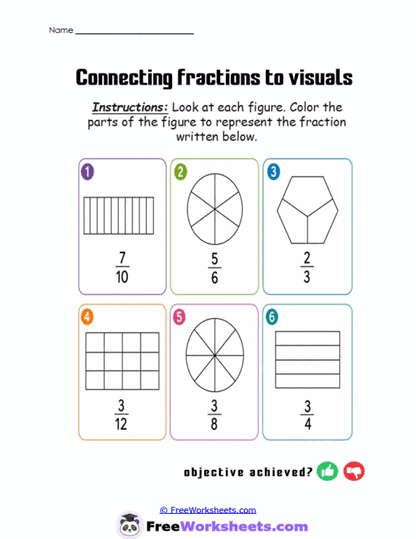
Shade the Fraction
What Kids Do: Students read each fraction and color the corresponding number of equal parts in a visual model. The six problems use different shapes and partitions, so students count the sections in each whole before deciding how many to shade.
Target Skill: This activity strengthens understanding of how the numerator and denominator work together to describe a fraction. Practice with models divided into different numbers of parts supports accuracy and helps prepare students to compare fractions and recognize equivalent relationships.
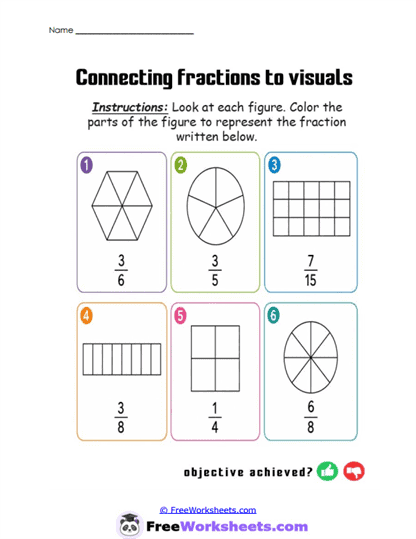
Shape Fraction Models
What Kids Do: Students turn six written fractions into pictures by coloring the correct number of equal sections. The models include shapes such as hexagons, circles, rectangles, and grids, with denominators ranging from fourths to fifteenths.
Target Skill: Students learn to apply the same fraction reasoning across models that look different. Counting all equal parts and then selecting the shaded parts builds flexible visual understanding and reinforces that a fraction’s meaning does not depend on the shape used.
Visual Fraction Builder
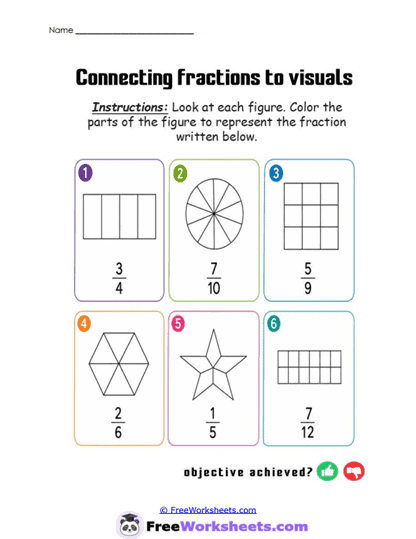
What Kids Do: Students read each fraction beside a shape or grid, count the total equal sections, and color the number shown by the numerator. The six models include rectangles, circles, a hexagon, a star, and a grid.
Target Skill: By building each fraction through coloring, students connect the numbers in a fraction to the parts of a whole. The varied shapes and denominators encourage flexible thinking and help students begin to compare how different visual models represent fractional amounts.
Visual Fraction Choices
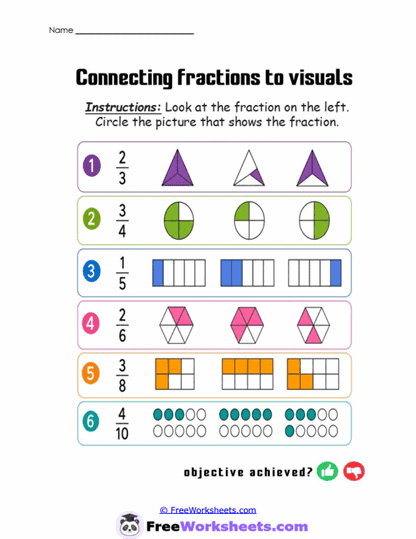
What Kids Do: Students read the fraction at the start of each row and examine three possible models, including shapes, grids, bars, and groups of objects. They count the total and shaded parts in each choice, then circle the correct representation.
Target Skill: The activity develops students’ ability to recognize fractions even when the whole is presented in an unfamiliar form. Systematically checking the total equal parts and the shaded amount supports fraction sense, visual reasoning, and readiness for comparing fractions.
Visual Fraction Inspector
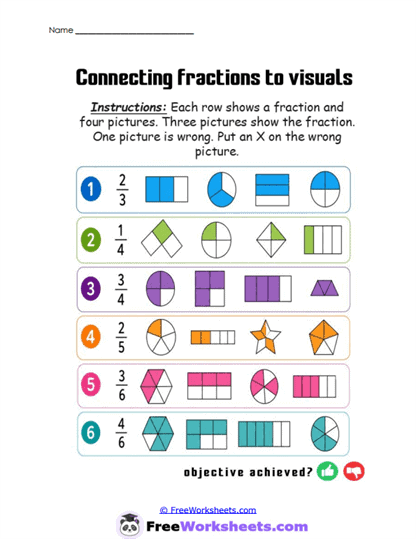
What Kids Do: Students inspect four models in each row and search for the one that does not match the target fraction. They count equal sections and shaded parts, then mark the incorrect picture; models use shapes such as circles, bars, stars, and grids.
Target Skill: Students strengthen their ability to compare a visual model with a written fraction and explain why a representation is incorrect. Checking every option reinforces the numerator-denominator relationship and helps prepare students for equivalent fractions and fraction comparison.