
Prime And Composite Numbers Worksheets
4th grade math prime and composite numbers worksheets help students classify whole numbers by analyzing factors, divisibility, and number patterns. Free, ready-to-print worksheets in PDF format are designed for immediate classroom use, centers, guided practice, homework, or homeschool lessons. Students strengthen factor knowledge, divisibility reasoning, and number classification while developing skills that support curriculum expectations.
About This Collection of Worksheets
Prime and composite numbers help 4th grade students understand how whole numbers are organized according to their factors. Students learn that a prime number has exactly two factors, 1 and itself, while a composite number has more than two factors. Recognizing these structures strengthens number sense and prepares learners for later work with factorization, common factors, and other number relationships.
The collection includes odd-one-out challenges, prime and composite sorting, factor-based classification, number linking, and larger tally activities. Some worksheets ask students to identify a single number that differs from the others, while later pages require them to classify many numbers and count how many primes and composites appear in a set. This progression builds both conceptual understanding and faster recognition.
Teachers can use these worksheets for whole-class lessons, math centers, homework, intervention, review, or informal assessment. Parents, tutors, and homeschool educators can encourage students to prove that a number is composite by naming a factor pair and to test uncertain numbers using simple divisibility rules. Because the collection moves from small-group comparisons to independent classification of larger sets, it supports increasing confidence with factors and divisibility.

Paul’s Teacher Tip
Remind students that odd does not automatically mean prime, since numbers such as 9, 15, 21, and 25 are composite. Teach them to check divisibility by 2, 3, 5, and 7 before spending time listing every factor of a larger number. Keep the two important exceptions visible: 2 is the only even prime number, and 1 is neither prime nor composite. When students call a number composite, ask them to name at least one factor pair that proves it. Over time, this habit helps students classify numbers accurately instead of relying on appearance or memorized lists.
Worksheet Collection Skill Spotlights
Category Outlier
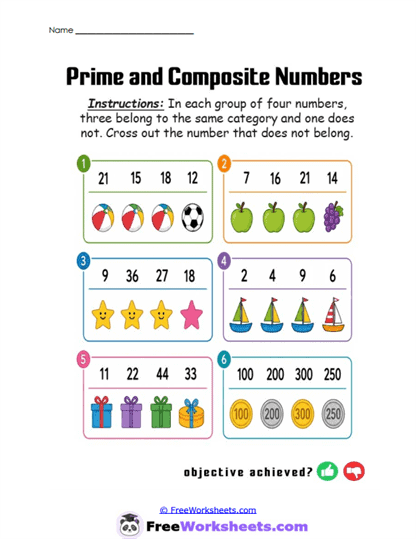
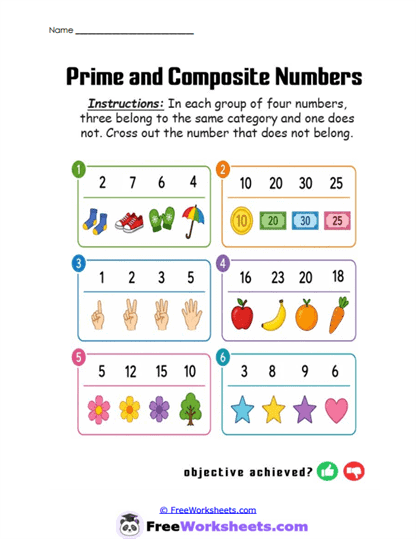
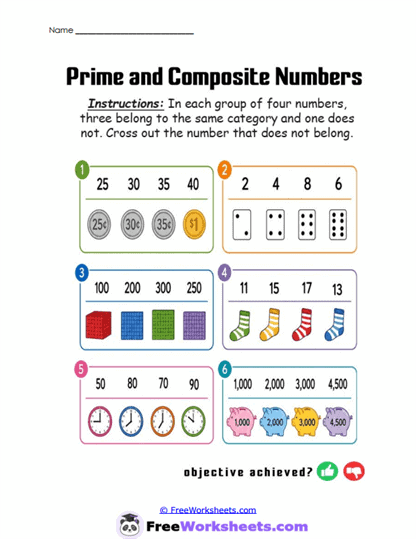
What Kids Do: Students examine six groups containing four numbers each and determine which value has a different prime-or-composite classification from the other three. They compare small and larger numbers, check factor relationships, and cross out the single number that does not fit each group.
Target Skill: This activity strengthens factor-based classification and divisibility awareness. 4th grade students practice distinguishing primes from composites across a wide range of values and learn to justify an outlier by analyzing actual factors rather than relying only on whether a number is odd or even.
Factor Count Challenge
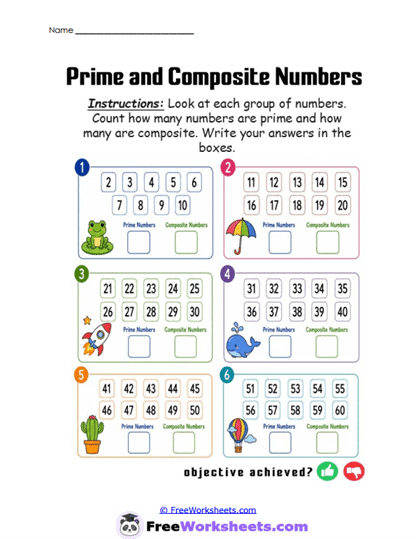
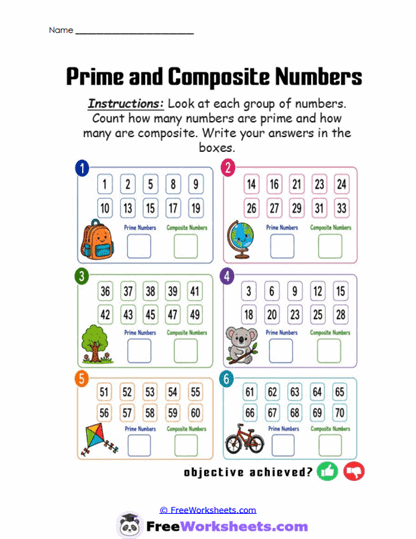
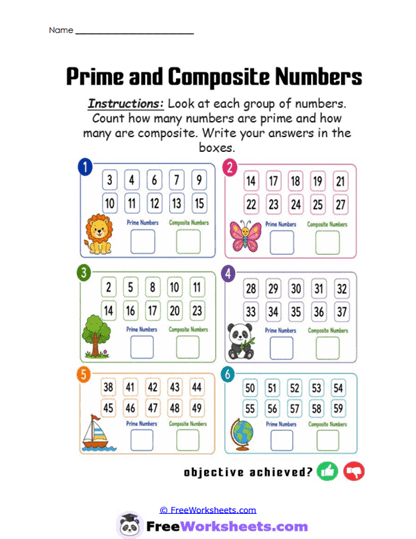
What Kids Do: Students work through six mixed groups of ten numbers and determine how many values in each set are prime and how many are composite. They classify the numbers individually, keep track of their decisions, and record separate totals for both categories.
Target Skill: The worksheet develops classification fluency and mathematical accuracy with larger number sets. 4th grade students practice using factor pairs and divisibility checks efficiently while separating the reasoning step of classification from the final task of tallying each category.
Factor Oddball
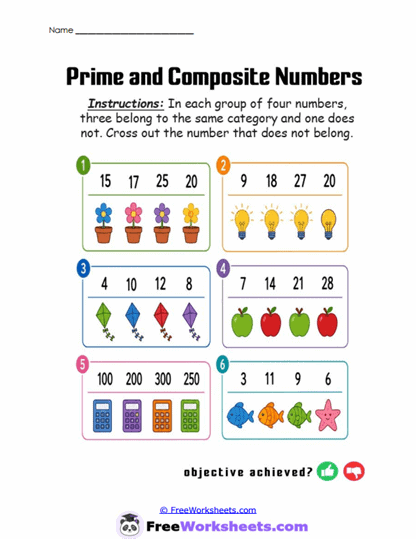
What Kids Do: Students inspect six groups of four numbers and identify the one value whose factor structure differs from the other three. They analyze examples containing even numbers, odd composites, primes, and larger multiples before crossing out the prime-or-composite oddball.
Target Skill: This activity builds faster recognition of common prime and composite patterns. 4th grade students strengthen their understanding that odd numbers can still be composite and that a single additional factor pair is enough to prove a number belongs in the composite category.
Factor Pattern Hunt
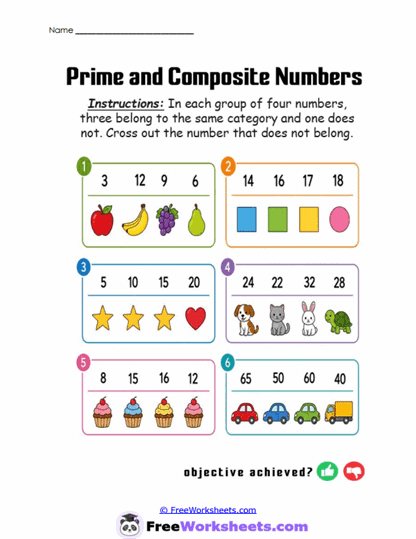
What Kids Do: Students analyze six groups of four values and search for the hidden prime-or-composite pattern within each set. They use factor knowledge and divisibility checks to determine which three numbers belong together and cross out the value that breaks the pattern.
Target Skill: The worksheet develops pattern recognition through number structure rather than visual appearance. 4th grade students practice using divisibility by familiar factors such as 2, 3, and 5 to classify values more efficiently while reinforcing the definitions of prime and composite numbers.
Factor Sort Cards
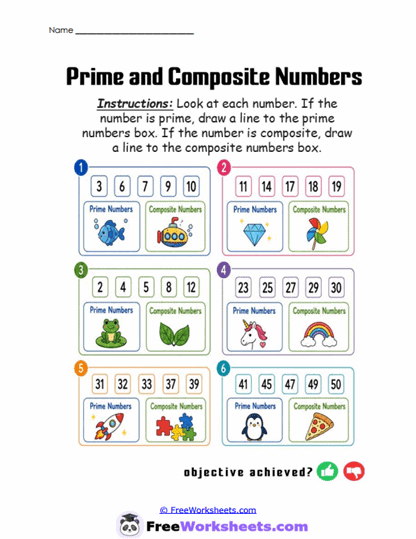
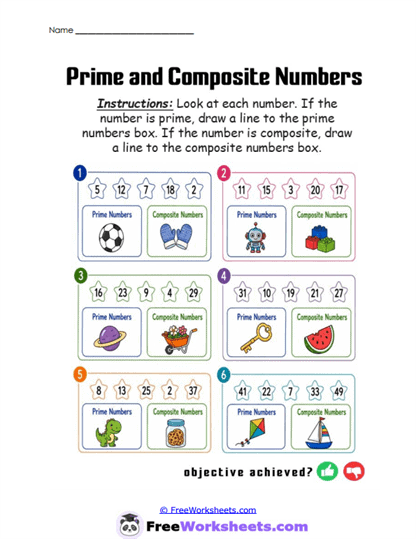
What Kids Do: Students classify thirty themed number cards across six groups by drawing each value to either a Prime Numbers or Composite Numbers target. They work with numbers from 2 through 50, including less obvious values such as 25, 39, and 49.
Target Skill: This activity strengthens prime-and-composite fluency across a broad range of whole numbers. 4th grade students practice recognizing useful divisibility patterns, testing factor pairs when needed, and remembering important exceptions such as 2 being the only even prime.
Factor Tally Challenge
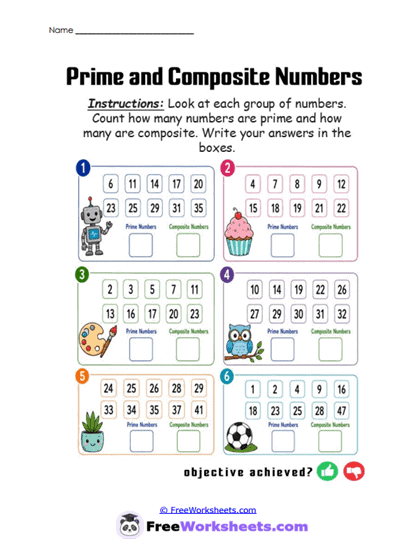
What Kids Do: Students inspect six mixed groups of ten numbers, classify each usable value, and record how many primes and composites appear in each set. They also encounter the special value 1, which must be left outside both categories rather than forced into one.
Target Skill: The worksheet develops deeper understanding of number classification and the special status of 1. 4th grade students reinforce that primes have exactly two factors, composites have more than two, and 1 has only one factor, making it neither prime nor composite.
Number Oddball
What Kids Do: Students study six illustrated groups of four numbers and decide which value does not match the prime-or-composite pattern of the others. They compare factors for numbers ranging from small single digits to values such as 23, 25, and 30 before crossing out the outlier.
Target Skill: This activity introduces prime-and-composite classification through comparison and reasoning. 4th grade students practice checking factors rather than relying on number appearance while building awareness of special cases such as 1 being neither prime nor composite and 2 being prime.
Prime Composite Review
What Kids Do: Students complete six groups of ten mixed numbers and classify each value as prime or composite before recording the totals. They work independently with familiar primes, easy composites, and less obvious odd composites that require careful divisibility or factor checking.
Target Skill: This cumulative activity strengthens independent factor reasoning and classification fluency. 4th grade students apply divisibility knowledge across many values with minimal scaffolding, preparing them for future work involving prime factorization and common factors.
Prime Composite Sort
What Kids Do: Students sort thirty numbers across six activity boxes by drawing each value to either the Prime Numbers or Composite Numbers area. They classify numbers ranging from 2 through 47 and repeatedly apply factor reasoning to common primes and composites.
Target Skill: The worksheet develops direct classification fluency using the formal definitions of prime and composite numbers. 4th grade students practice identifying exactly two factors for primes, finding additional factor pairs for composites, and using divisibility rules to make decisions more efficiently.
Prime Count Check
What Kids Do: Students examine six sets containing ten numbers apiece and count how many values in each group are prime and how many are composite. They can mark numbers as P or C first, then tally the totals and record them in separate category boxes.
Target Skill: This activity strengthens efficient recognition of prime and composite values within larger collections. 4th grade students practice organizing their classifications, avoiding skipped or double-counted numbers, and identifying tricky odd composites that may initially resemble primes.
Prime Count Groups
What Kids Do: Students analyze six groups of ten values ranging from small numbers into the 70s. They classify every number using factors or divisibility, then record the number of primes and composites in each group after checking the entire set.
Target Skill: The worksheet develops number-classification fluency across increasingly varied ranges. 4th grade students practice combining known prime-number recognition with efficient divisibility checks and factor-pair reasoning when a value cannot be classified immediately.
Prime Number Links
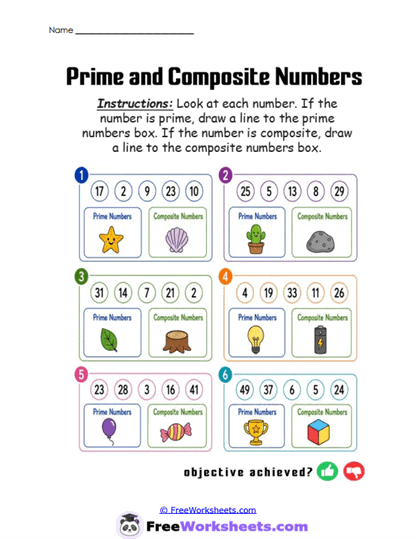
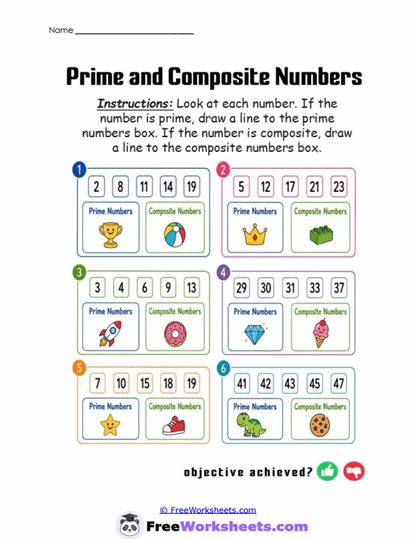
What Kids Do: Students classify thirty illustrated numbers by drawing lines from each value to a Prime Numbers or Composite Numbers box. The sets contain straightforward examples along with less obvious values such as 21, 26, 33, and 49 that require careful factor reasoning.
Target Skill: This activity reinforces the connection between divisibility and number classification. 4th grade students practice testing small prime divisors, recognizing factor pairs, and distinguishing truly prime values from odd composite numbers that do not have immediately obvious factors.
Prime Outlier
What Kids Do: Students compare six groups of four numbers and identify the one value that differs from the prime-or-composite status of the other three. The page includes both small values and much larger numbers, requiring students to look for efficient divisibility evidence.
Target Skill: The worksheet strengthens classification across different number sizes and discourages assumptions based on appearance. 4th grade students learn that large numbers can often be classified quickly through divisibility and that 2 remains an important exception as the only even prime number.
Prime Sort Lines
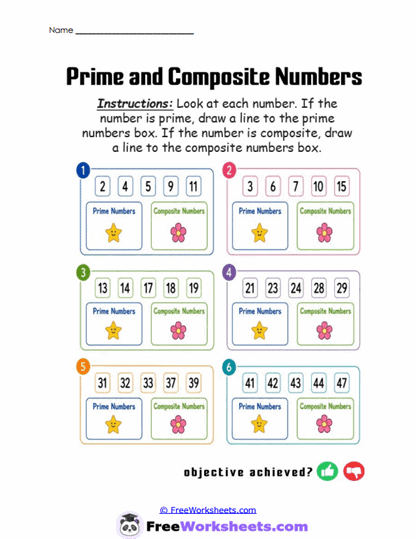
What Kids Do: Students sort thirty numbers across six groups by connecting each value to either the Prime Numbers or Composite Numbers category. They work with familiar and less obvious values, including odd composites such as 21, 33, and 45.
Target Skill: This activity develops fluent factor-based classification through repeated practice. 4th grade students reinforce divisibility by 2, 3, and 5, identify common primes through the 40s, and explain composite status by naming factor pairs that prove a number has more than two factors.
Prime Tally
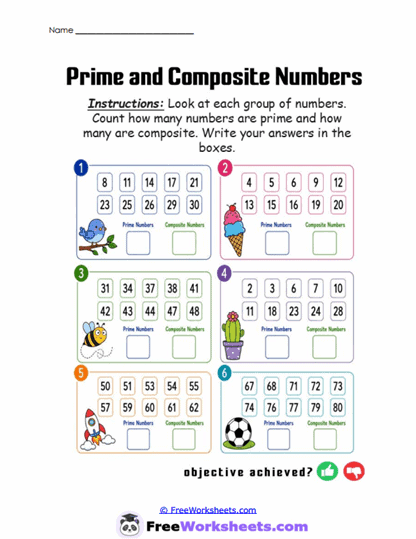
What Kids Do: Students complete six larger mixed number sets by determining how many values are prime and how many are composite. They classify numbers extending into the 70s, mark or organize their decisions, and record separate totals for each category.
Target Skill: The worksheet builds independent classification and tallying with increasingly challenging values. 4th grade students practice testing divisibility by small prime numbers, recognizing less obvious composites such as 33, 39, 49, and 55, and applying factor reasoning efficiently.