
Subtracting Fractions With Like Denominators Worksheets
4th grade math subtracting fractions with like denominators worksheets help students remove equal-sized parts and find differences accurately. Free, ready-to-print worksheets in PDF format are designed for immediate classroom use, centers, guided practice, homework, or homeschool lessons. Students strengthen fraction sense, numerator reasoning, and subtraction fluency while developing skills that support curriculum expectations.
About This Collection of Worksheets
Subtracting fractions with like denominators helps 4th grade students understand that the fractional pieces stay the same size throughout the problem. Because the denominators already match, students only need to subtract the numerators and keep the denominator unchanged. Visual models make this relationship easier to see and help students connect symbolic equations with actual parts of a whole.
The collection includes food-based fraction models, direct subtraction equations, error-analysis pages, answer-checking activities, and matching exercises. Early worksheets provide strong visual support with pizzas, cakes, chocolate, fruit, and other divided objects, while later pages ask students to rely more on the numbers themselves. This progression helps move students from concrete fraction understanding toward independent fluency.
Teachers can use these worksheets for whole-class lessons, guided math, centers, intervention, homework, review, or quick assessments. Parents, tutors, and homeschool educators can begin with the visual pages before moving into error checking and numerical matching. Because students repeatedly solve, verify, and compare fraction differences, the collection reinforces both the procedure and the reasoning behind like-denominator subtraction.
Paul’s Teacher Tip
Have students name the fractional unit before subtracting, such as “sixths minus sixths” or “tenths minus tenths.” This reminds them that the denominator describes the size of the pieces and should not change. When a student subtracts the denominators, return to a visual model and ask whether the size of each piece changed when some were removed. During error-analysis pages, encourage students to solve the equation independently before looking at the proposed answer. As visual support is reduced, have students say each subtraction aloud to keep the numerator and denominator roles clear.
Worksheet Collection Skill Spotlights
Animal Connections
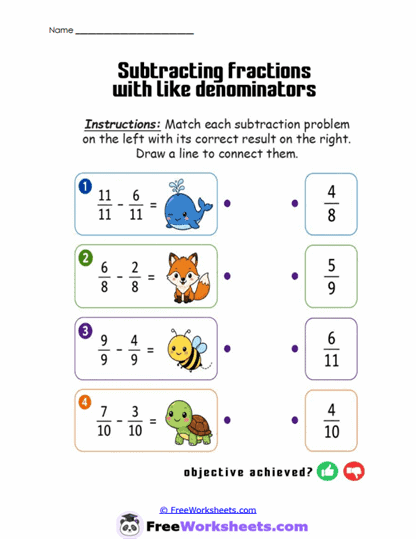
What Kids Do: Students solve four animal-themed fraction subtraction equations involving elevenths, eighths, ninths, and tenths. They calculate each difference and then draw a line from the equation to the correct shuffled fraction answer on the opposite side of the page.
Target Skill: This activity strengthens like-denominator subtraction and answer verification. 4th grade students practice subtracting numerators accurately while preserving the denominator and carefully comparing both parts of a fraction before selecting the correct match.
Answer Audit
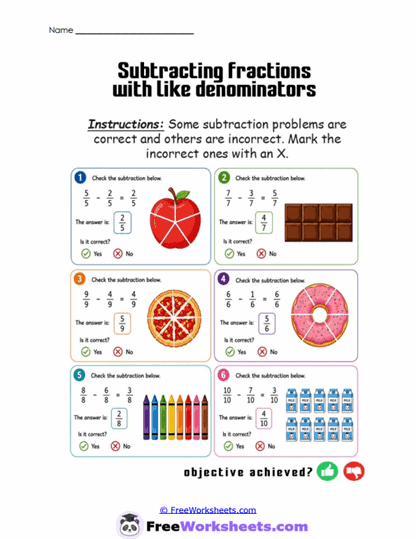
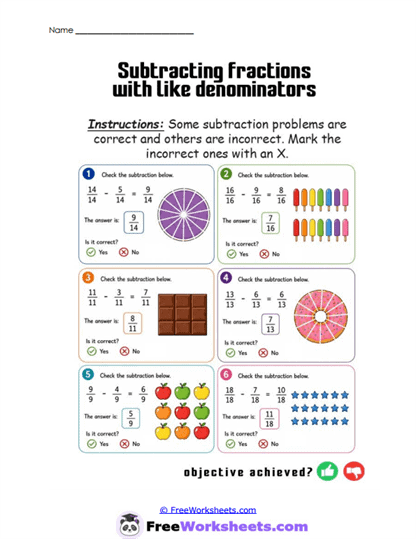
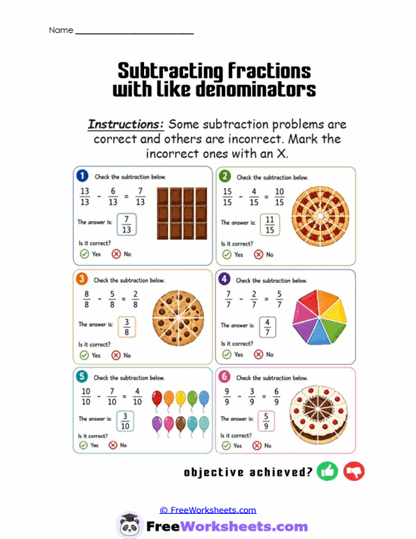
What Kids Do: Students inspect six completed fraction subtraction equations that include proposed answers and colorful visual models. They recalculate each problem independently, compare their own result with the printed answer, and choose Yes or No to determine whether the work is accurate.
Target Skill: The worksheet develops error analysis and mathematical self-checking. 4th grade students reinforce that the denominator remains unchanged during like-denominator subtraction and learn to verify completed work instead of automatically trusting a printed result.
Difference Detectives
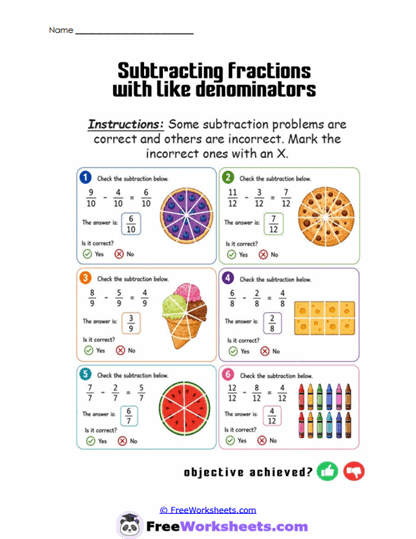
What Kids Do: Students review six completed subtraction problems using denominators such as eighths, ninths, tenths, elevenths, and twelfths. They solve each equation themselves, compare the result with the proposed answer, and identify any incorrect differences.
Target Skill: This activity strengthens computational accuracy and fraction reasoning through error detection. 4th grade students practice focusing on numerator subtraction, preserving the fractional unit, and recognizing answers that may look reasonable but do not follow the correct subtraction rule.
Difference Match
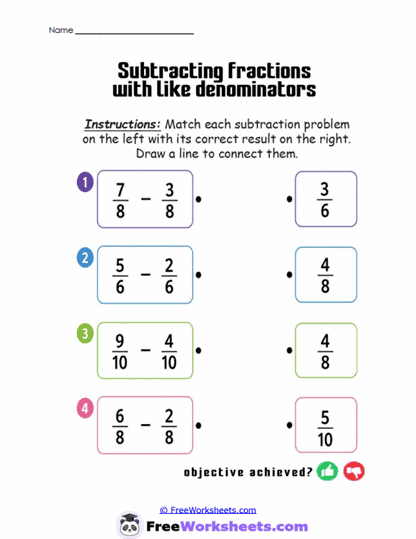
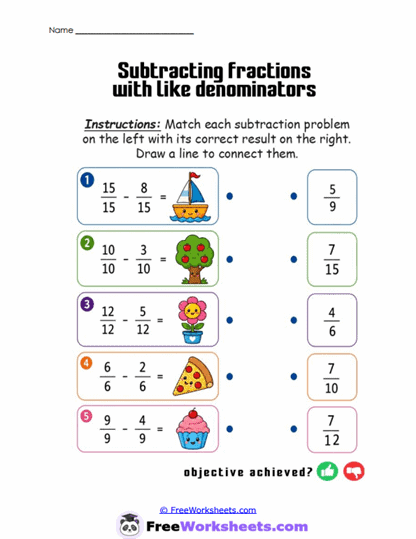
What Kids Do: Students calculate a set of like-denominator fraction differences and connect each equation to its correct answer from a shuffled group. They solve before matching so they must compare the exact numerator and denominator rather than relying on position or appearance.
Target Skill: The worksheet develops subtraction fluency and independent answer checking. 4th grade students practice applying the same numerator-subtraction rule across several denominator sizes while strengthening their ability to recognize exact fraction results.
Equation Inspector
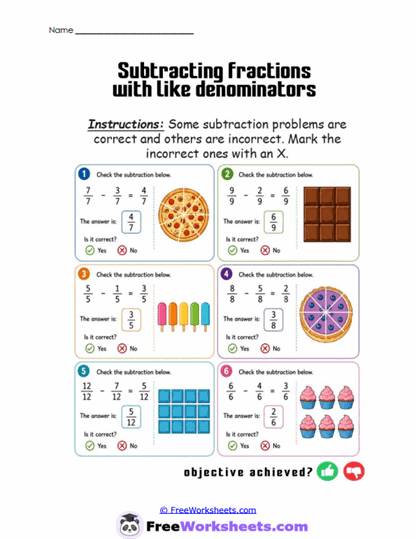
What Kids Do: Students inspect six completed fraction subtraction problems using larger denominators such as ninths, elevenths, thirteenths, fourteenths, sixteenths, and eighteenths. They recalculate each equation and decide whether the stated answer is correct.
Target Skill: This activity extends error analysis to less familiar fractional units. 4th grade students strengthen the habit of naming and preserving the denominator while checking whether each numerator difference has been calculated correctly and consistently.
Food Fraction Subtraction
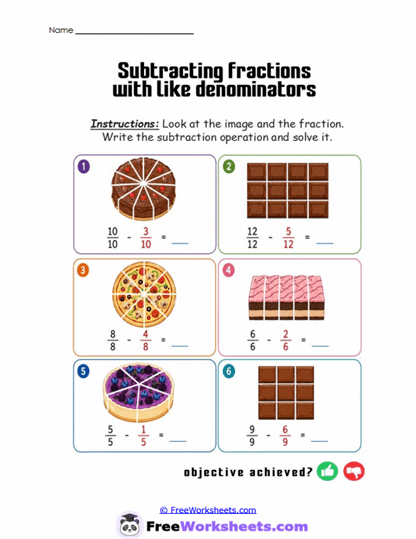
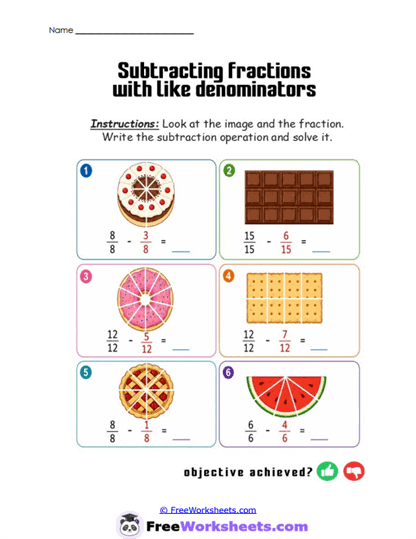
What Kids Do: Students solve six visual subtraction problems using cakes, chocolate bars, pizza, and other divided foods. They examine each model, subtract the second numerator from the first, and write the remaining fraction while working with several common denominators.
Target Skill: The worksheet builds conceptual understanding of like-denominator subtraction through concrete models. 4th grade students see that removing pieces changes how many are left but does not change the size or name of the fractional pieces.
Fraction Error Check
What Kids Do: Students examine six completed fraction subtraction problems that include an equation, proposed answer, visual model, and Yes/No choices. They solve each problem independently, compare results, and identify whether the printed work is correct or contains an error.
Target Skill: This activity strengthens fraction subtraction, self-checking, and mathematical reasoning. 4th grade students practice verifying both numerator calculations and denominator consistency while using visual models as supporting evidence rather than as the sole source of an answer.
Fraction Food Minus
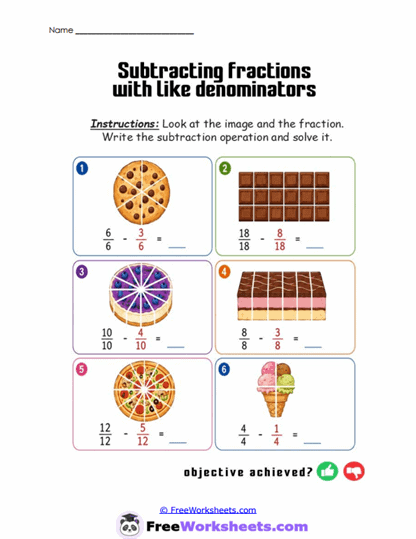
What Kids Do: Students solve six food-themed subtraction equations using cookies, chocolate, cake, pizza, ice cream, and other familiar models. They determine how many equal parts remain after the indicated amount is removed and write the resulting fraction.
Target Skill: The worksheet reinforces numerator subtraction with a fixed denominator. 4th grade students connect symbolic fraction equations with visible take-away situations and build confidence applying the same rule across denominators such as fourths, sixths, eighths, and larger units.
Fraction Model Minus
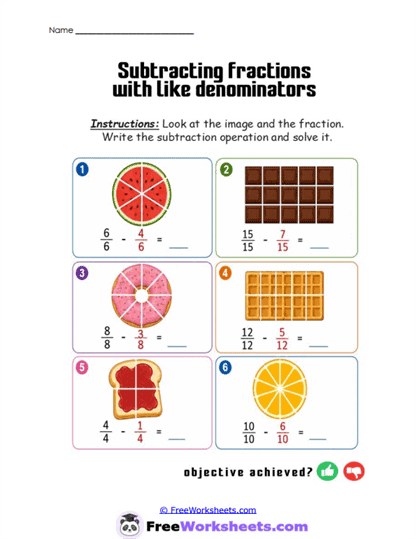
What Kids Do: Students work through six visual subtraction problems featuring watermelon, chocolate, pastries, crackers, toast, and orange slices. They use the picture as a check while subtracting the numerators and writing the difference with the same denominator.
Target Skill: This activity supports the transition from visual fraction reasoning to numerical fluency. 4th grade students learn to identify the amount remaining after subtraction while recognizing that whole fractions such as 15/15 can still be treated as equal fractional parts.
Fraction Takeaway
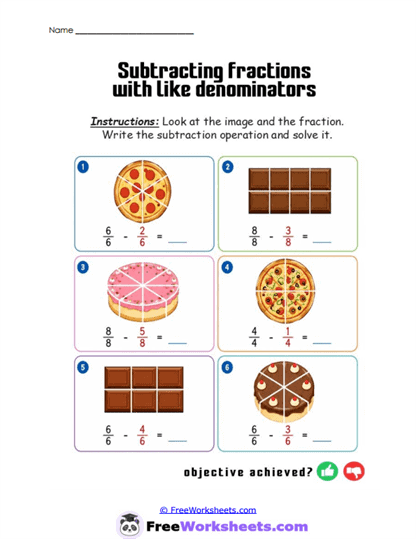
What Kids Do: Students solve six introductory subtraction problems using familiar food models divided into equal pieces. They start with the fraction shown, remove the amount indicated by the second numerator, and record the fraction that remains.
Target Skill: The worksheet builds a foundational understanding of subtracting fractions with like denominators. 4th grade students connect numerator subtraction with visible take-away actions and learn why the denominator remains constant when the size of the pieces does not change.
Number Connections
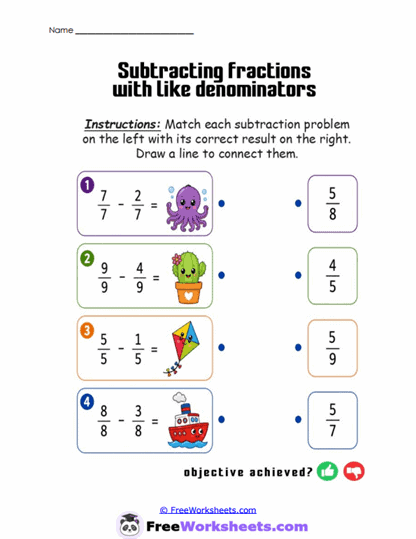
What Kids Do: Students solve mostly numerical like-denominator subtraction equations with minimal visual support and connect each problem to its correct shuffled result. They work one equation at a time and rely on fraction structure rather than picture models.
Target Skill: This activity develops independent fraction subtraction fluency. 4th grade students practice accurately subtracting numerators, preserving denominators, and recognizing correct differences without needing concrete models to confirm every result.
Picture Pairing
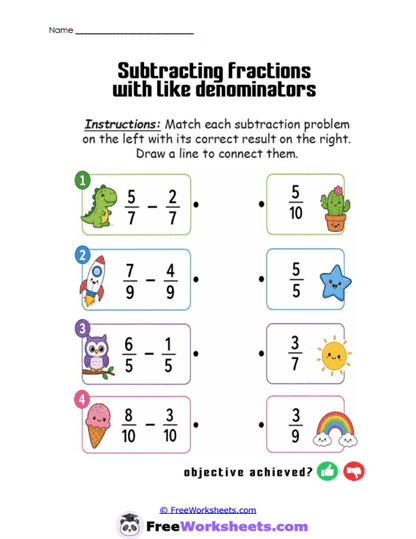
What Kids Do: Students solve four subtraction equations involving sevenths, ninths, fifths, and eighths and then draw lines to their matching fraction answers. Friendly illustrations accompany the problems while the numerical work remains the main focus.
Target Skill: The worksheet strengthens quick recall of the like-denominator subtraction rule and careful answer matching. 4th grade students practice solving first and then using both numerator and denominator information to verify the exact result.
Result Links
What Kids Do: Students solve like-denominator fraction subtraction equations presented on one side of the page and connect each equation to the correct shuffled fraction answer on the other side. They calculate each difference before beginning the matching process.
Target Skill: This activity reinforces subtraction accuracy and attention to fraction structure. 4th grade students practice transferring the same procedure across different denominators while using matching as a built-in check for their completed calculations.
Result Patrol
What Kids Do: Students inspect six completed fraction subtraction problems with visual models, proposed results, and Yes/No choices. They recalculate each difference independently and decide whether the displayed answer can be trusted or needs to be rejected.
Target Skill: The worksheet develops mathematical verification and self-correction. 4th grade students practice checking numerator differences, maintaining the original denominator, and recognizing that a visually plausible answer still needs to satisfy the actual fraction equation.
Visual Fraction Takeaway
What Kids Do: Students solve six subtraction problems using divided models such as cake, chocolate, pie, crackers, and watermelon. They identify how many equal fractional pieces remain after the specified amount is removed and record the difference.
Target Skill: This activity reinforces the meaning of subtraction with like denominators through repeated visual modeling. 4th grade students strengthen numerator reasoning, recognize whole fractions such as 12/12 or 15/15, and preserve the same fractional unit throughout the subtraction.