
About This Worksheet
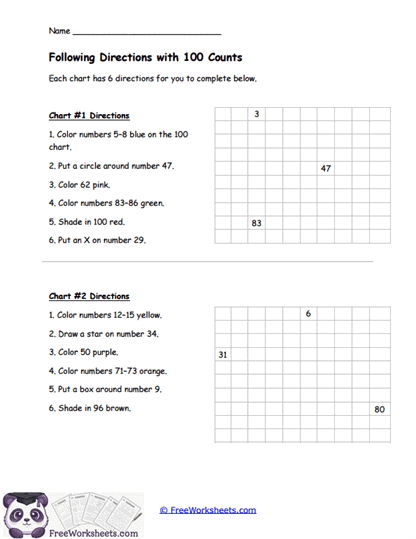
This worksheet is a number recognition and following directions activity that uses a 100 chart. It is designed for first grade students who are learning to locate and work with numbers up to 100. Students follow step-by-step instructions to color, circle, and mark specific numbers. This helps them connect number recognition with real actions, which makes learning more engaging. For example, coloring numbers 5-8 helps students see how numbers group together on a chart.
Curriculum and Grade Alignment
This worksheet supports Grade 1 math skills in counting, number identification, and following multi-step directions. The goal is to strengthen how students recognize numbers within a 100 chart while also practicing listening and reading comprehension. Students should already be familiar with basic number order before starting. It aligns with Common Core Standard 1.NBT.A.1, focusing on counting and understanding number relationships. In TEKS, it connects with 1.2(A) and early problem-solving skills.
Student Tasks
On this worksheet, students will read a list of directions tied to a 100 chart. They color specific numbers, circle certain values, and mark others with symbols. Each step requires them to carefully locate numbers on the chart. Students must follow directions in order to complete the task correctly. This builds both number fluency and attention to detail at the same time.
Common Challenges and Misconceptions
Students may rush through the directions and miss important details. Some learners might struggle to find numbers quickly on the chart. Others may confuse numbers that look similar, like 47 and 74. There can also be difficulty keeping track of multiple steps. A good approach is to have students complete one direction at a time and check their work as they go.
Implementation Guidance
This worksheet works really well as a guided activity at first. Teachers can read directions aloud and model how to find numbers on the chart. Once students understand the process, it can shift into independent or partner work. At home, parents can turn it into a fun game by reading directions and checking answers together. It’s a great way to make number practice more interactive.
Details and Features
The worksheet includes two separate charts with different sets of directions. This allows for repeated practice without feeling repetitive. The directions are clearly written and easy to follow for young learners. The visual format keeps students engaged while they work. It is designed to print cleanly and be used in both classroom and home settings.