
About This Worksheet
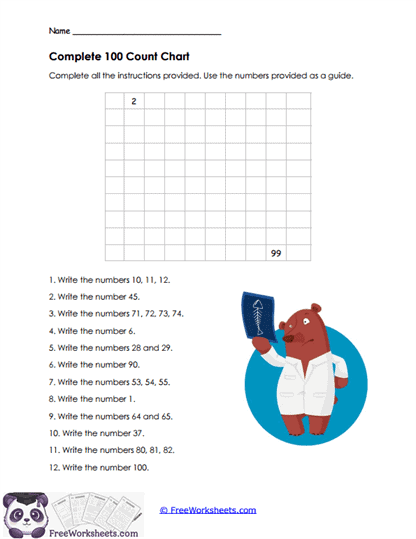
This worksheet helps students build a full 100 chart step by step, which is a key skill in first grade math. It gives kids a chance to slow down and really think about how numbers are organized. Instead of just reading numbers, they are actively placing them in the correct spots. That hands-on thinking helps the number pattern “click” for many learners. It’s a great way to strengthen both confidence and accuracy.
Curriculum and Grade Alignment
This activity supports Grade 1 math skills focused on counting and number relationships. The goal is to help students understand how numbers fit together within a 100 chart. Students should already be able to count forward before starting. It aligns with Common Core Standard 1.NBT.A.1, which focuses on counting and number understanding. In TEKS, it connects with 1.2(A) as students develop stronger number sense.
Student Tasks
Students are given a mostly blank 100 chart with a few numbers filled in as clues. They use those clues to figure out where the rest of the numbers go. Students write numbers in the correct boxes to complete the chart. Each step requires them to think about what comes next and how rows and columns work. This builds both logic and number fluency.
Common Challenges and Misconceptions
Students may struggle with placing numbers in the correct row, especially when moving from one line to the next. Some might skip numbers or repeat them without noticing. Others may not fully understand how the chart increases across and down. Encouraging students to count aloud or check each row can really help.
Implementation Guidance
This worksheet works well as guided practice before moving into independent work. Teachers can model how to use the given numbers as anchors. It’s also great for small groups where students can talk through their thinking. At home, parents can support by helping their child count and check each row together.
Details and Features
The worksheet includes a large, easy-to-read 100 chart. It provides just enough numbers to guide students without giving away the answers. The layout is clean and not overwhelming. It encourages careful thinking and accuracy. It’s simple to print and ready for classroom use.