
About This Worksheet
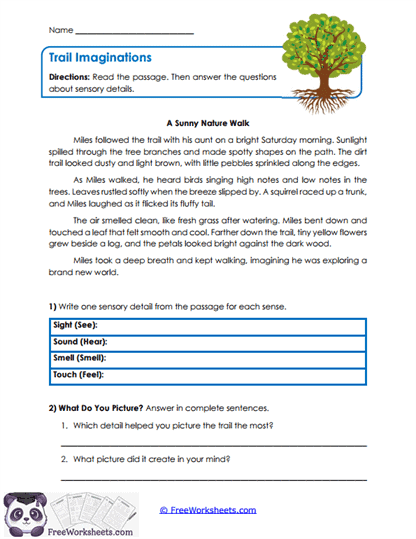
This worksheet is a sensory detail reflection activity focused on visualization and comprehension. It helps Grade 3 students connect descriptive language to mental imagery. Learners read a nature passage and identify sensory details for each sense. For example, “soft grass” relates to touch, while “birds singing” relates to sound. The activity builds visualization and comprehension skills.
Curriculum and Grade Alignment
This worksheet is designed for Grade 3 students working on reading comprehension. The goal is to identify sensory details and describe mental imagery. Students should already understand basic descriptive language. This skill supports deeper literary analysis and writing. It aligns with CCSS.ELA-LITERACY.RL.3.7 and TEKS 3.8(B).
Student Tasks
On this worksheet, students will read a passage about a nature walk. They identify one sensory detail for each sense. Students then answer questions about visualization. They describe what they pictured while reading. The activity encourages reflection and comprehension.
Common Challenges and Misconceptions
Students may struggle to identify details for each sense. Some might give vague or incomplete answers. Others may find it difficult to describe mental images. Misunderstanding visualization is common. Teachers should model how to create mental pictures.
Implementation Guidance
Teachers can use this worksheet during lessons on visualization strategies. It works well for guided reading or independent practice. Parents can use it to support comprehension at home. Discussing mental images enhances understanding. Repeated practice builds confidence.
Details and Features
The worksheet includes a descriptive passage and structured response sections. It provides space for both identification and reflection. The layout is clear and student-friendly. It is printable and suitable for classroom use. The design supports comprehension and creativity.