
About This Worksheet
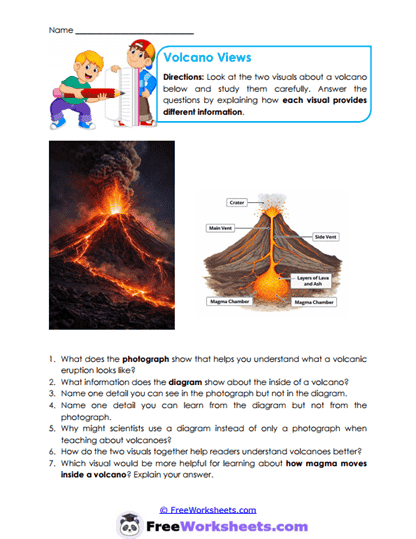
This worksheet helps students understand that different types of visuals serve different purposes. Students compare a dramatic photograph of an erupting volcano with a scientific diagram showing the inside structure of a volcano. By examining both visuals, students learn that photographs and diagrams communicate information in different ways.
The photograph shows what a volcanic eruption looks like in real life. Students can observe lava, smoke, fire, and the power of the eruption. The diagram, however, reveals information that cannot be seen from the outside, including magma chambers, vents, and underground structures. Together, these visuals provide a more complete understanding of the topic.
This is an important lesson because students regularly encounter multiple visual formats in science and informational texts. Learning to recognize the strengths and limitations of different visuals helps students become more effective readers and learners.
Parents often notice that students look at pictures quickly and move on. This worksheet encourages students to slow down and ask what each visual teaches that another visual cannot. This deeper level of analysis strengthens both reading comprehension and scientific thinking.
Curriculum and Grade Alignment
This worksheet is designed for Grade 6 students studying visual literacy, diagrams, and informational texts. Students compare visual formats and analyze how each contributes to understanding a topic. This activity aligns with CCSS RI.6.7.
Student Tasks
Students compare a photograph and a diagram, identify unique information provided by each, and explain how the visuals work together to improve understanding.
Common Challenges and Misconceptions
Students may assume that one visual is better than the other. Encourage them to recognize that each visual provides different types of information that are valuable for learning.
Implementation Guidance
Teachers can use this worksheet during science units involving Earth science, geology, or informational reading. Parents can discuss how diagrams often reveal information that photographs cannot show.
Details and Features
The worksheet combines visual comparison, scientific literacy, informational reading, and evidence-based analysis.