
About This Worksheet
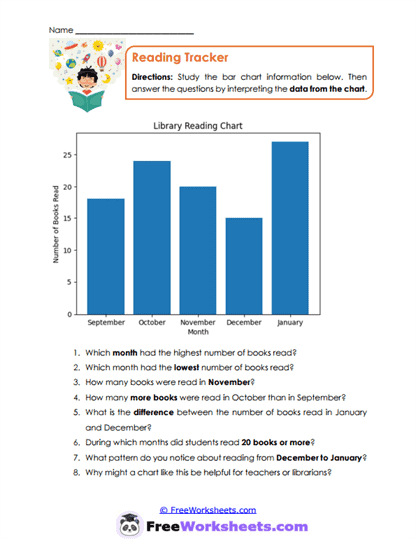
This worksheet helps students develop the important skill of reading and interpreting data from a chart. Students study a library reading chart that shows the number of books read across several months. They answer questions that require them to identify values, compare data, find trends, and explain what the chart reveals.
Charts are commonly used in nonfiction texts because they allow readers to see information quickly and clearly. Instead of reading several paragraphs of statistics, students can examine a visual display and identify patterns at a glance. This worksheet teaches students how to move beyond simply reading numbers and begin thinking about what those numbers mean.
As students work through the questions, they practice comparing months, finding increases and decreases, and recognizing overall trends. These skills support reading comprehension while also strengthening critical thinking and data analysis abilities that are useful across many subjects.
Curriculum and Grade Alignment
This worksheet is designed for Grade 6 students studying visual information, charts, and data interpretation. Students analyze information presented visually and draw conclusions from the data. This activity aligns with CCSS RI.6.7.
Student Tasks
Students interpret a bar chart, answer questions about the data, compare values, identify trends, and explain patterns shown in the visual.
Common Challenges and Misconceptions
Students may focus on individual numbers without considering the larger pattern. Encourage them to look at how the data changes from month to month and what those changes might suggest.
Implementation Guidance
Teachers can use this worksheet during lessons involving graphs, charts, and informational texts. Parents can help students connect these skills to real-life examples such as weather graphs, sports statistics, or school reports.
Details and Features
The worksheet develops graph-reading skills, data analysis, comparison, and evidence-based reasoning.