
About This Worksheet
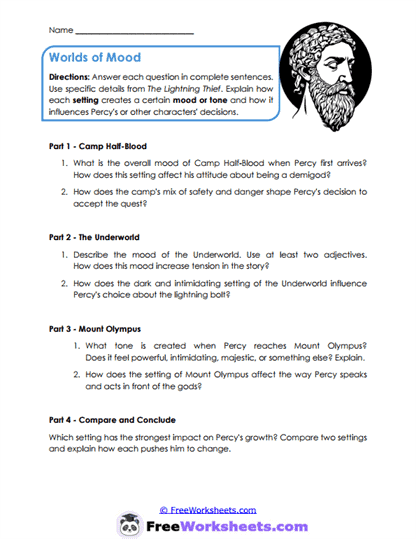
This worksheet focuses on how setting creates mood and influences character decisions. In The Lightning Thief, Percy Jackson travels through locations that feel exciting, dangerous, mysterious, and powerful. Sixth-grade students strengthen literary analysis skills when they examine how authors use setting to build atmosphere and shape events. This activity encourages readers to think about the relationship between place, mood, and character development. Students learn that settings do more than provide a backdrop-they actively influence the story.
Curriculum and Grade Alignment
This worksheet is designed for Grade 6 students studying setting, mood, and literary analysis. The primary learning goal is analyzing how settings affect characters and plot development. Students should already understand basic story elements and descriptive language. The next progression involves evaluating how mood contributes to theme and character growth. This activity aligns with CCSS RL.6.3, RL.6.4, and RL.6.5.
Student Tasks
Students analyze several major settings from the novel, including Camp Half-Blood, the Underworld, and Mount Olympus. Learners describe the mood created by each setting and explain how those moods affect Percy’s choices and development. Students compare settings and determine which has the strongest impact on Percy’s growth. Responses require textual evidence and thoughtful explanation.
Common Challenges and Misconceptions
Many students describe settings physically but do not explain their emotional impact. Some learners identify mood words without supporting them with details. Others focus on action rather than atmosphere. Readers sometimes overlook how settings influence decisions and behavior. Teachers should encourage students to connect setting details to character experiences.
Implementation Guidance
Teachers can use this worksheet during lessons on setting, mood, or fantasy literature. Parents may discuss how different places can create different feelings in real life. Homeschool educators can compare settings across multiple fantasy novels. The worksheet encourages students to see how authors use setting as a storytelling tool.
Details and Features
The worksheet includes setting analysis, mood evaluation, character connections, and comparative thinking. Students support responses with evidence and descriptive details. Reflection questions encourage deeper literary understanding. The printable design supports classroom instruction, homework assignments, intervention groups, and homeschool learning. Its focus on setting helps students appreciate author craft.