
About This Worksheet
This worksheet focuses on identifying the theme or lesson of a literary text and supporting that theme with evidence. Theme is the important message or lesson that readers learn from a story. Third-grade students develop deeper comprehension when they connect story events to larger life lessons. For example, a story about returning a lost item may teach the importance of honesty. This activity helps readers move beyond what happened in the story to understand what it means.
Curriculum and Grade Alignment
This worksheet is designed for Grade 3 students studying literary themes and comprehension. The primary learning goal is identifying a story’s lesson and supporting it with evidence from important events. Students should already be able to summarize stories and identify major plot points. The next progression involves comparing themes across multiple texts. This activity aligns with CCSS RL.3.2 and supports TEKS 3.8A by helping students determine themes in literary works.
Student Tasks
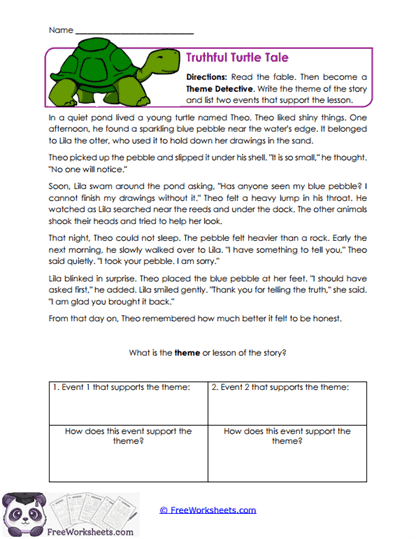
On this worksheet, students will read a fable about a turtle who takes something that does not belong to him. They will identify the theme or lesson of the story. Learners must select two events that support the theme and explain how each event contributes to the lesson. Students connect actions and consequences to the overall message. The activity encourages evidence-based literary analysis.
Common Challenges and Misconceptions
Many students confuse the topic of the story with its theme. Some learners identify an event correctly but struggle to explain how it supports the lesson. Others focus on one detail instead of considering the story as a whole. Readers sometimes choose a theme that sounds positive but is not supported by evidence. Teachers should encourage students to think about what the main character learned by the end of the story.
Implementation Guidance
Teachers can use this worksheet during lessons on theme and moral lessons in literature. It works well after students have practiced identifying story events and character actions. Parents may discuss how the character’s choices affected the outcome of the story. Homeschool educators can extend learning by comparing the lesson to other fables and folktales. The worksheet helps students connect evidence with deeper meaning.
Details and Features
The worksheet includes a short fable with a clear moral and meaningful character growth. Students complete a structured organizer that links events directly to theme development. The response format encourages explanation rather than simple identification. The printable design is suitable for classroom instruction, homework assignments, intervention groups, and homeschool learning. Its focused approach helps students understand how literary lessons are developed.