
Grade 5 Writing Prompts Worksheets
Strong writing develops through planning, drafting, and revising rather than completing every step at once. These grade 5 writing prompts worksheets guide students through organizing personal narratives, planning opinion essays, and expanding a simple science fair paragraph with specific details. Additional exercises focus on openings, conclusions, transitions, and correcting a rough draft about a museum visit. The free printable PDFs offer targeted practice for developing writers. Encourage students to discuss their ideas before drafting and focus on one improvement at a time during revision.
-
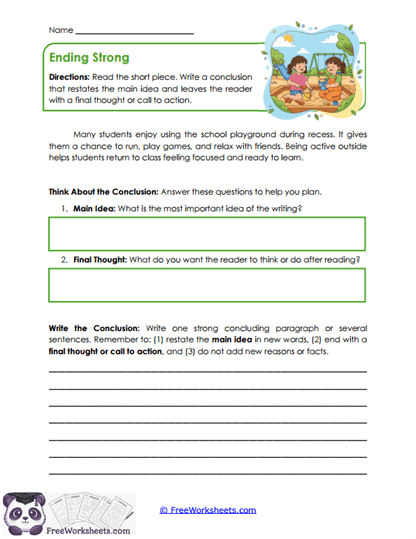
Conclusion Builder
-
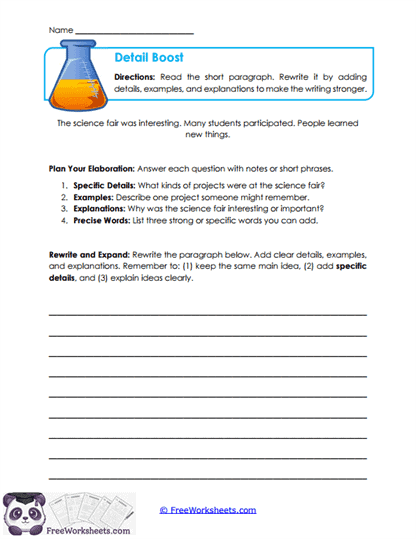
Detail Expansion Practice
-
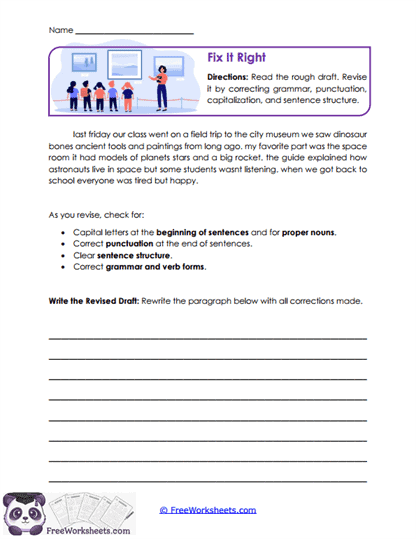
Editing and Revision Practice
-
-
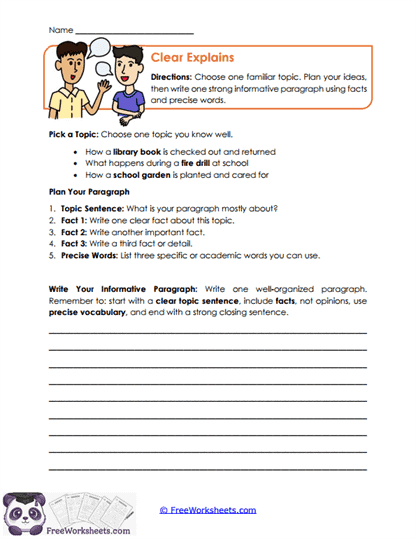
Informative Paragraph Builder
-
Opinion Essay Planner
-
Personal Moment Narrative
-
Point of View Rewrite
-
Prompt Planning Detective
-
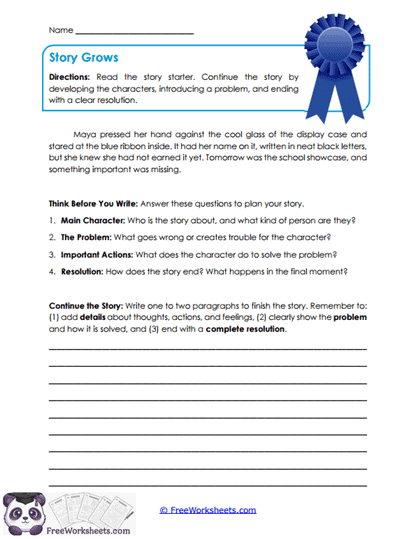
Story Continuation Builder
-
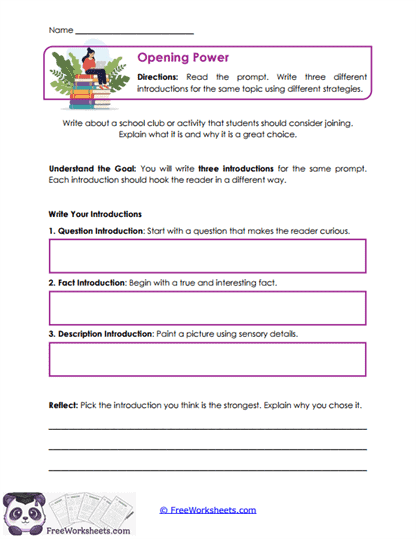
Strong Opening Practice
-
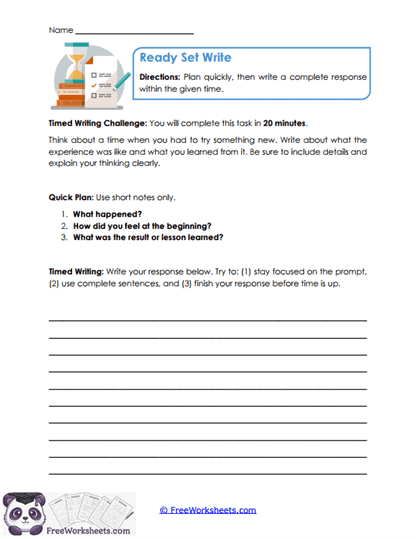
Timed Writing Challenge
-
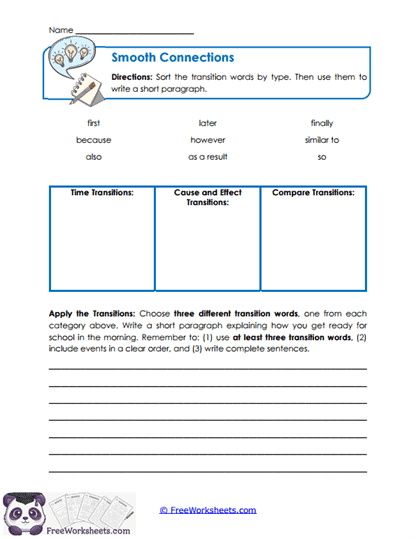
Transition Word Practice
About This Collection of Worksheets
Writing well involves more than getting ideas onto a page. Students need to understand a task, choose a useful structure, develop their thoughts with details, and guide the reader from the opening to a satisfying ending. These skills help them communicate clearly across subjects and for different purposes.
The collection offers prompts and focused exercises for several stages of the writing process. Students plan personal narratives, opinion essays, and informative paragraphs; continue a story; analyze prompts before drafting; and practice introductions, conclusions, and transitions. Other pages focus on changing point of view, expanding details, editing and revising a paragraph, and completing a timed writing task.
Teachers can use these pages for mini-lessons, writing centers, independent practice, homework, revision workshops, or test preparation. Parents and tutors can help students talk through the prompt and organize their ideas before writing. For activities that involve revising, reading the draft aloud can help students notice where a sentence needs more detail or a clearer connection.
Each worksheet gives students a chance to apply a specific writing move, from planning a sequence to choosing a stronger opening or correcting a rough draft. Practicing these moves across different genres helps students understand how purpose and audience shape their choices. They can build a toolkit of strategies to draw on when a new writing task feels unfamiliar.
Paul’s Teacher Tip
Before students draft, ask them to restate the prompt in their own words and identify what the response needs to accomplish. For planning pages, encourage brief notes rather than fully formed sentences so students can keep their ideas flexible. When teaching introductions or conclusions, compare two examples and discuss which one better prepares or satisfies the reader. During revision, have students focus on one area at a time, such as adding specific details or improving transitions. In timed writing practice, set aside a few minutes for planning and a final moment to reread.
Worksheet Collection Skill Spotlights
Conclusion Builder
What Kids Do: Students read a short passage about school playgrounds, identify its most important idea, and decide what they want the reader to think or do. They use those notes to write a concluding paragraph that restates the main idea and ends with a final thought or call to action.
Target Skill: Writing a conclusion helps students bring a piece to a clear close without simply repeating the introduction or adding a new reason. They practice restating an idea in fresh words and giving the reader a meaningful final impression.
Detail Expansion Practice
What Kids Do: Students read a plain paragraph about a science fair, answer four planning questions, and then rewrite it with specific examples, descriptions, explanations, and precise vocabulary. The revised version stays focused on the original topic while giving the reader more to picture and understand.
Target Skill: Elaborating on a central idea helps students develop writing that is clear and informative rather than vague. Choosing details that explain or illustrate the topic builds paragraph development, descriptive skill, and awareness of what readers need to know.
Editing and Revision Practice
What Kids Do: Students review a rough draft about a class trip to a city museum and use a checklist to find issues with capitalization, punctuation, grammar, verb forms, and sentence structure. They then rewrite the paragraph to improve its clarity while preserving the original meaning.
Target Skill: Revising and editing a complete draft encourages students to check several features of writing, not only spelling. Making separate passes for conventions and clarity builds a practical process they can use to improve their own work.
Informative Paragraph Builder
What Kids Do: Students choose a familiar topic, such as checking out a library book, following a fire drill, or caring for a school garden. They plan a topic sentence and three facts, select precise vocabulary, and use their plan to write a focused informative paragraph.
Target Skill: Organizing facts around a clear topic sentence helps students explain a subject without drifting into opinion. Selecting relevant details and specific vocabulary builds informational writing and supports clear explanations across subject areas.
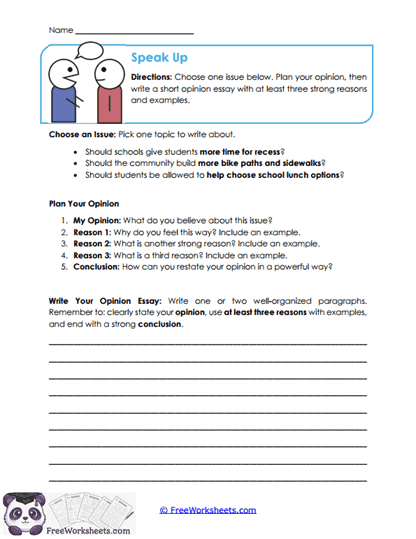
Opinion Essay Planner
What Kids Do: Students choose a school or community issue, such as having more recess or offering more lunch choices, and state their position. They plan three reasons with supporting examples, prepare a conclusion, and turn the plan into one or two developed paragraphs.
Target Skill: Planning an opinion before drafting helps students build an argument that is organized and supported. Developing distinct reasons, adding examples, and reinforcing the position in a conclusion strengthen persuasive writing and written reasoning.
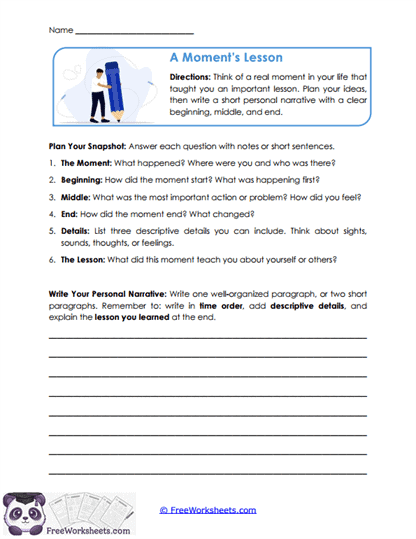
Personal Moment Narrative
What Kids Do: Students choose one meaningful experience, plan its beginning, middle, and end, and note details about what they saw, heard, thought, or felt. They then write one well-organized paragraph or two short paragraphs that tell the event in sequence and explain what they learned.
Target Skill: Focusing on one specific moment helps students shape a personal narrative with a clear arc. Including sequence, sensory details, feelings, and reflection builds storytelling and helps students connect an experience to a meaningful lesson.
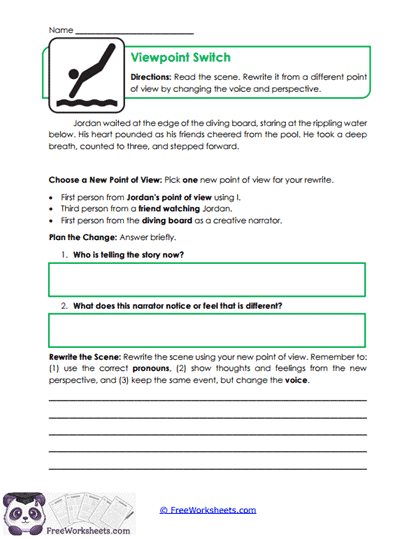
Point of View Rewrite
What Kids Do: Students read a scene about Jordan standing on a diving board and rewrite the same moment from a different narrator’s perspective. They choose a point of view, plan how the narrator might respond, and adjust pronouns, details, thoughts, and feelings in the new version.
Target Skill: Rewriting from another perspective helps students see how a narrator shapes what readers notice and feel. Maintaining the central event while adapting the narration builds control of point of view, pronoun use, and narrative voice.
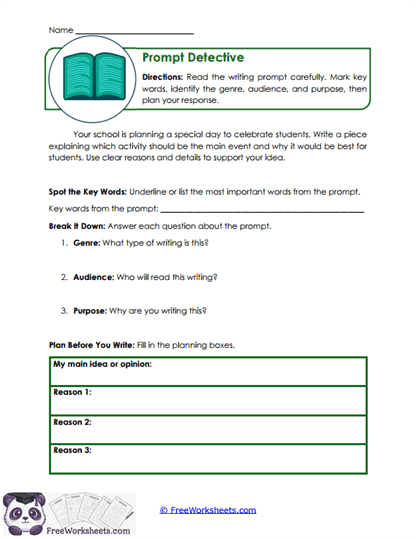
Prompt Planning Detective
What Kids Do: Students analyze a prompt asking them to recommend a school celebration activity. They identify key words, genre, audience, and purpose, then plan a main idea or opinion and three supporting reasons before beginning a draft.
Target Skill: Breaking down a prompt helps students understand the task before they start writing. Identifying who will read the response and what it should accomplish leads to more focused planning and keeps supporting reasons connected to the assignment.
Story Continuation Builder
What Kids Do: Students read a story starter about Maya at a school showcase, where she discovers something important is missing. They plan the character, problem, key actions, and resolution, then write one or two paragraphs that continue the story and bring it to a complete ending.
Target Skill: Continuing an existing story teaches students to build on established details rather than introduce unrelated events. Developing a logical problem and resolution strengthens narrative structure, character development, and continuity.
Strong Opening Practice
What Kids Do: Students respond to a prompt recommending a school club or activity by writing three different introductions: one that begins with a question, one with an interesting fact, and one with sensory description. They choose the strongest opening and explain their choice.
Target Skill: Experimenting with several opening strategies helps students understand how an introduction can engage a reader. Comparing the results builds awareness of audience and purpose and encourages more deliberate choices when beginning a longer piece.
Timed Writing Challenge
What Kids Do: Students quickly plan a response about a time they tried something new, noting what happened, how they felt, and what they learned. They use those notes to write a complete response within 20 minutes, staying focused on the prompt and finishing with a takeaway.
Target Skill: Working within a set time helps students practice planning efficiently and sustaining a complete response. Organizing a personal experience, writing clearly, and including a lesson builds confidence with on-demand writing and assessment-style tasks.
Transition Word Practice
What Kids Do: Students sort transition words into time, cause-and-effect, and comparison categories. They select one word from each group and use the three transitions in a short paragraph about getting ready for school, connecting the events and ideas in a clear order.
Target Skill: Recognizing what transitions signal helps students show how ideas relate to one another. Sorting and applying words for sequence, cause and effect, and comparison builds paragraph flow and makes writing easier for readers to follow.