
Fractions And Mixed Numbers Worksheets
These 5th Grade worksheets help students build confidence with fraction concepts, equivalent fractions, and mixed-number conversions. These free, ready-to-print worksheets are provided in PDF format for immediate classroom use during lessons, homework, centers, or intervention support. Students develop curriculum aligned skills including simplifying fractions, comparing fractions, and converting mixed numbers using visual and numerical strategies.
About This Collection of Worksheets
This worksheet collection gives Grade 5 students comprehensive practice with fractions, mixed numbers, equivalent fractions, and fraction reasoning skills. Learners explore foundational concepts such as numerators, denominators, number lines, and fraction models before progressing into conversions, simplification, comparison, and ordering activities. The collection is carefully structured to help students strengthen both conceptual understanding and procedural fluency through repeated practice and visual support.
Teachers can use these worksheets during whole-group instruction, guided math groups, review lessons, or targeted intervention sessions. Several activities encourage students to explain mathematical reasoning, identify equivalent fractions, analyze visual fraction models, and organize fraction values accurately. Students also practice converting between improper fractions and mixed numbers while strengthening multiplication, division, and number sense skills connected to upper elementary math standards.
The printable format makes these worksheets ideal for classroom instruction, tutoring programs, homeschool lessons, and independent practice routines. Clear layouts, scaffolded examples, and engaging visuals help learners focus on one skill at a time without becoming overwhelmed. Across the collection, students develop strong Grade 5 fraction fluency aligned to Common Core standards involving fraction representation, equivalent fractions, simplification, comparison, and mixed-number understanding.
Paul’s Teacher Tip
Students often develop stronger fraction understanding when they can connect visual models to numerical fraction values. Encourage learners to draw pictures, use number lines, or build fraction models before solving more abstract fraction problems. Repeated exposure to equivalent fractions helps students recognize patterns that later support comparison, simplification, and fraction operations. During mixed-number lessons, remind students to think about wholes and fractional parts separately before converting between forms. Fraction strips, circles, and hands-on manipulatives can make difficult concepts much easier for struggling learners to understand. Short daily fraction review activities can help students build long-term confidence and procedural fluency with mixed numbers and equivalent fractions.
Worksheet Collection Skill Spotlights
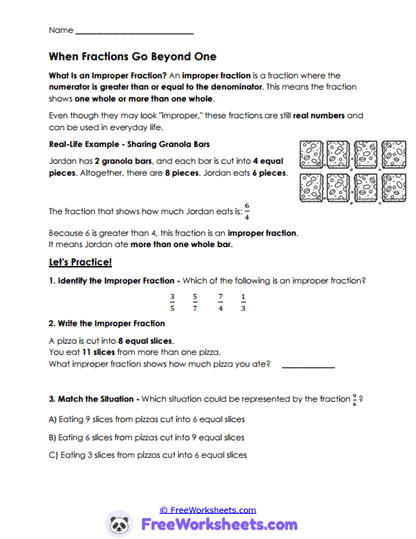
Beyond One
- What Kids Do:
Students identify improper fractions and explore how fractions can represent values greater than one whole through real-world examples involving pizzas, snack bars, and visual fraction situations. Learners connect fraction notation to quantities larger than a single whole object. - Target Skill:
Students strengthen understanding of improper fractions and fraction representation aligned to Common Core Grade 5 standards. The worksheet reinforces conceptual understanding of fractions greater than one whole while preparing students for mixed-number conversions and advanced fraction operations.
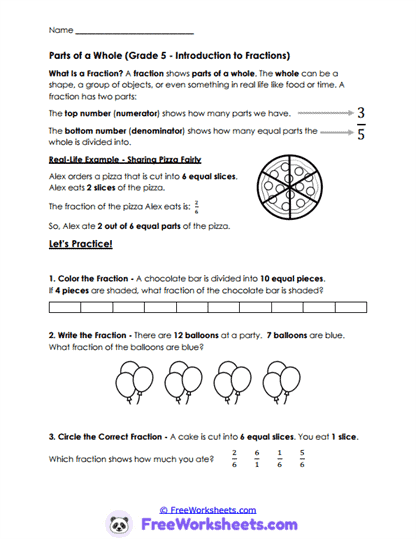
Fraction Basics
- What Kids Do:
Students learn foundational fraction concepts by identifying numerators, denominators, and shaded parts of visual models. Learners connect fractions to real-world examples such as pizzas and candy bars while practicing correct fraction notation and part-to-whole reasoning. - Target Skill:
Students develop introductory fraction understanding aligned to Grade 5 fraction standards by recognizing equal parts, reading fractions correctly, and interpreting visual models. The worksheet reinforces essential vocabulary and foundational fraction reasoning skills.
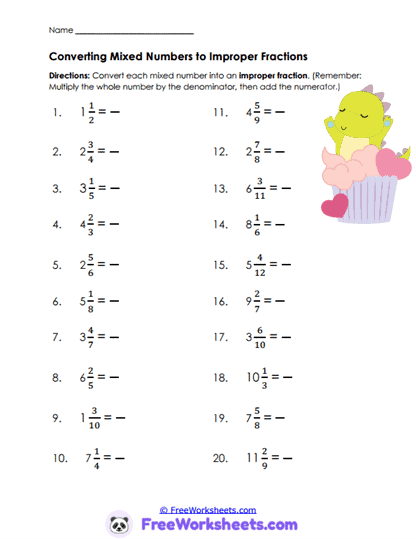
Fraction Changes
- What Kids Do:
Students convert mixed numbers into improper fractions by multiplying whole numbers and denominators before adding numerators. Learners complete step-by-step conversions while practicing careful organization and checking their fraction work for accuracy. - Target Skill:
Students strengthen mixed-number conversion skills aligned to Common Core fraction representation standards. The worksheet reinforces understanding of fraction structure, multiplication relationships, and improper fraction notation while supporting procedural fluency.
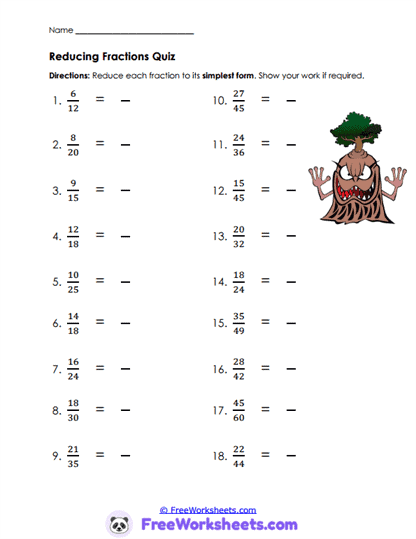
Fraction Checkup
- What Kids Do:
Students simplify fractions into lowest terms by identifying common factors and dividing numerators and denominators correctly. Learners solve independent reduction problems and practice recognizing when fractions are fully simplified. - Target Skill:
Students build fluency with simplifying fractions and equivalent fraction reasoning aligned to Grade 5 standards. The worksheet supports multiplication fact fluency, factor recognition, and accurate fraction simplification procedures.
Fraction Pairs
- What Kids Do:
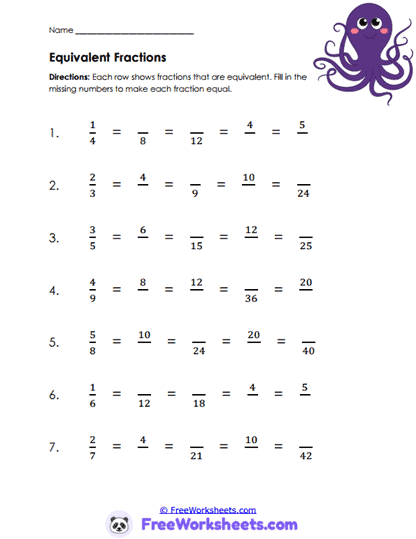
Students complete sets of equivalent fractions by finding missing numerators and denominators using multiplication and division patterns. Learners analyze fraction relationships and determine how fractions remain equal despite different-looking numbers. - Target Skill:
Students strengthen understanding of equivalent fractions aligned to Common Core fraction standards by generating equal fraction values accurately. The worksheet reinforces multiplication reasoning, fraction relationships, and pattern recognition skills.
Fraction Sorting
- What Kids Do:
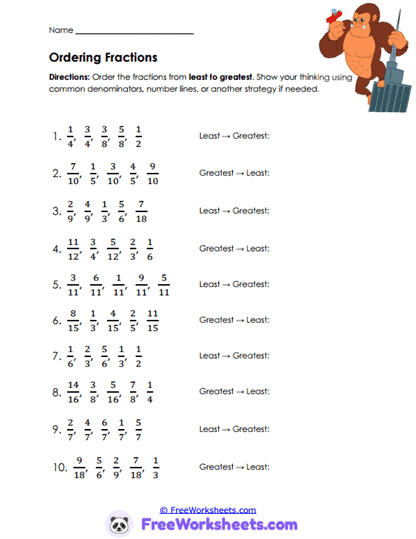
Students compare and arrange groups of fractions from least to greatest or greatest to least using fraction reasoning strategies. Learners organize sequences carefully while applying benchmark fractions, common denominators, and comparison skills. - Target Skill:
Students improve fraction ordering fluency and comparison reasoning aligned to Grade 5 standards. The worksheet reinforces equivalent fraction understanding, logical sequencing, and accurate analysis of fraction magnitude.
Line Parts
- What Kids Do:
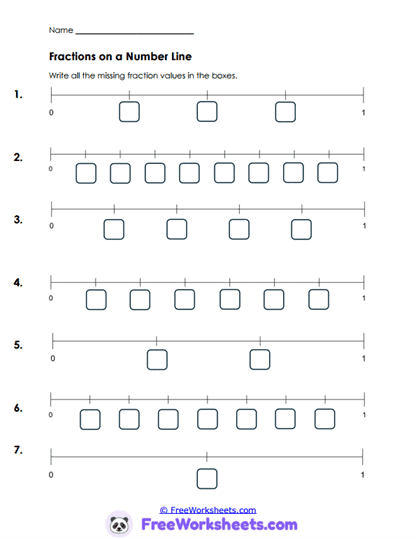
Students identify missing fractions on number lines by analyzing equal spaces between zero and one. Learners study intervals carefully and determine which fraction belongs at each labeled location on the line. - Target Skill:
Students develop stronger number sense and fraction visualization aligned to Common Core fraction representation standards. The worksheet reinforces understanding that fractions are numbers with exact positions and measurable values.
Matching Pieces
- What Kids Do:
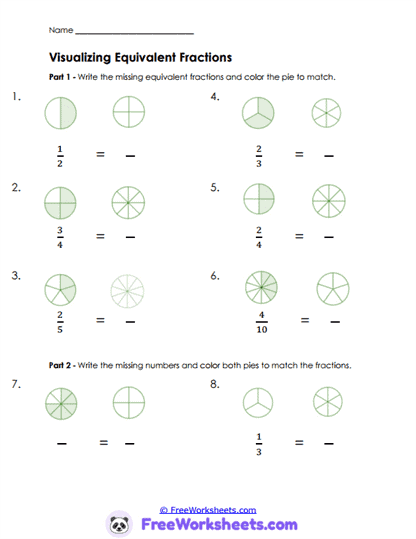
Students study shaded pie models and fraction circles to identify equivalent fractions visually. Learners compare visual representations, complete matching activities, and color fraction models to demonstrate equal values through pictures. - Target Skill:
Students strengthen conceptual understanding of equivalent fractions aligned to Grade 5 standards through visual reasoning and fraction modeling. The worksheet supports connections between numerical fractions and shaded representations.
Mixed Forms
- What Kids Do:
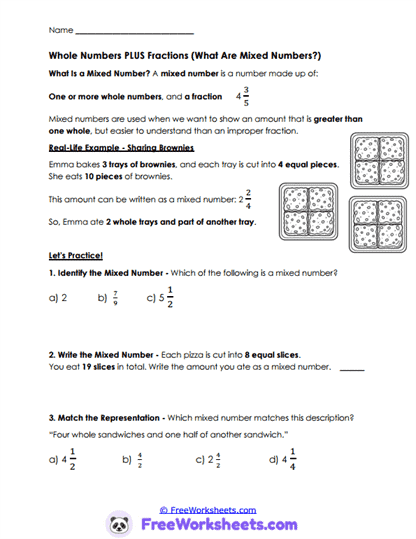
Students identify and interpret mixed numbers using real-world examples involving food and sharing situations. Learners practice reading, writing, and recognizing mixed numbers that combine whole numbers with fractional parts. - Target Skill:
Students build foundational understanding of mixed numbers and fraction representation aligned to Common Core standards. The worksheet reinforces how whole numbers and fractions work together to represent quantities greater than one.
Model Match
- What Kids Do:
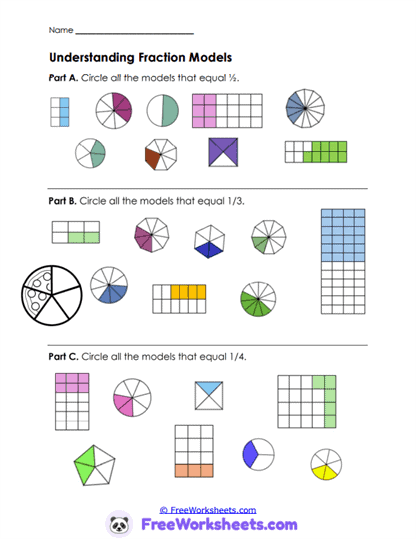
Students examine groups of visual fraction models and determine which pictures correctly match target fractions such as one half, one third, and one fourth. Learners compare shaded portions carefully to identify equivalent values. - Target Skill:
Students strengthen visual fraction reasoning and equivalent fraction recognition aligned to Grade 5 standards. The worksheet reinforces understanding of equal partitioning, fraction size relationships, and picture-based mathematical analysis.
Simple Shares
- What Kids Do:
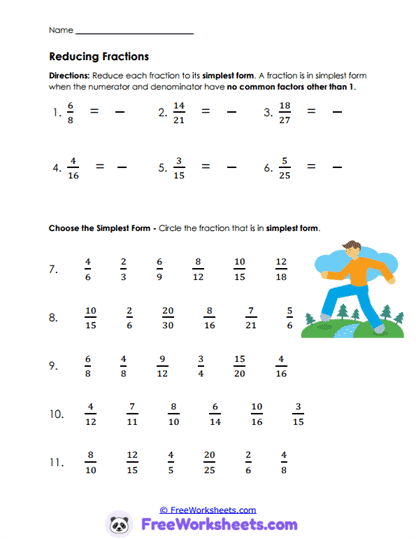
Students reduce fractions into simplest form by identifying common factors and dividing numerators and denominators equally. Learners determine which fractions are already simplified and practice checking for remaining common factors. - Target Skill:
Students improve fraction simplification fluency aligned to Common Core equivalent fraction standards. The worksheet supports understanding of common factors, lowest terms, and efficient fraction reduction strategies.
Whole Conversions
- What Kids Do:
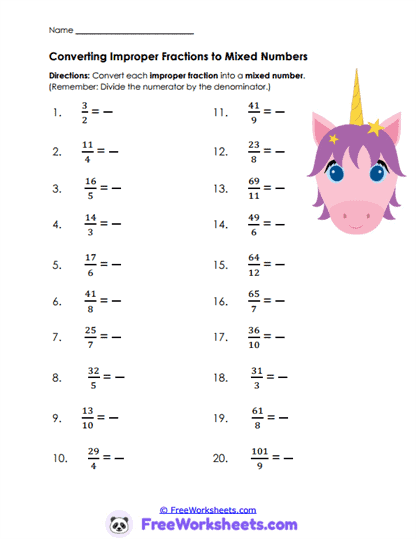
Students convert improper fractions into mixed numbers by dividing numerators by denominators and interpreting remainders correctly. Learners write answers in mixed-number form while simplifying fractional remainders when necessary. - Target Skill:
Students strengthen improper fraction conversion skills aligned to Grade 5 fraction representation standards. The worksheet reinforces division reasoning, mixed-number notation, and understanding of fractions greater than one whole.