
Compare Fractions Worksheets
These 5th Grade worksheets help students strengthen fraction reasoning, comparison strategies, and number sense with engaging practice activities. These free, ready-to-print worksheets are provided in PDF format for immediate classroom use during lessons, centers, homework, or intervention support. Students develop curriculum aligned skills including comparing fractions, ordering fractions, and using benchmark fractions with confidence.
About This Collection of Worksheets
This worksheet collection helps Grade 5 students build a deeper understanding of fraction size and comparison strategies through a variety of engaging activities. Students compare fractions with common denominators, matching numerators, unlike fractions, visual models, and ordered fraction sets while developing stronger mathematical reasoning skills. The collection gradually increases in complexity so learners can strengthen confidence and procedural fluency step by step.
Teachers can use these worksheets to introduce fraction comparison concepts, reinforce classroom instruction, or provide targeted review and intervention support. Several activities encourage students to explain reasoning, analyze common misconceptions, and apply different comparison methods depending on the problem type. Students also strengthen critical-thinking skills by connecting visual models, benchmark fractions, and equivalent fractions to comparison tasks.
The printable format makes these worksheets easy to use in classrooms, homeschool settings, tutoring sessions, and independent practice routines. Clear layouts, repeated practice, and kid-friendly visuals help students remain focused while building long-term fraction fluency. Across the collection, learners develop important Grade 5 skills aligned to Common Core standards related to fraction comparison, mathematical reasoning, and number relationships.
Paul’s Teacher Tip
Students often understand fraction comparisons more quickly when they can connect visual models to numerical fractions. Encourage learners to explain why a fraction is larger or smaller instead of only choosing a comparison symbol. Benchmark fractions such as 1/2 and 1 can help students estimate and compare unlike fractions more efficiently. Fraction strips, number lines, and shaded models are especially useful for students who struggle with denominator reasoning. Remind students that larger denominators do not always mean larger fractions because the whole is divided into smaller pieces. Frequent mixed review activities help students choose the correct comparison strategy independently and improve long-term retention.
Worksheet Collection Skill Spotlights
Equal Pieces
- What Kids Do:
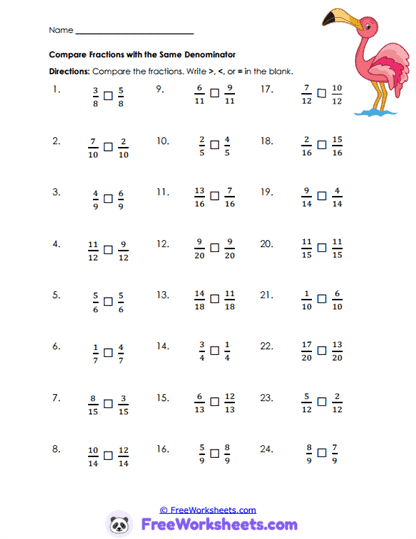
Students compare fractions with matching denominators by focusing on the numerators to decide which fraction is greater, smaller, or equal. Learners write comparison symbols between fraction pairs and practice interpreting fraction relationships accurately through repeated comparison exercises. - Target Skill:
Students strengthen Common Core aligned fraction comparison skills by understanding how numerators affect fraction size when denominators remain the same. The worksheet reinforces fraction vocabulary, mathematical reasoning, and accurate use of greater than, less than, and equal symbols.
Fraction Matches
- What Kids Do:
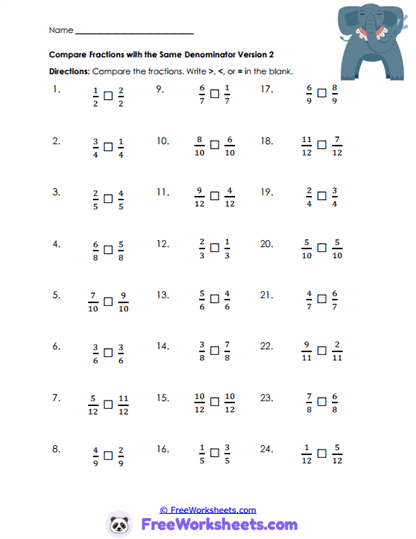
Students compare fractions with common denominators and determine whether each fraction is greater than, less than, or equal to the other fraction. Learners carefully analyze numerators, complete comparison statements, and improve accuracy through focused repeated practice. - Target Skill:
Students build fluency with comparing fractions that share equal-sized parts while reinforcing understanding of numerators and denominators. The worksheet supports Common Core aligned fraction reasoning, symbol usage, and procedural confidence with comparison tasks.
Fraction Meaning
- What Kids Do:
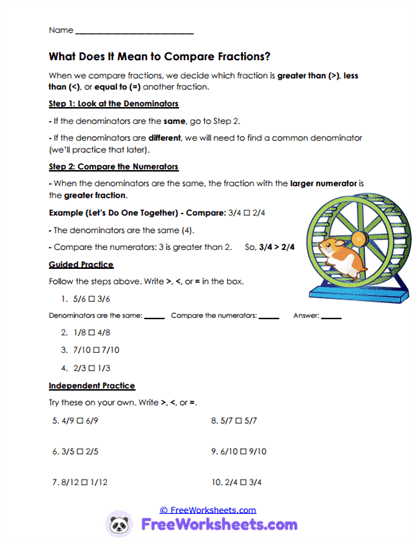
Students read guided explanations about fraction comparisons before completing practice problems using numerators, denominators, and comparison symbols. Learners work through teacher-supported examples and apply comparison strategies independently during fraction exercises. - Target Skill:
Students strengthen foundational understanding of fraction comparison concepts aligned to Grade 5 standards. The worksheet reinforces mathematical vocabulary, fraction reasoning, and conceptual understanding of how fraction size changes depending on numerators and denominators.
Fraction Measures
- What Kids Do:
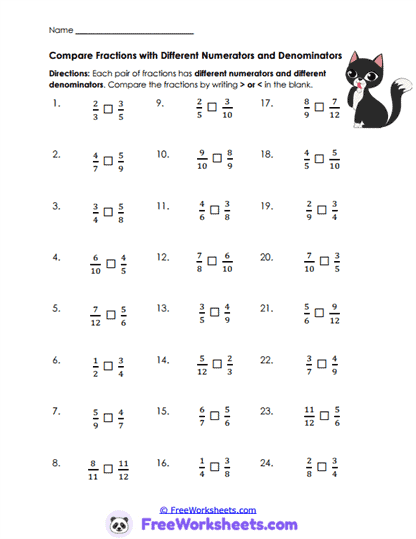
Students compare unlike fractions with different numerators and denominators using strategies such as benchmark fractions, equivalent fractions, and common denominators. Learners analyze each fraction pair carefully before selecting the correct comparison symbol. - Target Skill:
Students develop advanced fraction reasoning skills aligned to Common Core fraction standards by comparing unlike fractions accurately. The worksheet supports flexible problem-solving, equivalent fraction understanding, and confidence with multi-step comparison strategies.
Fraction Mixups
- What Kids Do:
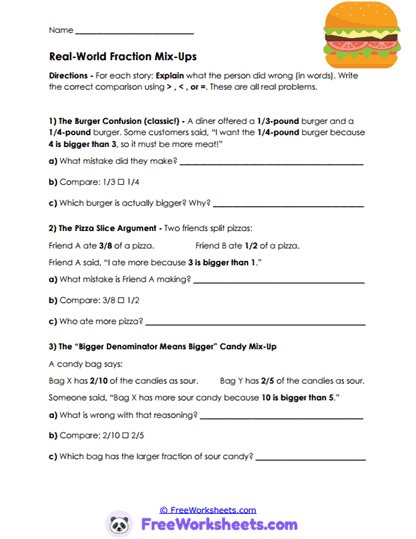
Students read real-world fraction comparison mistakes and explain why the reasoning is incorrect before solving the problem accurately. Learners connect mathematical thinking to everyday situations while practicing written explanations and fraction analysis. - Target Skill:
Students strengthen mathematical communication and critical-thinking skills by identifying common fraction misconceptions and explaining correct comparison strategies. The worksheet supports Common Core reasoning standards and deeper understanding of fraction relationships.
Fraction Order
- What Kids Do:
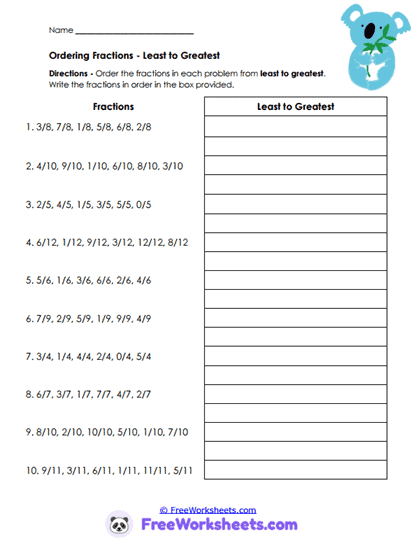
Students compare groups of fractions and arrange them from least to greatest using comparison strategies and fraction reasoning. Learners organize fractions carefully, check their sequences for accuracy, and apply benchmark fraction thinking during ordering activities. - Target Skill:
Students build fluency with ordering fractions and comparing multiple values at once while strengthening understanding of equivalent fractions and fraction size relationships. The worksheet reinforces Common Core aligned comparison and number sense skills.
Fraction Ranking
- What Kids Do:
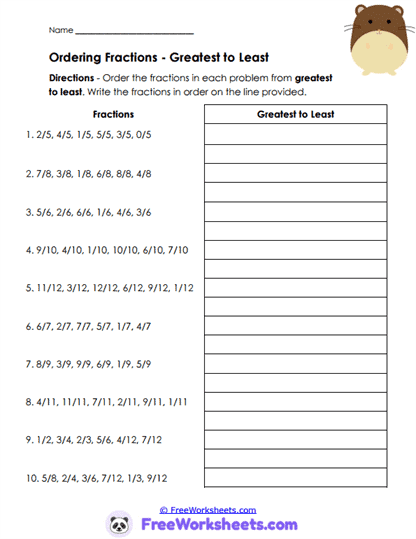
Students arrange groups of fractions from greatest to least by comparing fraction values carefully before placing them in descending order. Learners use benchmark fractions, common denominators, and reasoning strategies to organize each set accurately. - Target Skill:
Students strengthen fraction ordering skills aligned to Grade 5 standards while improving comparison fluency and mathematical organization. The worksheet reinforces understanding of fraction magnitude, equivalent fractions, and logical sequencing strategies.
Fraction Reasoning
- What Kids Do:
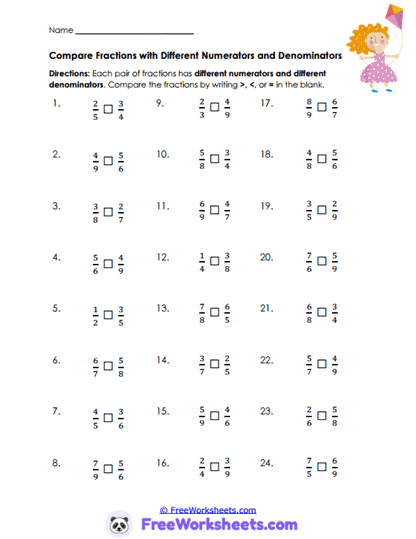
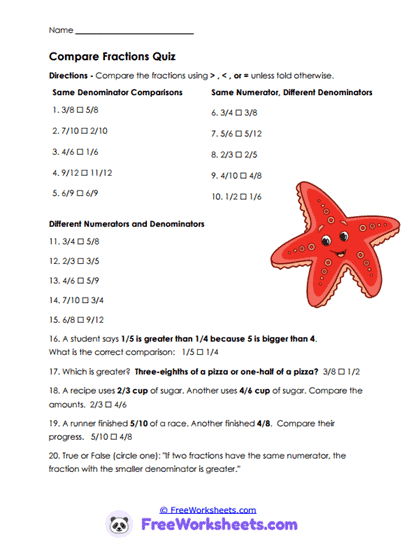
Students compare unlike fractions using greater than, less than, and equal symbols while applying multiple reasoning strategies. Learners analyze fraction values carefully and practice solving comparison problems involving different numerators and denominators. - Target Skill:
Students improve Common Core aligned fraction comparison fluency by using benchmark fractions, common denominators, and visual reasoning methods. The worksheet supports deeper mathematical thinking and accurate comparison of complex fraction pairs.
Fraction Review
- What Kids Do:
Students complete a mixed review of fraction comparison skills involving common denominators, unlike fractions, and real-world reasoning situations. Learners apply different strategies depending on the fraction type while strengthening accuracy and flexibility. - Target Skill:
Students reinforce multiple Grade 5 fraction comparison standards by applying a variety of comparison methods independently. The worksheet supports long-term retention, mathematical reasoning, and confidence with mixed fraction comparison activities.
Number Shares
- What Kids Do:
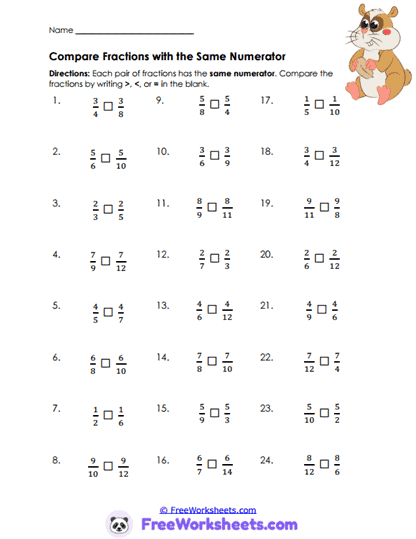
Students compare fractions with matching numerators by focusing on denominator size to determine which fraction is greater or smaller. Learners complete comparison statements and practice understanding how piece size changes fraction value. - Target Skill:
Students strengthen understanding of fraction size relationships and denominator reasoning aligned to Common Core fraction standards. The worksheet reinforces conceptual understanding that smaller denominators create larger fractional pieces of a whole.
Picture Parts
- What Kids Do:
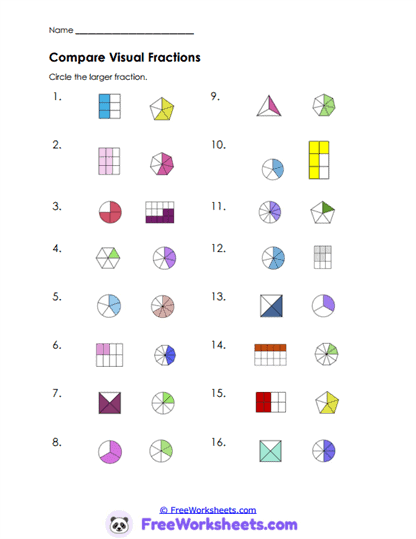
Students compare shaded fraction models using circles, rectangles, and divided shapes to determine which visual fraction is larger. Learners connect visual representations to numerical fraction understanding while strengthening comparison reasoning skills. - Target Skill:
Students build visual fraction reasoning skills aligned to Grade 5 comparison standards by interpreting shaded models and analyzing part-to-whole relationships. The worksheet supports conceptual understanding and visual mathematical thinking.
Visual Choices
- What Kids Do:
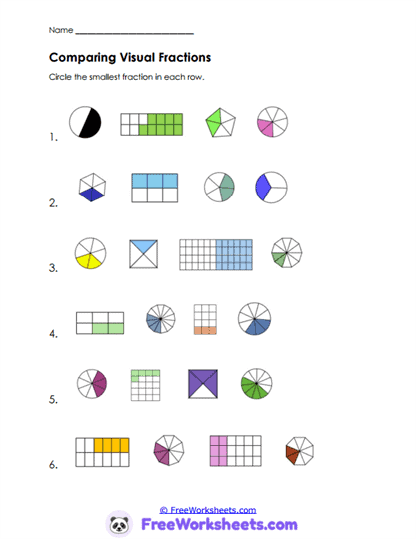
Students examine rows of visual fraction models and identify the smallest fraction represented in each group of shapes. Learners compare shaded areas carefully while practicing visual fraction reasoning and estimation strategies. - Target Skill:
Students strengthen visual comparison fluency and understanding of fraction size relationships using shaded models and part-to-whole reasoning. The worksheet reinforces Common Core aligned comparison skills and deeper fraction sense development.