
About This Worksheet
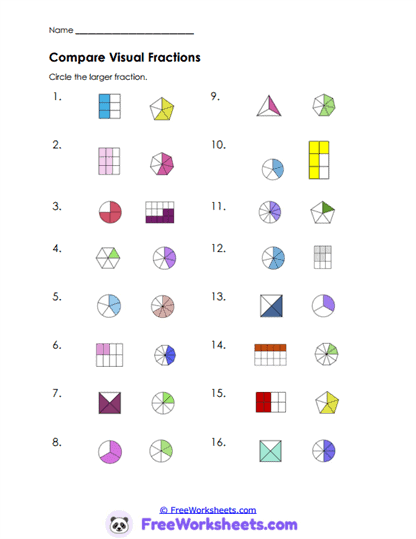
This worksheet helps students compare fractions by using visual fraction models instead of only numbers. Learners study shaded shapes and decide which fraction is larger in each pair. Visual fraction practice strengthens understanding of how fractions represent parts of a whole. For example, a shape shaded 3/4 is larger than a shape shaded 1/2 because more of the whole is covered. This activity supports stronger fraction reasoning through pictures and visual learning.
Curriculum and Grade Alignment
This worksheet focuses on comparing fractions using visual representations and fraction models. Students should already understand basic fraction vocabulary and how shaded parts represent fractions before beginning this activity. The main learning goal is helping learners connect visual models to fraction size and comparison skills. After mastering this skill, students are better prepared to compare numerical fractions without visual supports. The worksheet aligns with Common Core standard 5.NF.A.1 and TEKS 5.3D involving fraction concepts and comparisons.
Student Tasks
On this worksheet, students will
look at pairs of visual fraction models and identify the larger fraction. Students compare shaded sections of circles, rectangles, and other shapes to make decisions. Learners circle the fraction model that represents the greater amount. Several problems encourage students to carefully study how much of each shape is shaded. Students also practice connecting visual representations to fraction understanding.
Common Challenges and Misconceptions
Many students focus only on the number of shaded pieces instead of considering the size of each piece. Some learners become confused when shapes are divided into different numbers of equal parts. Others may rush and overlook which model actually covers more of the whole. Students sometimes struggle to compare unfamiliar fraction models accurately. Teachers can help by reviewing how equal-sized parts work before independent practice.
Implementation Guidance
Teachers can use this worksheet during fraction units, small-group instruction, or math centers. It works especially well for visual learners who benefit from seeing fractions represented with pictures. Parents and homeschool educators may discuss each model aloud with children before students work independently. Fraction circles and manipulatives can provide extra support for learners who need hands-on practice. The worksheet also serves as a strong introduction before moving into symbolic fraction comparisons.
Details and Features
This printable worksheet includes sixteen visual fraction comparison problems. Students compare colorful fraction models using circles, grids, and divided shapes. The page layout is organized clearly so learners can focus on one comparison at a time. Friendly graphics create an engaging appearance while maintaining academic structure. The worksheet is easy to print and suitable for classroom, tutoring, or homeschool instruction.