
Grade 5 Worksheets
Fifth-grade learning requires students to apply increasingly complex reading and mathematical skills with greater independence. These grade 5 worksheets cover fraction operations, long division, powers of ten, and numerical expressions alongside literary analysis and informational reading. Children compare fractional values, work through multi-step calculations, examine character perspectives, and support written responses with textual evidence. The free printable collections provide focused practice for learners preparing for middle school expectations. Select activities based on current learning needs and encourage children to explain their strategies or conclusions before moving forward.
Language Arts
Math
Reading
-
5th Grade Reading Comprehension
-
5th Grade Reading Fluency
-
5th Grade Reading Passages
-
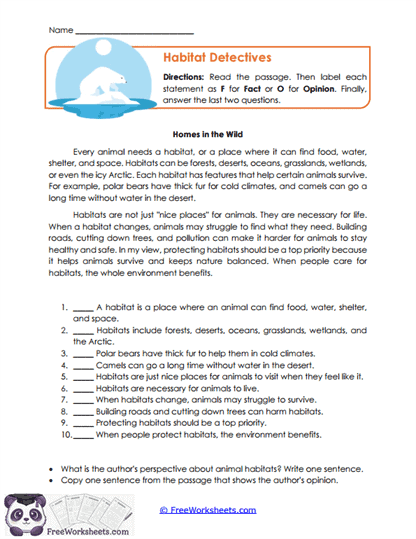
Author's Perspective
-
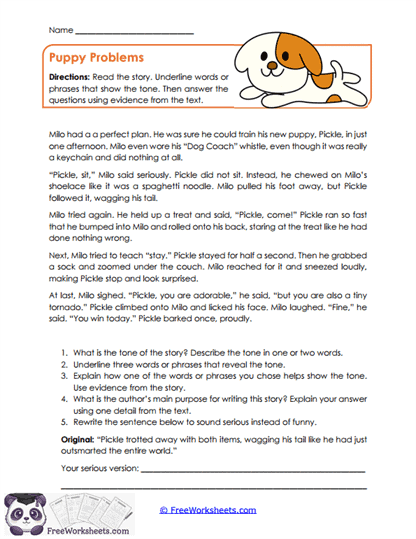
Author's Purpose and Tone
-
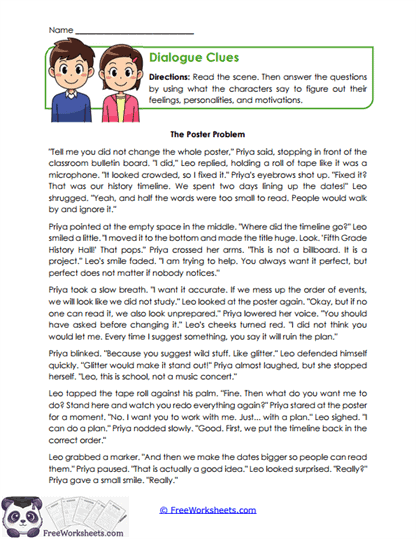
Characters of Stories
-
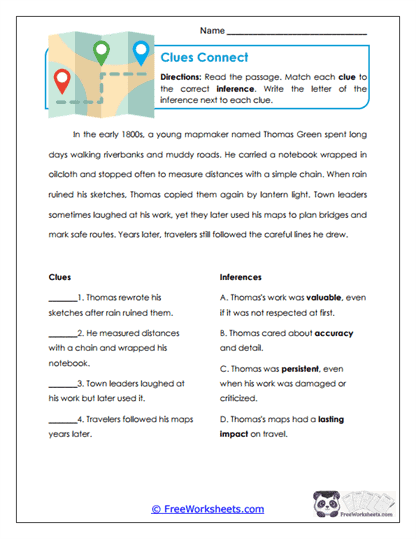
Inference And Theme
-
Informational Texts
-
Literary Devices
-
Literary Texts
-
Main Idea
-
Poetry Elements
-
Sensory Details
-
Story Elements
-
Text Features
-
Text Structure
-
Visual Elements
About This Worksheet Collection
5th Grade is where students begin preparing for the faster pace and increased academic expectations of middle school. Reading assignments become more complex, writing becomes more evidence-based, and math requires stronger problem-solving, reasoning, and accuracy across multiple steps.
This collection focuses on the skills students use most throughout the 5th Grade year: reading comprehension, text evidence, vocabulary, essay writing, fractions, decimals, volume, multi-step math, and analytical thinking. The worksheets are designed to help students strengthen independent learning habits while improving fluency, organization, and critical thinking across subjects.
Students practice interpreting informational texts, analyzing themes and author viewpoints, solving advanced math problems, organizing written responses, and applying academic skills more independently. These printable worksheets help students build the confidence and consistency needed before entering middle school coursework.
Why Teachers Use This Collection
- Text evidence response practice
- Multi-step math review activities
- Fraction and decimal reinforcement
- Reading comprehension skill building
- Essay and paragraph practice
- Vocabulary development worksheets
- Independent classroom work pages
- Small group intervention support
- Low-prep printable resources
- Middle school readiness reinforcement
Why Homeschoolers & Parents Use This Collection
- 5th Grade academic review
- Fraction and decimal practice
- Reading comprehension reinforcement
- Structured writing skill support
- Printable independent learning pages
- Easy daily review activities
- Screen-free educational practice
- Homework and tutoring support
- Critical thinking skill building
- 6th Grade readiness preparation
A Look at the Categories of Worksheets
Language Arts
Grade 5 Language Arts Review
Reviewing essential language arts skills helps children reinforce what they have learned while preparing for more advanced reading and writing challenges. Regular practice with grammar, vocabulary, comprehension, and sentence structure can help your child identify areas where they need additional support. These worksheets strengthen overall literacy skills, build confidence, and encourage greater independence in reading and writing.
Grade 5 Listening & Speaking
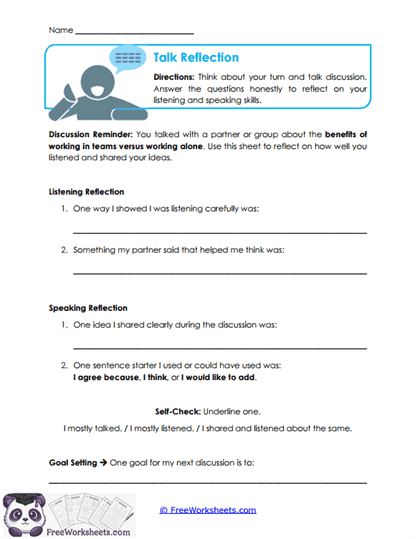
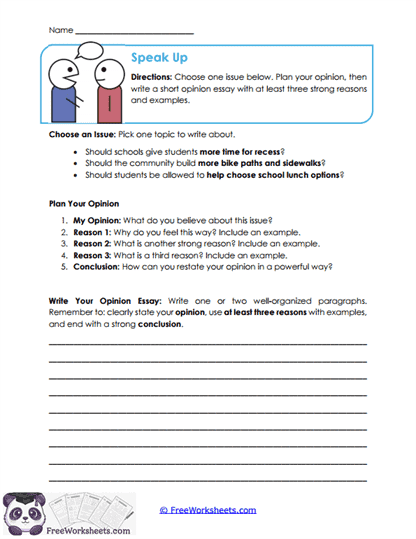
Strong listening and speaking skills help children communicate their ideas clearly while understanding and responding thoughtfully to others. Encourage your child to practice summarizing conversations, asking relevant questions, and explaining their opinions with supporting details. These activities strengthen verbal communication, active listening, critical thinking, and confidence in expressing ideas.
Grade 5 Spelling
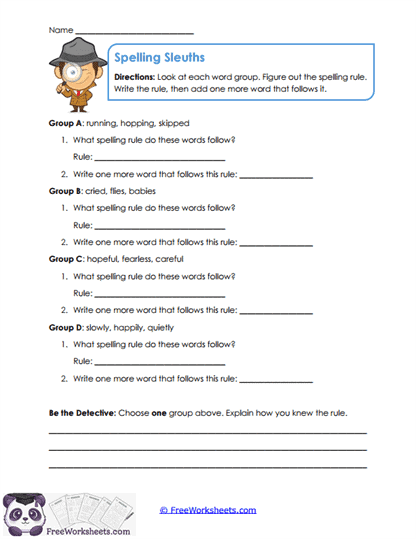
Developing accurate spelling skills helps children become more confident writers while improving their understanding of word patterns and language structure. Encourage your child to break unfamiliar words into syllables, recognize common spelling patterns, and practice using challenging words in sentences. These worksheets strengthen spelling accuracy, word recognition, vocabulary, and written communication skills.
Grade 5 Vocabulary
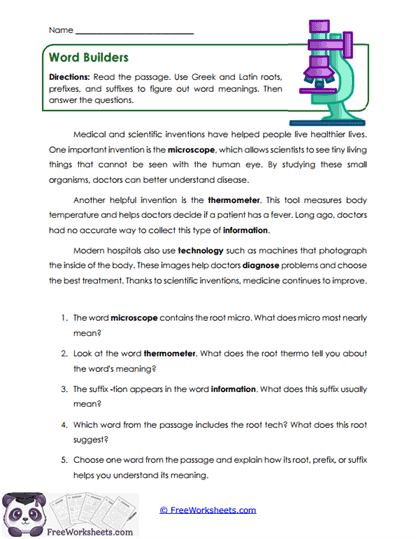
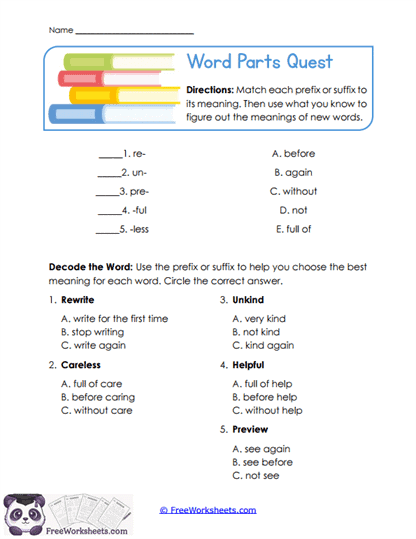
Expanding vocabulary helps children understand increasingly complex texts and express their thoughts with greater precision. A helpful strategy is to encourage your child to use context clues, explore word roots, and practice incorporating unfamiliar words into everyday conversations. These worksheets strengthen word knowledge, reading comprehension, language development, and effective communication skills.
Grade 5 Writing Prompts
Writing prompts encourage children to explore their creativity while learning to organize and communicate their thoughts effectively. Invite your child to brainstorm ideas before writing, develop paragraphs with supporting details, and reread their work to improve clarity and sentence flow. These activities strengthen creative expression, writing fluency, organization, and the ability to develop thoughtful, well-structured responses.
Math
Add And Subtract Fractions
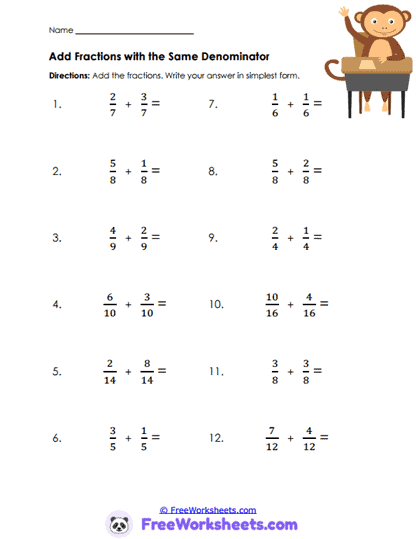
Adding and subtracting fractions helps children understand how parts of a whole can be combined and separated in different ways. A helpful strategy is to use visual models like fraction bars or circles so your child can see why common denominators matter. These activities strengthen fraction sense, mathematical reasoning, and problem-solving skills.
Add And Subtract Mixed Numbers
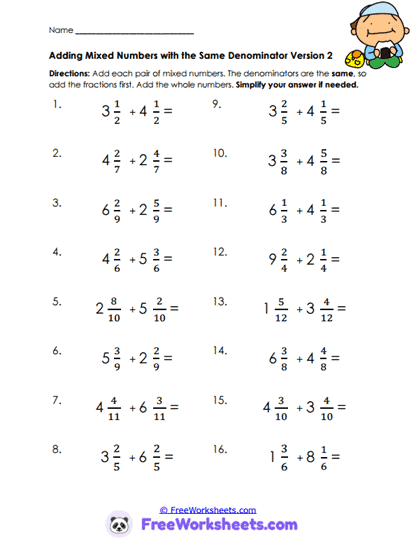
Working with mixed numbers helps children apply fraction skills to more advanced real-world math situations. Encourage your child to convert mixed numbers into improper fractions or use visual models when regrouping becomes confusing. These worksheets strengthen fraction fluency, place value understanding, and computational thinking skills.
Addition And Subtraction
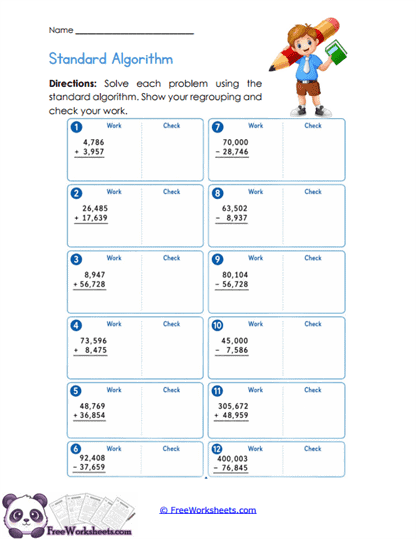
Adding and subtracting larger numbers helps children build confidence with essential calculations used in everyday math. Encourage your child to line up place values carefully and estimate answers before solving to check whether their results are reasonable. These worksheets strengthen addition and subtraction fluency, place value understanding, and computational accuracy.
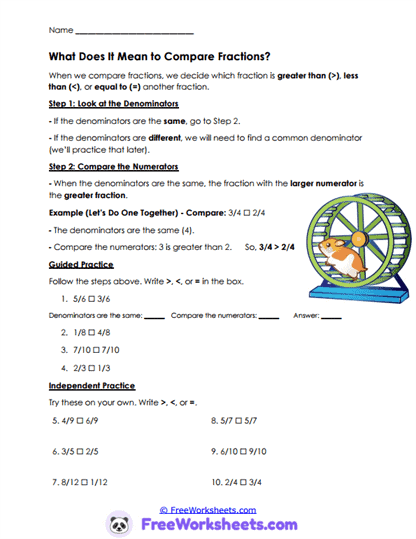
Compare Fractions
Comparing fractions helps children recognize relationships between quantities and understand which values are greater or smaller. Try using number lines or fraction strips so your child can visually compare fractions before solving problems. These activities strengthen number sense, fraction reasoning, and analytical thinking skills.
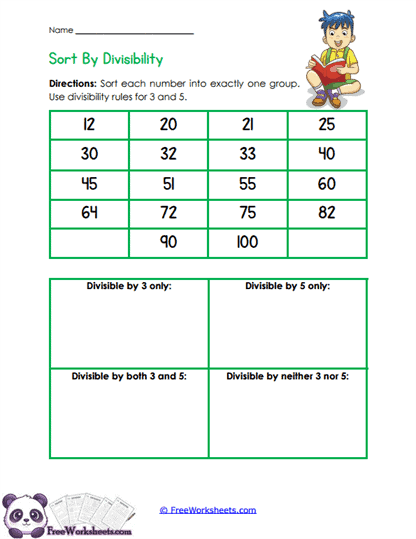
Factors, Multiples, And Divisibility
Understanding factors, multiples, and divisibility helps children recognize patterns and relationships between whole numbers. A helpful strategy is to practice using multiplication facts and divisibility rules to quickly identify which numbers divide evenly. These activities strengthen number sense, multiplication fluency, and mathematical reasoning skills.
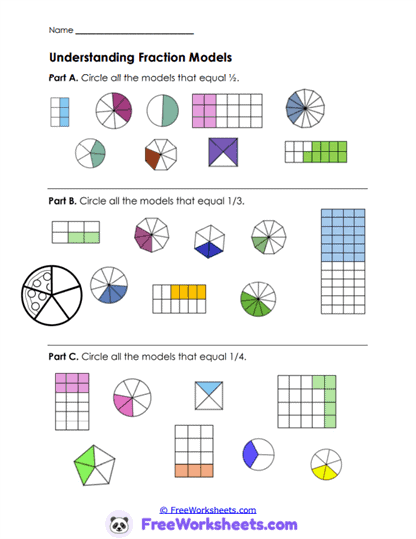
Fractions And Mixed Numbers
Understanding fractions and mixed numbers helps children build the foundation for more advanced math concepts like decimals and ratios. A useful strategy is to connect fractions to everyday examples like measuring ingredients or sharing food equally. These worksheets strengthen fraction sense, mathematical reasoning, and real-world problem-solving skills.
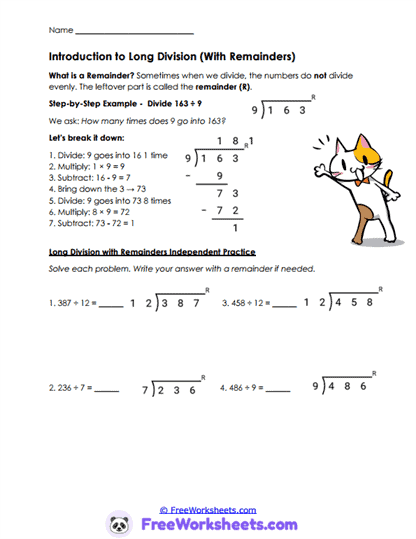
Long Division
Long division teaches children how to break larger problems into smaller, organized steps. Encourage your child to estimate the answer first and check each step carefully to avoid place value mistakes. These activities strengthen division fluency, computational accuracy, and multi-step problem-solving skills.
Mixed Operations Whole Numbers
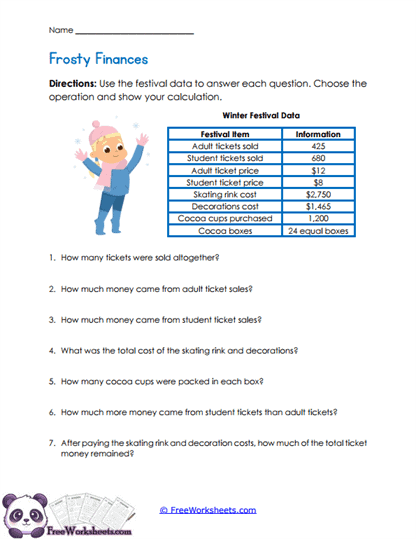
Working with mixed operations helps children decide which mathematical operation to use when solving different types of problems. Encourage your child to identify the operation needed before calculating and check each answer using estimation or an inverse operation. These worksheets strengthen computational fluency, mathematical reasoning, and multi-step problem-solving skills.
Multiply Fractions
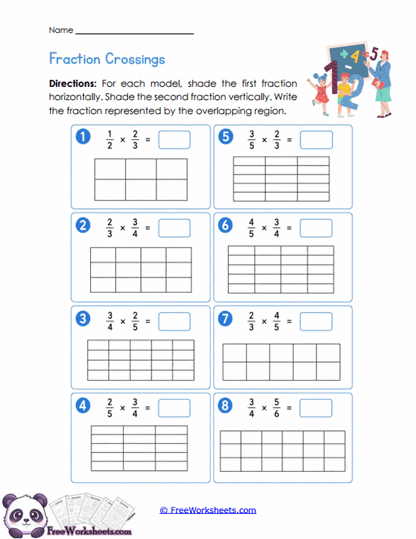
Multiplying fractions helps children understand how finding a fraction of a quantity can make a value larger or smaller. Try using visual models or everyday examples to help your child see what happens when fractions and whole numbers are multiplied. These activities strengthen fraction sense, multiplication fluency, and mathematical reasoning skills.
Numerical Expressions
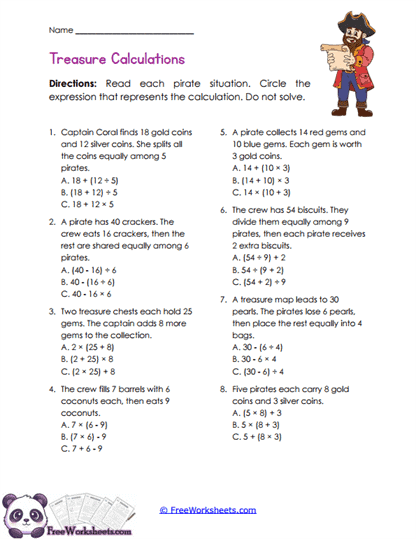
Working with numerical expressions helps children understand how numbers and operations can be organized to represent mathematical ideas. Encourage your child to identify each operation and follow the correct order of operations step by step. These worksheets strengthen computational thinking, mathematical reasoning, and problem-solving skills.
Powers Of Ten
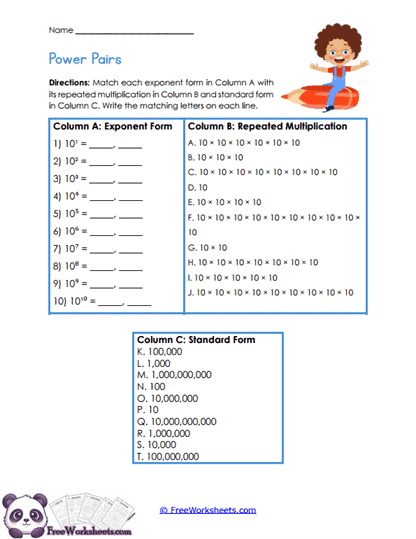
Understanding powers of ten helps children recognize patterns in our base-ten number system and work more confidently with large and small numbers. A helpful strategy is to observe how the position of each digit changes when multiplying or dividing by 10, 100, or 1,000. These activities strengthen place value understanding, number sense, and computational fluency.
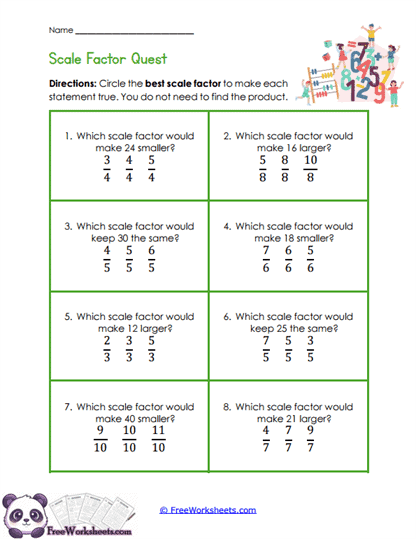
Scaling By Fractions
Scaling by fractions helps children understand how multiplication can change the size of a quantity depending on the value of the fraction. Encourage your child to estimate whether the answer should be greater or less than the original number before solving. These worksheets strengthen fraction sense, multiplication reasoning, and mathematical problem-solving skills.
Reading
Author’s Perspective
Understanding an author’s perspective helps children recognize bias, opinions, and how viewpoint shapes a text. A helpful strategy is to ask your child whether the author seems neutral or strongly opinionated while reading. These worksheets strengthen critical thinking, reading analysis, and evidence-based discussion skills.
Author’s Purpose and Tone
Recognizing purpose and tone helps children better understand both the meaning and emotion behind a text. Encourage your child to notice words that sound serious, humorous, or persuasive while reading. These activities strengthen reading comprehension, text analysis, and vocabulary skills.
Characters of Stories
Analyzing characters helps children understand motivations, conflicts, and how people change throughout a story. A great strategy is to ask your child to explain how a character changed from the beginning to the end of the text. These worksheets strengthen comprehension, analytical thinking, and text evidence skills.
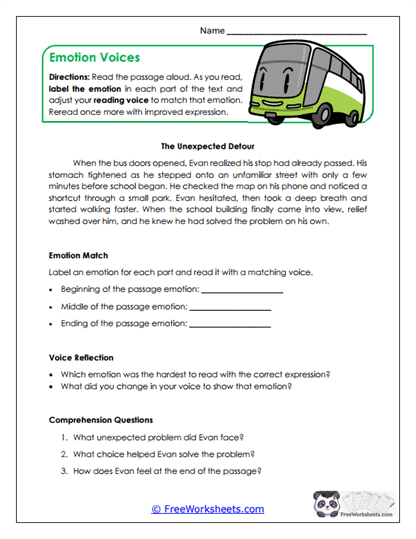
Grade 5 Fluency Practice
Strong fluency helps children read smoothly while focusing on meaning instead of decoding every word. Reading aloud with expression and proper pacing can help your child sound more natural and confident. These activities strengthen fluency, comprehension, and overall reading confidence.
Grade 5 Reading Comprehension
As texts become more advanced, strong comprehension skills help children analyze and explain complex ideas. Encourage your child to support answers with details directly from the passage instead of guessing. These worksheets strengthen comprehension, critical thinking, and evidence-based reasoning skills.
Grade 5 Reading Passages
Reading a variety of passages helps children become more flexible and confident readers. A simple strategy is to pause after each section and summarize the most important idea in one sentence. These activities strengthen comprehension, fluency, and reading stamina.
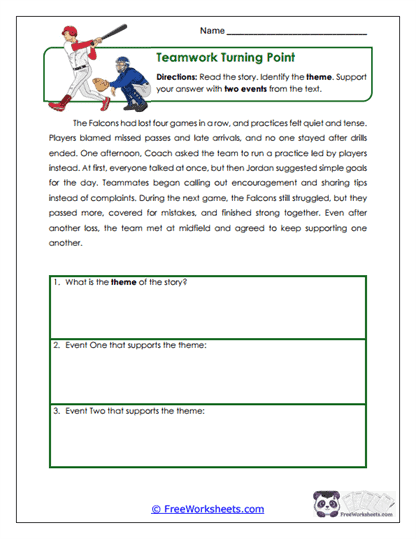
Inference And Theme
Making inferences and identifying themes helps children understand deeper meanings that are not directly stated. Ask your child what lesson the author wants readers to learn and what clues support that idea. These worksheets strengthen analytical thinking, comprehension, and evidence-based reasoning skills.
Informational Texts
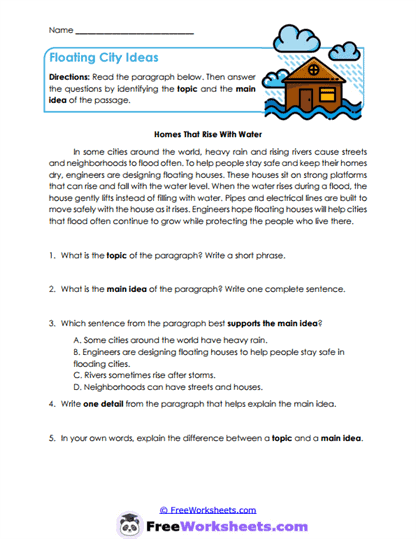
Informational texts help children learn how to gather, organize, and understand factual information. Encourage your child to identify the main idea and supporting details after each section they read. These activities strengthen nonfiction comprehension, vocabulary, and research skills.
Literary Devices
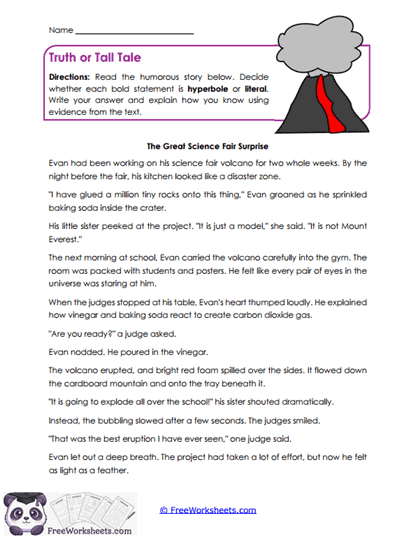
Understanding literary devices helps children recognize how authors make writing more vivid and meaningful. Point out examples of similes, metaphors, or imagery while reading together to help these concepts feel more natural. These worksheets strengthen figurative language, comprehension, and literary analysis skills.
Literary Texts
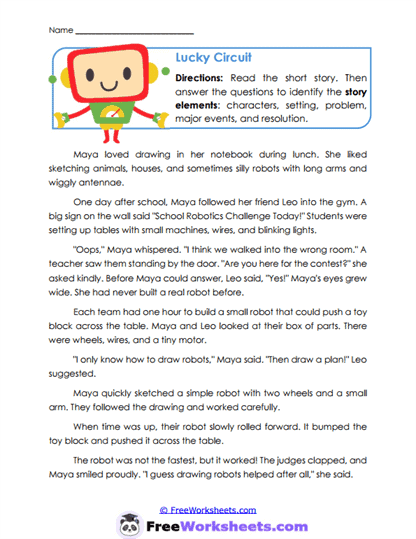
Reading literary texts helps children think more deeply about themes, characters, and story structure. Encourage your child to explain why certain events or character choices are important to the story. These activities strengthen comprehension, discussion, and analytical reading skills.
Main Idea
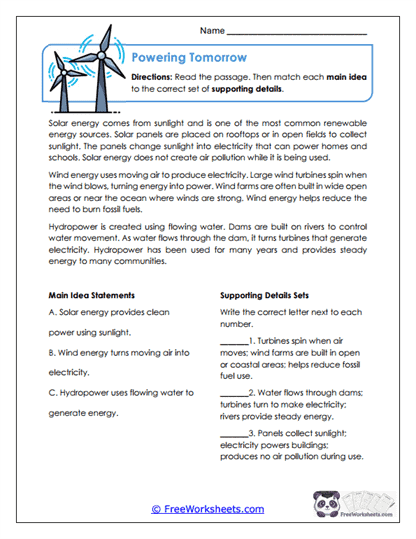
Finding the main idea helps children organize information and better understand complex reading passages. A helpful strategy is to ask, “What is the author mostly trying to teach or explain here?” after reading. These worksheets strengthen summarizing, comprehension, and organizational thinking skills.
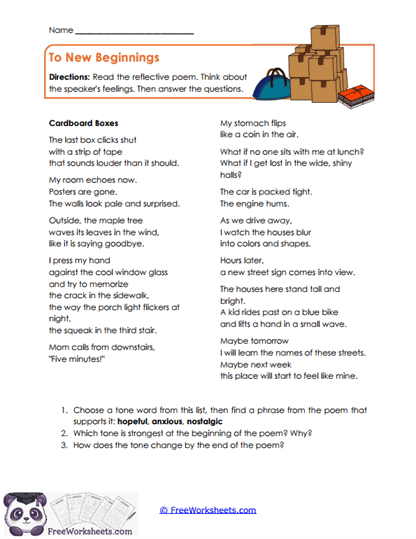
Poetry Elements
Understanding poetry elements helps children recognize how poets use language, rhythm, and structure to create meaning. Reading poems aloud together can help your child hear rhyme, flow, and expression more clearly. These activities strengthen fluency, figurative language, and poetry analysis skills.
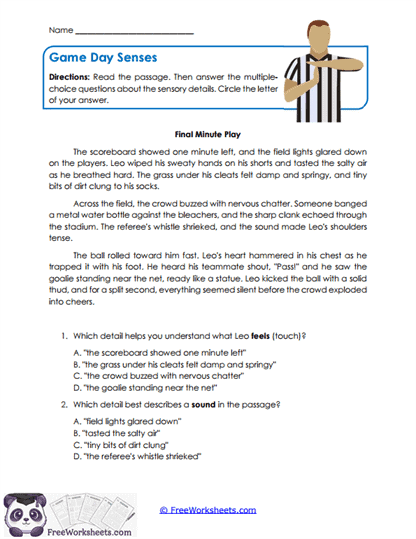
Sensory Details
Sensory details help children better visualize and connect with what they read. Encourage your child to notice words that describe sights, sounds, smells, tastes, and textures while reading. These worksheets strengthen comprehension, visualization, and descriptive writing skills.
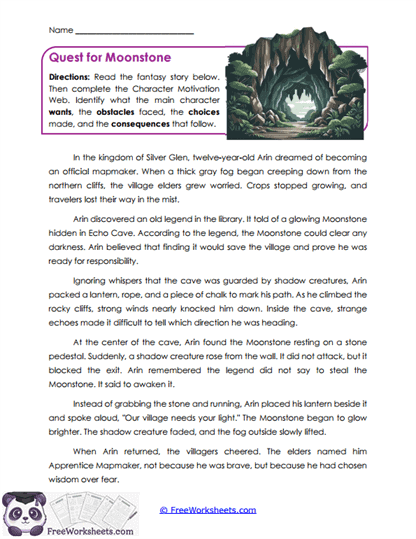
Story Elements
Understanding story elements helps children break down and analyze how stories are built. A good strategy is to discuss the plot, setting, conflict, and characters after reading together. These activities strengthen comprehension, storytelling, and literary analysis skills.
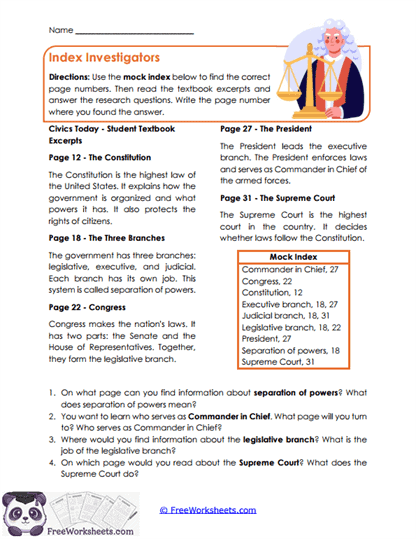
Text Features
Text features help children quickly locate and understand important information in nonfiction texts. Encourage your child to preview headings, captions, charts, and diagrams before reading the full passage. These worksheets strengthen nonfiction comprehension and informational reading skills.
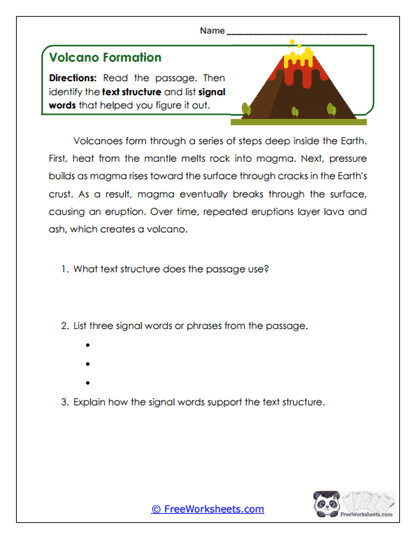
Text Structure
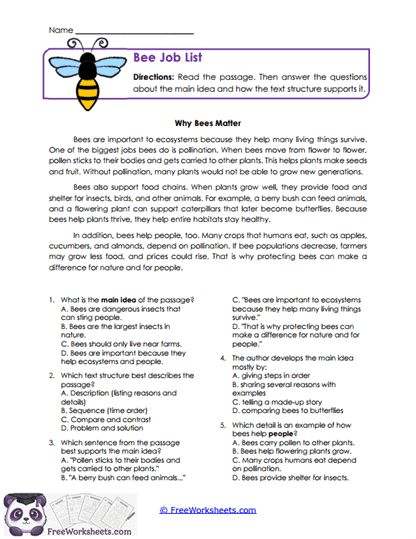
Recognizing text structure helps children better follow how ideas and information are organized. Practice identifying structures like chronological order, cause and effect, or problem and solution while reading together. These activities strengthen comprehension, organization, and analytical reading skills.
Visual Elements
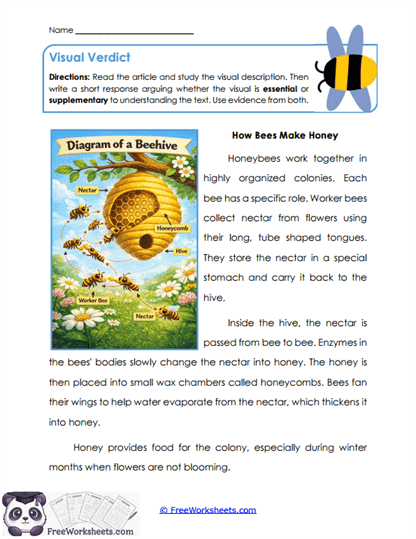
Understanding visual elements helps children combine written information with graphs, diagrams, and images to gain deeper meaning. Ask your child what information the visual adds that the text alone does not explain. These worksheets strengthen visual literacy, nonfiction comprehension, and analytical thinking skills.