
Grade 12 Worksheets
This 12th grade printable worksheet collection is a comprehensive, standards-aligned resource designed to prepare students for graduation and beyond. These academically rigorous worksheets strengthen critical thinking, analytical writing, problem-solving, and cross-curricular reasoning across Language Arts, Math, Science, and Social Studies. By reinforcing mastery, independence, and real-world application, this collection helps seniors build the confidence and intellectual fluency needed for college, career, and lifelong learning.
Pre-calculus
About This Collection of Worksheets
12th Grade is about preparing students for what comes after high school. Seniors are expected to handle complex reading, independent research, advanced writing, and real-world problem-solving with much less teacher support than in previous grades.
This collection focuses on the skills students need most before graduation: rhetorical analysis, research-based writing, source evaluation, advanced vocabulary, critical reading, data interpretation, and evidence-driven argumentation. The worksheets are designed to help students strengthen academic independence while improving clarity, organization, and analytical depth across subjects.
Students practice evaluating complex arguments, synthesizing information from multiple sources, interpreting technical and informational texts, organizing long-form written responses, and applying higher-level reasoning skills in academic and real-world contexts. These printable worksheets help students build the confidence and academic maturity needed for college courses, workforce training, and post-secondary learning.
Why Teachers Use This Collection
- College-prep writing practice
- Rhetorical analysis reinforcement
- Research skill development activities
- Evidence-based response assignments
- Advanced vocabulary review pages
- Independent senior-level coursework
- Critical reading skill practice
- Real-world document analysis
- Low-prep printable resources
- Graduation readiness reinforcement
Why Homeschoolers & Parents Use This Collection
- Senior year academic support
- College readiness skill building
- Independent study reinforcement
- Advanced writing practice pages
- Critical thinking development
- Printable daily review activities
- Screen-free academic learning
- Homework and tutoring support
- Post-secondary preparation practice
- Real-world reasoning skill support
A Look at the Categories of Worksheets
Pre-calculus (Math)
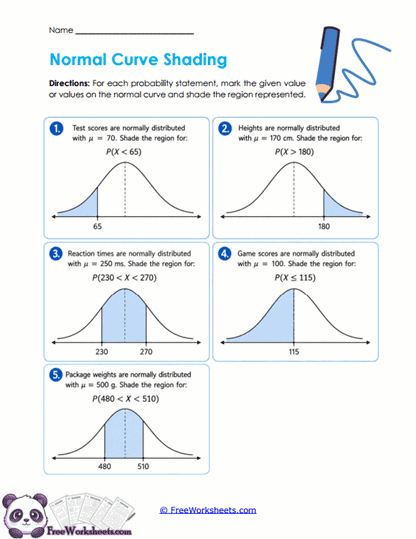
Binomial And Normal Distributions
Binomial and normal distributions help students understand how probability can be used to describe patterns and predict outcomes. A helpful strategy is to first identify whether a situation involves a fixed number of trials or data that follows a bell-shaped pattern before choosing a method. These activities strengthen probability reasoning, data analysis, and real-world problem-solving skills.
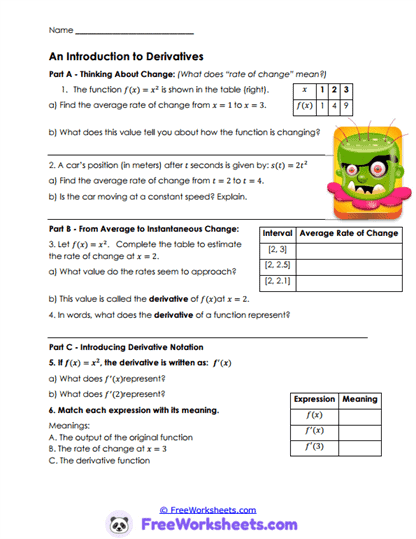
Derivatives
Understanding derivatives helps students measure how quantities change and forms the foundation of calculus concepts used in science, engineering, and economics. A helpful strategy is to connect derivatives to real-world examples like speed, growth, or changing temperatures to make the concept easier to visualize. These activities strengthen analytical thinking, problem-solving, and advanced mathematical reasoning skills.
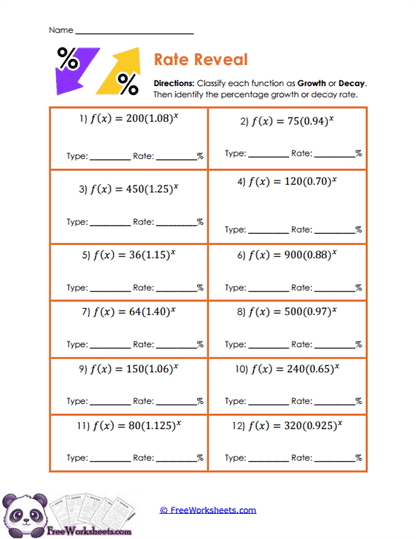
Exponential Functions
Exponential functions help students model situations where quantities grow or decrease at changing rates, such as population growth, investments, and depreciation. Encourage your child to pay close attention to the starting value and growth or decay factor when building or interpreting an equation. These worksheets strengthen algebraic reasoning, function analysis, and mathematical modeling skills.
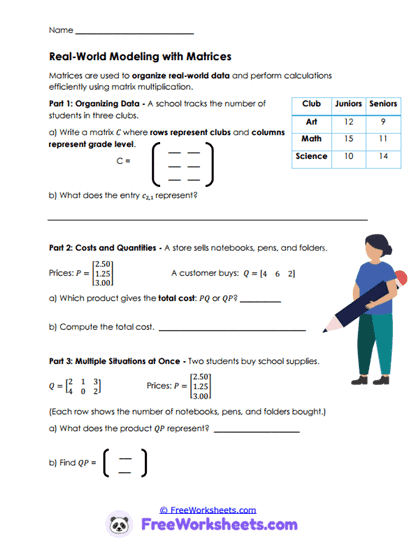
Matrices
Matrices help students organize and solve complex systems of information more efficiently. Encourage your child to work carefully through each row and column step by step to avoid small calculation errors. These worksheets strengthen algebraic reasoning, organization skills, and higher-level problem-solving abilities.
Nonlinear Inequalities
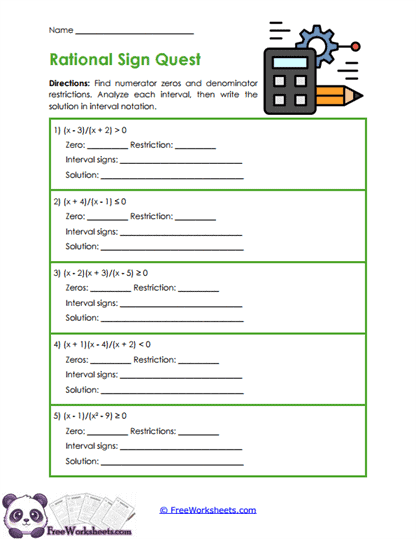
Nonlinear inequalities help students determine the range of values that make more complex mathematical relationships true. A useful approach is to find important points such as zeros and boundaries first, then test the intervals between them. These activities build algebraic fluency, logical reasoning, and multi-step problem-solving skills.
Polynomial Expressions And Equations
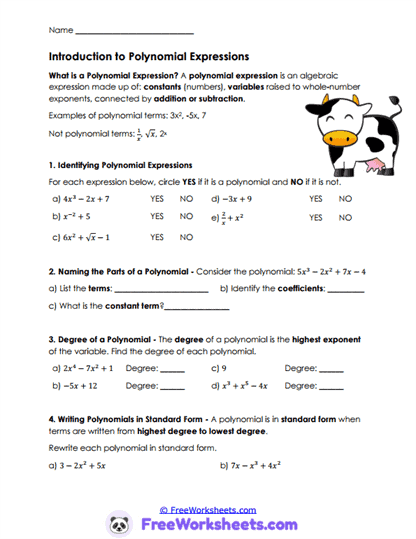
Working with polynomial expressions and equations helps students recognize patterns and solve more advanced algebraic problems. A useful strategy is to factor expressions completely before attempting to solve the equation whenever possible. These activities strengthen algebraic fluency, critical thinking, and mathematical reasoning skills.
Probability Distributions
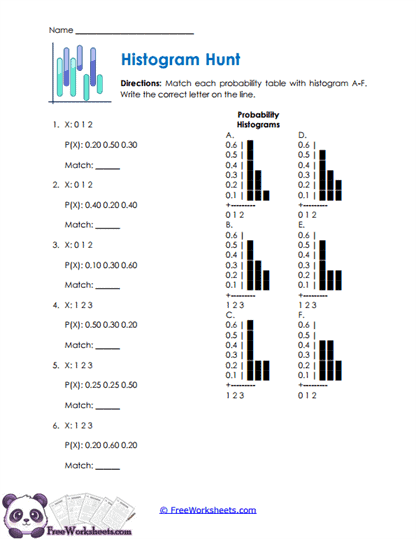
Probability distributions help students organize possible outcomes and understand how likely different results are to occur. Encourage your child to connect each possible value with its probability and check that all probabilities together represent the complete set of outcomes. These worksheets strengthen statistical reasoning, organization, and data interpretation skills.
Sequences (Arithmetic & Geometric)
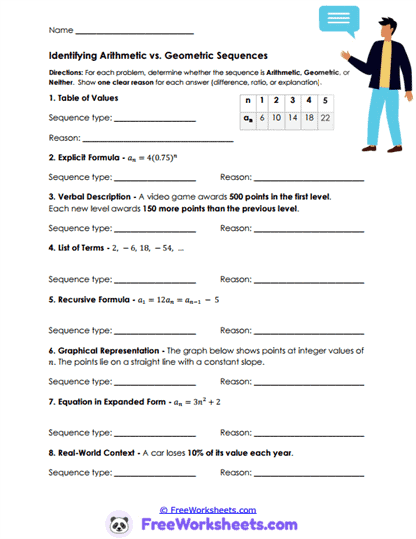
Understanding arithmetic and geometric sequences helps students recognize patterns and predict how numbers change over time. Encourage your child to identify whether the pattern is based on addition or multiplication before solving. These worksheets strengthen pattern recognition, algebraic thinking, and analytical reasoning skills.
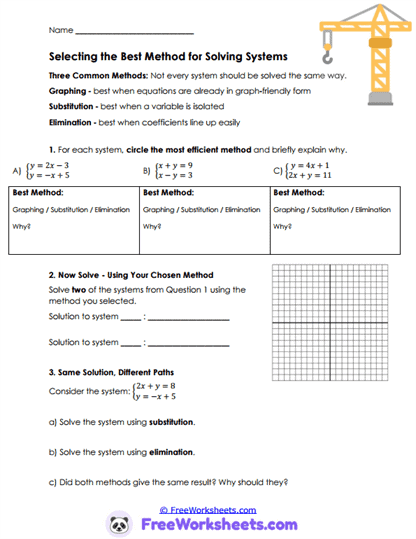
Systems Of Equations & Inequalities
Solving systems of equations and inequalities helps students analyze multiple mathematical relationships at the same time. A helpful strategy is to graph the equations first so your child can visually identify where the solutions overlap. These activities strengthen algebraic reasoning, logical thinking, and multi-step problem-solving skills.
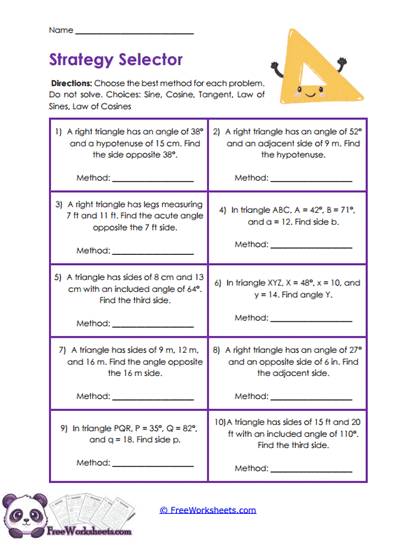
Trigonometry Review
Reviewing trigonometry gives students an opportunity to strengthen their understanding of angles, functions, identities, and equations before moving into more advanced mathematics. A helpful strategy is to identify the type of trigonometric problem first and then choose the appropriate formula, identity, or relationship. These activities reinforce mathematical fluency, analytical thinking, and problem-solving confidence.
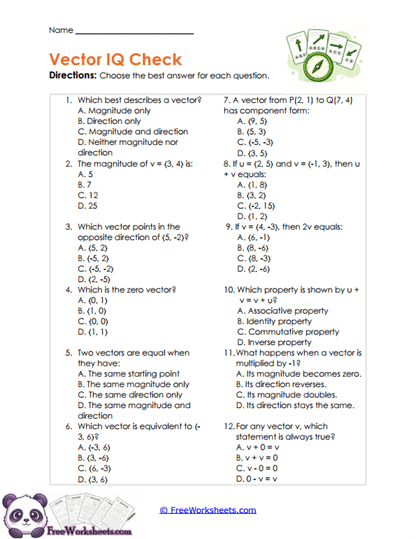
Vectors
Vectors help students describe quantities that have both a size and a direction, making them useful for studying movement, forces, and position. Encourage your child to draw or visualize each vector before performing calculations so the direction and relationships are easier to understand. These worksheets strengthen spatial reasoning, algebraic thinking, and advanced problem-solving skills.
Reading
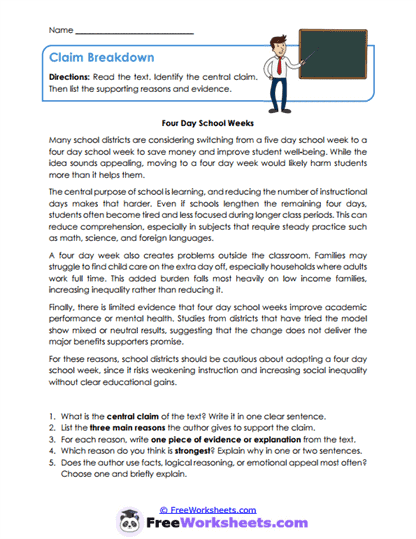
Analyzing Informational Texts
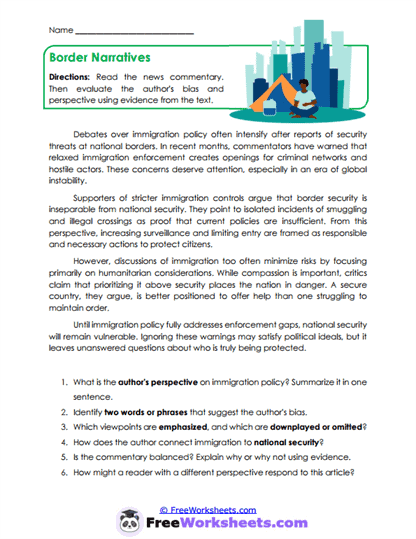
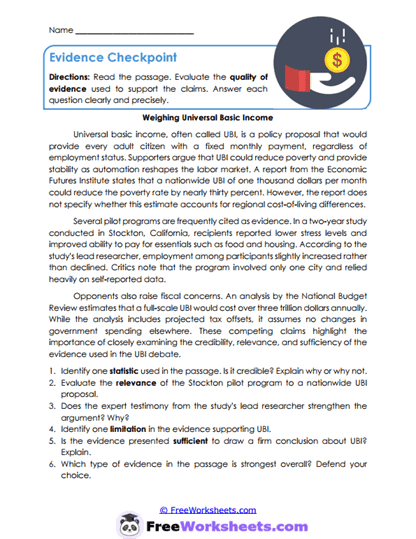
Analyzing informational texts helps students evaluate arguments, evidence, and complex ideas found in real-world reading. Encourage your child to question whether the author’s evidence is reliable, balanced, and convincing while reading articles or reports. These worksheets strengthen critical thinking, nonfiction comprehension, and evidence-based analysis skills.
Analyzing Literature
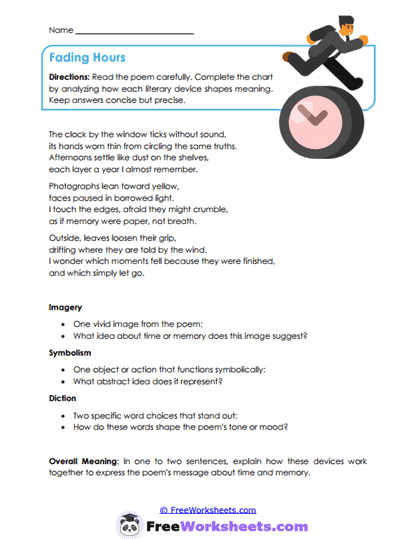
Analyzing literature helps students look beyond the surface of a text to understand themes, symbolism, and author choices more deeply. A helpful strategy is to ask your child how specific details or scenes contribute to the overall meaning of the work. These activities strengthen literary analysis, interpretation, and critical thinking skills.
Audience, Purpose, and Tone
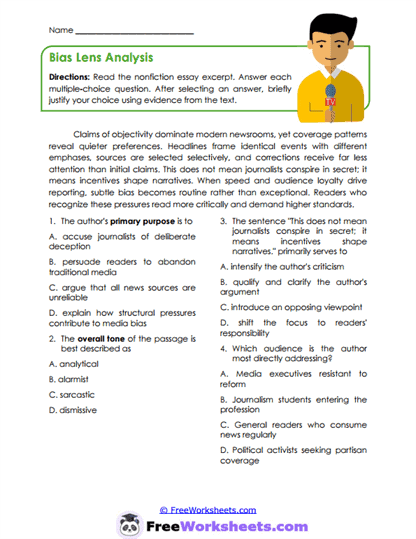
Recognizing audience, purpose, and tone helps students understand how writers shape meaning for different readers and situations. Encourage your child to notice how language changes depending on whether a text is formal, persuasive, emotional, or informative. These worksheets strengthen communication awareness, text analysis, and comprehension skills.
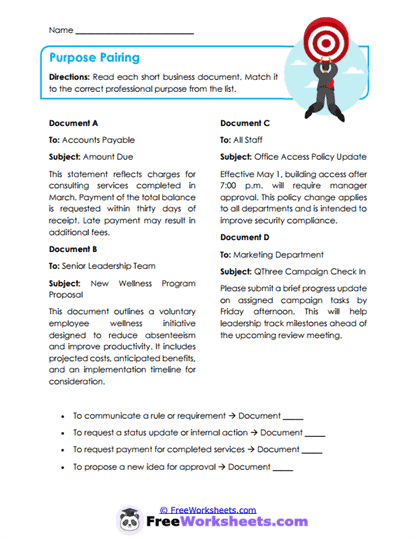
Business Documents
Understanding business documents helps students build practical literacy skills they will use in college, careers, and everyday life. Reviewing examples like emails, reports, or memos together can help your child become more confident with professional communication. These activities strengthen workplace literacy, informational reading, and communication skills.
Grade 12 Reading Comprehension
Strong comprehension skills help students analyze complex texts, draw conclusions, and explain ideas using evidence. Encourage your child to annotate important details and summarize key points while reading longer passages. These worksheets strengthen analytical reasoning, evidence-based comprehension, and critical thinking skills.
Grade 12 Reading Passages
Reading a variety of challenging passages helps students build confidence with advanced vocabulary, ideas, and writing styles. A great strategy is to pause occasionally and summarize the author’s main argument or message before continuing. These activities strengthen comprehension, vocabulary, and reading stamina.
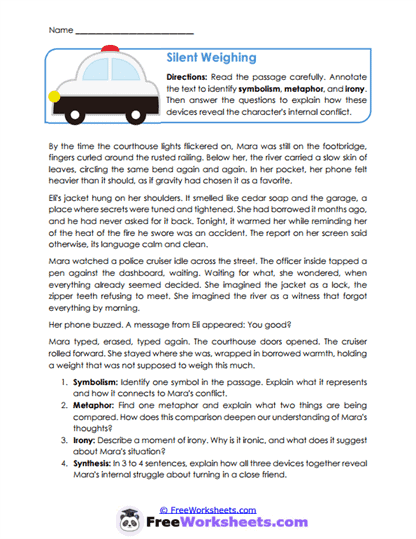
Literary Devices
Understanding literary devices helps students recognize how authors create deeper meaning, symbolism, and emotional impact in writing. Point out examples of irony, metaphor, or imagery while reading together to help these concepts feel more natural. These worksheets strengthen literary analysis, figurative language, and interpretation skills.
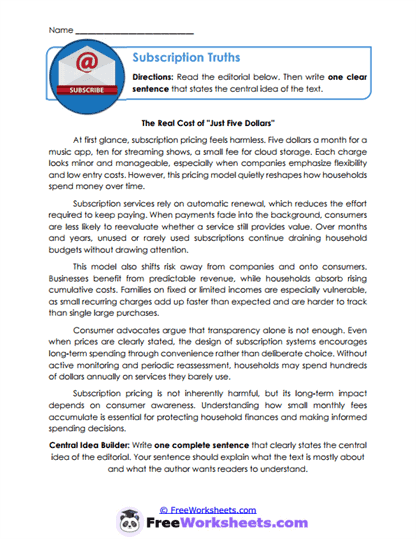
Main Idea
Finding the main idea helps students focus on the author’s central message instead of getting distracted by supporting details. Ask your child, “What is the author mainly trying to prove, explain, or communicate here?” after reading each section. These activities strengthen summarizing, comprehension, and organizational thinking skills.
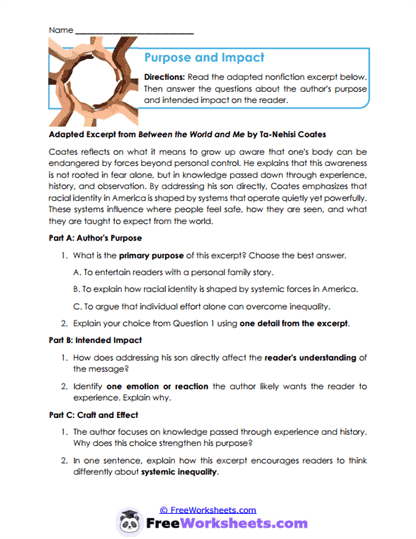
Nonfiction Book Study
Studying nonfiction books helps students analyze arguments, evaluate evidence, and better understand complex real-world topics. Encourage your child to take notes on major claims and supporting details while reading. These worksheets strengthen nonfiction comprehension, research, and analytical thinking skills.
Novel Study
Novel studies help students think more deeply about themes, character development, and important ideas across longer texts. A helpful strategy is to discuss how characters evolve and what larger message the author may want readers to understand. These activities strengthen literary analysis, comprehension, and discussion skills.