
About This Worksheet
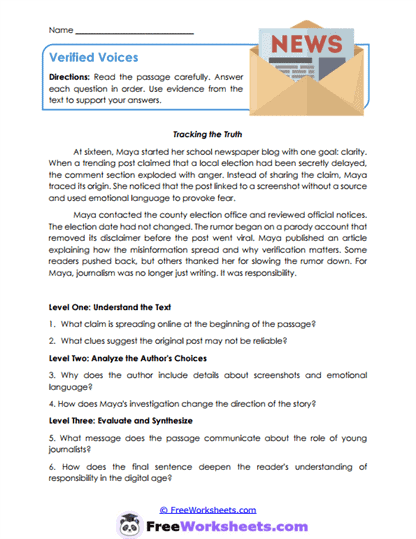
Verified Voices is a grade 10 reading comprehension worksheet focused on evaluating credibility, author choices, and digital responsibility. It is a high school literacy resource designed to strengthen students’ ability to analyze how information spreads online and how journalists verify claims. The passage, Tracking the Truth, follows a young writer who investigates a viral rumor and chooses responsible reporting over attention-driven content. For example, the author highlights screenshots without sources and emotional language to signal unreliability. This worksheet builds advanced comprehension, evaluation, and synthesis skills appropriate for tenth-grade readers navigating digital media.
Curriculum and Grade Alignment
This worksheet is designed for Grade 10 and emphasizes analyzing author choices, evaluating credibility, and synthesizing themes related to media literacy. The primary learning goal is to move beyond surface comprehension and assess reliability, author purpose, and thematic implications. Students should already understand how to cite textual evidence before analyzing craft and theme. The next progression skill involves writing argumentative responses evaluating credibility in complex texts. This resource aligns with CCSS.ELA-LITERACY.RI.9-10.1, RI.9-10.6, and RI.9-10.8.
Student Tasks
Students read a narrative nonfiction passage about verifying online claims. In Level One, they identify key facts and explain why the original source may lack credibility. In Level Two, they analyze why the author includes specific details, such as screenshots and emotional wording. In Level Three, they evaluate the broader message about journalism and responsibility in the digital age. Each response requires direct evidence from the text and thoughtful explanation.
Common Challenges and Misconceptions
Students may focus only on plot events instead of evaluating credibility signals. Some learners may assume viral content is trustworthy without analyzing evidence. Others may struggle to connect individual actions to larger themes about digital responsibility. Teachers can model identifying credibility markers and discussing how tone shapes trust.
Implementation Guidance
This worksheet works well in media literacy, journalism, or digital citizenship units. Teachers can extend learning by having students evaluate real online posts for credibility. Small-group discussions can explore ethical reporting. The activity strengthens analytical reading and responsible digital engagement.
Details and Features
The worksheet includes a structured passage with tiered comprehension questions. Prompts move from understanding to analysis to evaluation and synthesis. The layout is classroom-ready and supports written evidence-based responses. The topic is timely and relevant for high school students.