
About This Worksheet
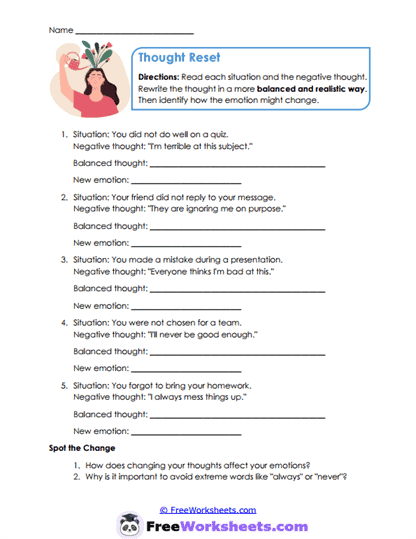
This worksheet teaches students how thoughts can influence emotions and how a more balanced thought can change the way a situation feels. Each example begins with a difficult event and an extreme negative thought, such as believing one poor quiz means being terrible at a subject or assuming a friend is ignoring them on purpose. Students rewrite the thought in a more realistic and fair way, then identify a possible new emotion. The activity does not ask children to pretend that everything is perfect; instead, it helps them replace harsh or absolute thinking with language that is calmer, more accurate, and more useful.
Skills Developed
Students practice emotional regulation, flexible thinking, self-talk, perspective-taking, and recognizing unhelpful thought patterns. They learn to notice words such as always, never, everyone, and no one, which can make a disappointing moment feel much larger than it really is. The worksheet also helps students connect thoughts with emotions by showing how a balanced thought may reduce shame, anger, worry, or hopelessness. Over time, this skill can help children pause before reacting and respond to mistakes, rejection, or frustration with more patience and confidence.
Grade & Stage Appropriateness
This worksheet is most appropriate for upper elementary through early high school students, generally grades 5 through 9. Students in this range are beginning to understand that their first thought is not always the most accurate interpretation of an event. Younger children may benefit from hearing the situations read aloud and creating balanced thoughts as a group, while older students can discuss how thinking patterns affect choices and relationships. The activity is especially helpful for students who struggle with perfectionism, negative self-talk, social worries, or strong reactions to small setbacks.
Connections to Collaborative for Academic, Social and Emotional Learning (CASEL)
This activity closely supports the CASEL areas of self-awareness, self-management, and responsible decision-making. Students become more aware of their inner voice, notice how certain thoughts increase emotional distress, and practice choosing a more balanced response. In the classroom, I often tell students that a balanced thought should be believable, not simply cheerful. Children usually understand this better when they see that “I made one mistake, but I can fix it” is more helpful and honest than either “I am terrible at everything” or “Nothing is wrong.”
Using This Worksheet
Teachers can use this page during lessons on coping skills, growth mindset, test anxiety, friendship problems, or emotional regulation. It is helpful to complete the first example together and compare an unrealistic positive statement with a truly balanced one. Parents and homeschool educators can connect the situations to moments when a child becomes discouraged, embarrassed, or convinced that one mistake has ruined everything. Encourage the child to ask three simple questions: Is this thought completely true, is there another explanation, and what would I say to a friend in the same situation?