
About This Worksheet
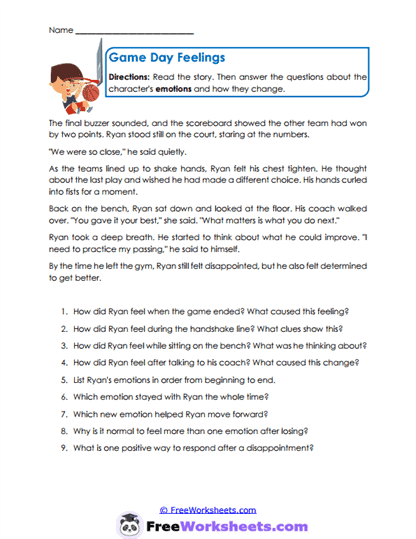
This worksheet helps students explore the emotional ups and downs that can follow a disappointing loss. Ryan moves through several feelings after his team loses a close game, including sadness, frustration, disappointment, and determination. Students read the story and use details from Ryan’s thoughts, body language, conversations, and choices to explain how his emotions change. The activity also shows that a difficult feeling does not have to be the final feeling, especially when a child pauses, reflects, and begins thinking about what can be improved next time.
Skills Developed
Students strengthen emotional awareness, reading comprehension, sequencing, and cause-and-effect thinking as they follow Ryan’s reactions from the final buzzer through his conversation with his coach. They practice identifying emotional clues, placing feelings in order, and explaining why one feeling may remain while another begins to change. The questions also encourage students to think about healthy responses to disappointment, such as talking with a trusted adult, reflecting on effort, and making a plan for future growth. These skills can support children during sports, schoolwork, friendships, competitions, and any other situation where the outcome is not what they hoped for.
Grade & Stage Appropriateness
This worksheet is best suited for upper elementary and early middle school students, especially grades 4 through 7. Children at this stage are becoming more aware that emotions can change over time and that disappointment can exist alongside motivation, pride, or hope. The reading passage is clear enough for younger students with teacher support, while the deeper reflection questions are strong enough to challenge older students. It is especially useful for children who are learning how to handle competition, recover from mistakes, and separate one disappointing result from their overall ability or worth.
Connections to Collaborative for Academic, Social and Emotional Learning (CASEL)
This activity connects strongly with the CASEL areas of self-awareness, self-management, and responsible decision-making. Ryan first notices his sadness and disappointment, then begins calming himself, listening to his coach, and thinking about what he can control. In my experience, students often need help understanding that feeling upset after a loss is completely normal, but staying stuck in blame or anger usually does not help them move forward. I like using this worksheet to show children that reflection, support, and a realistic next step can turn disappointment into determination without pretending the loss did not matter.
Using This Worksheet
Teachers can use this page during an SEL lesson about resilience, sportsmanship, handling mistakes, or coping with setbacks. It works especially well after a class competition, team activity, difficult test, or other experience where students may be feeling disappointed. Parents and homeschool educators can use the story to open a calm conversation about a recent loss or frustration without putting the child directly on the spot. After completing the questions, ask the child to name one feeling they would expect, one healthy response they could use, and one thing they could focus on next time.