
About This Worksheet
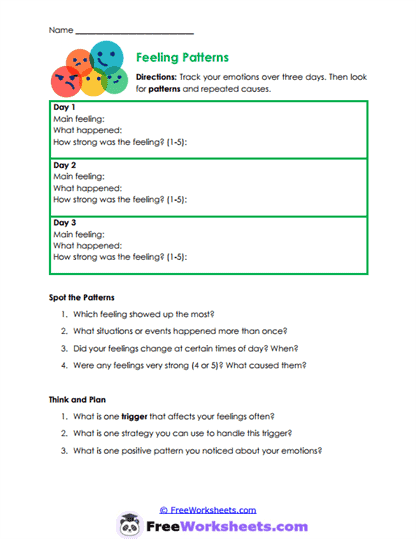
This worksheet encourages children to track their emotions over three days and look for patterns in what they feel. Each day, students record their main emotion, describe what happened, and rate the strength of the feeling on a scale from one to five. After collecting the information, they review their entries to see which emotions appeared most often and which situations may have caused them. This helps children understand that feelings are not random and may be connected to certain events, people, routines, or thoughts.
Skills Developed
Children practice self-monitoring, emotional naming, reflection, and recognizing personal triggers. They learn to compare experiences across several days instead of focusing only on one strong moment. The worksheet also asks students to notice repeated situations, intense emotions, and positive emotional patterns. By looking at this information, children can begin to understand what helps them feel calm, what makes them upset, and when they may need extra support.
Connections to Collaborative for Academic, Social and Emotional Learning (CASEL)
This activity aligns closely with the CASEL areas of self-awareness and self-management. Tracking emotions helps children recognize what they are feeling, how strongly they feel it, and what may have caused it. The planning questions then guide them toward choosing a strategy for a common trigger, which is an important part of managing emotions. When I have used emotion trackers with children, I have found that they often notice patterns adults may not see, such as becoming frustrated when tired or feeling calmer after physical activity.
Using This Worksheet
Teachers can use this page as a short daily check-in over three school days and then hold a private or small-group reflection at the end. It can also support counseling sessions, behavior planning, or classroom discussions about emotional triggers. Parents and homeschool educators may find it useful during a week when a child is experiencing strong moods or changes in routine. Keep the conversation curious and calm, and help your child view patterns as useful information rather than as something good or bad.