
About This Worksheet
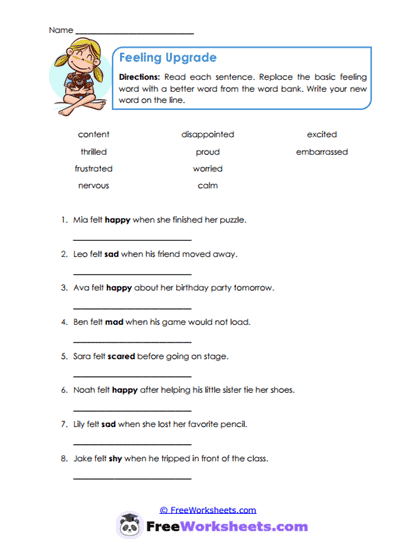
This worksheet helps children learn that some feeling words are more exact than others. Words such as happy, sad, mad, scared, and shy can be useful, but they do not always explain exactly how a person feels. Students use a word bank filled with stronger choices, including content, thrilled, frustrated, nervous, disappointed, and embarrassed. This gives children practice choosing the word that best matches the situation.
Each sentence describes a short event and includes a basic feeling word in bold print. Your child replaces that word with a more detailed emotion from the word bank and writes the new word on the line. For example, a child who feels happy after completing a puzzle may feel proud, while someone who feels shy after tripping in front of the class may feel embarrassed. These small differences help children understand that emotions can have different meanings and levels of strength.
Skills Developed
This activity builds emotional vocabulary, reading comprehension, and careful word choice. Children must read the whole sentence, notice what happened, and decide which emotion makes the most sense. They also learn that two feeling words can be related without meaning exactly the same thing. A larger emotional vocabulary can make it easier for children to explain their needs, talk through problems, and ask adults for the right kind of support.
Using This Worksheet
Teachers can use this page during a social-emotional learning lesson, morning meeting, counseling group, or vocabulary activity. It works well after discussing common feeling words and asking students to name stronger or more exact choices. Parents can complete the first one or two sentences with their child and talk aloud about why one emotion fits better than another. When your child finishes, ask which words were new and invite them to use each new word in a sentence about a real experience.