
About This Worksheet
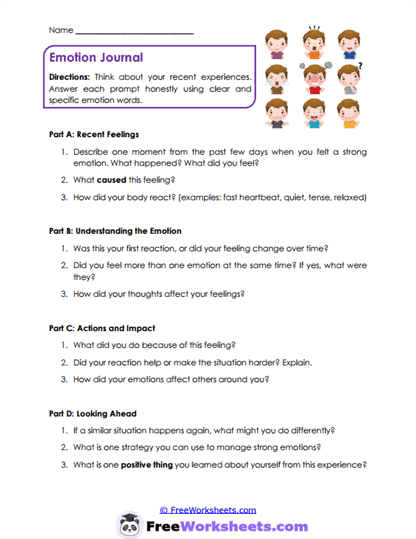
This worksheet gives students a structured way to think carefully about a strong emotion they recently experienced. They describe what happened, identify the feeling, explain what caused it, and notice how their body reacted. The journal then guides them to examine their thoughts, actions, and the effect their response had on other people. The final section helps students look ahead and decide what they might do differently if a similar situation happens again.
Skills Developed
Students develop self-awareness, emotional vocabulary, body-signal recognition, reflection, and personal responsibility. They learn to connect a feeling with its trigger, physical reaction, thoughts, actions, and consequences instead of treating the emotion as one isolated event. The worksheet also encourages children to notice whether their response made the situation better or harder and how it may have affected the people around them. By ending with a positive lesson and a future strategy, the activity helps students move from simply remembering an emotional moment to learning from it.
Grade & Stage Appropriateness
This worksheet is a strong fit for upper elementary through high school students, generally grades 5 through 12. Younger students may need an adult to explain words such as reaction, impact, or strategy, while older students can complete the journal independently and provide more detailed answers. The open-ended format allows the activity to grow with the student because a fifth grader may write about a playground disagreement, while a teenager may reflect on academic pressure, friendships, family conflict, or social situations. It is especially appropriate for students who are ready to examine not only what they felt, but also how their choices affected what happened next.
Connections to Collaborative for Academic, Social and Emotional Learning (CASEL)
This worksheet aligns with all five CASEL areas, especially self-awareness, self-management, responsible decision-making, and relationship skills. Students name their emotions, examine their thoughts and physical reactions, evaluate their behavior, and consider how their actions affected others. When I have used reflection pages like this, I have found that students respond best when adults treat the journal as a learning tool rather than a punishment. A warm conversation afterward can help a child see that taking responsibility does not mean calling themselves bad; it means understanding what happened and choosing a more helpful response next time.
Using This Worksheet
Teachers can use this journal after a classroom conflict, a strong emotional moment, a challenging assignment, or a counseling lesson about personal growth. It works best when students have enough time and privacy to answer honestly without feeling rushed or judged. Parents and homeschool educators can use the page after emotions have settled, rather than trying to complete it in the middle of an argument. Sit nearby, offer help with emotion words if needed, and focus the conversation on understanding the experience and planning one realistic strategy for the future.