
About This Worksheet
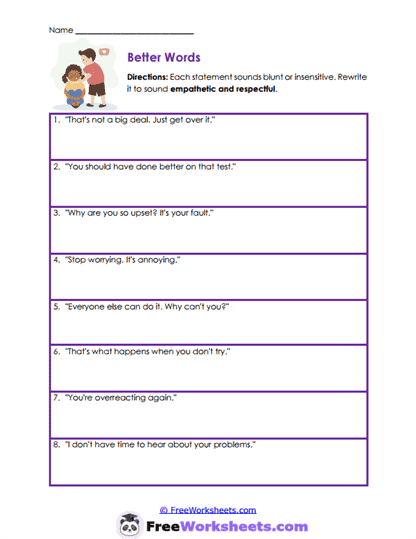
This worksheet teaches students how to replace blunt, dismissive, or insensitive comments with language that shows empathy and respect. Children rewrite eight statements that minimize feelings, compare people unfairly, assign blame, or refuse to listen. The goal is not to avoid honesty, but to communicate concern in a way that does not shame or silence the other person. The activity helps students understand that a small change in wording can make someone feel safer, heard, and more willing to talk.
Skills Developed
Students build empathetic communication, emotional validation, perspective-taking, and conflict-prevention skills. They practice changing phrases such as “Just get over it” or “You’re overreacting” into responses that acknowledge feelings and invite understanding. The open-ended task also encourages flexible thinking because students must create language that sounds natural and fits the situation. These skills are valuable during disagreements, academic struggles, worry, disappointment, and conversations about personal problems.
Grade & Stage Appropriateness
This worksheet is best suited for upper elementary and middle school students, generally grades 4 through 8. Children at this stage may recognize that a statement sounds harsh but still need practice finding kinder words that do not feel fake or overly formal. Younger students can benefit from sentence starters, while older students can add questions, validation, and offers of support. The worksheet is especially helpful for students who give quick advice, become impatient with emotions, or use teasing and sarcasm during serious conversations.
Connections to Collaborative for Academic, Social and Emotional Learning (CASEL)
This activity supports the CASEL areas of social awareness, relationship skills, self-management, and responsible decision-making. Students consider how their words may affect another person and practice choosing language that protects trust. In my experience, children sometimes worry that empathetic language means agreeing with everything the other person says. I explain that they can disagree or see the situation differently while still responding with care, patience, and respect for the person’s feelings.
Using This Worksheet
Teachers can use this page during lessons about empathy, peer feedback, friendship skills, or respectful conflict. It works well to read the original statements aloud and ask students how each one might feel to hear before rewriting it. Parents and homeschool educators can connect the examples to real conversations about schoolwork, worries, mistakes, or family disagreements. Afterward, invite students to choose one rewritten sentence and practice saying it with a calm and sincere tone.