
About This Worksheet
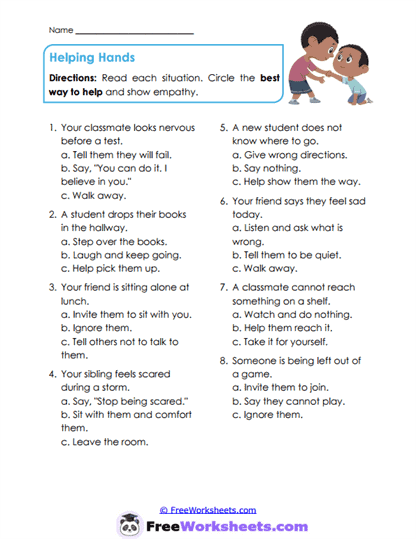
This worksheet helps children choose the most caring response when another person needs support. Students read eight situations involving nervousness, dropped books, loneliness, fear, confusion, sadness, difficulty reaching something, and exclusion from a game. For each one, they select the action that shows the greatest empathy and practical help. The page teaches that caring means paying attention to another person’s feelings and choosing a response that makes the situation safer, easier, or less lonely.
Skills Developed
Students build perspective-taking, compassionate decision-making, listening, and problem-solving skills. They practice comparing several choices and deciding which one truly responds to the person’s need. The worksheet also shows that empathy can take different forms, including encouragement, physical help, comfort, explanation, patient listening, and inclusion. These skills help children move beyond simply feeling sorry for someone and begin taking kind, useful action.
Grade & Stage Appropriateness
This worksheet is most appropriate for early elementary students, particularly grades 1 through 3. Children in this age range are beginning to understand that different problems call for different kinds of support. First-grade students may benefit from hearing the choices aloud, while second- and third-grade students can usually explain why one option is more helpful than the others. The familiar school and family situations make the lesson easy to connect with real life.
Connections to Collaborative for Academic, Social and Emotional Learning (CASEL)
This worksheet supports the CASEL areas of social awareness, relationship skills, and responsible decision-making. Students notice another person’s emotional or practical need, compare possible responses, and choose a caring action. In my experience, young children often want to help but sometimes choose what would make them feel better rather than what the other person actually needs. I use these examples to ask, “What would help this person most right now?” and that question usually leads to much more thoughtful answers.
Using This Worksheet
Teachers can use this activity during an empathy unit, partner lesson, counseling group, or classroom discussion about being helpful. It works well to pause after each situation and let students explain how the person may be feeling before reviewing the choices. Parents and homeschool educators can connect the examples to home, sports, neighborhood play, and sibling relationships. Encourage the child to explain the reason for each answer so the focus stays on understanding the person rather than simply choosing a letter.