
About This Worksheet
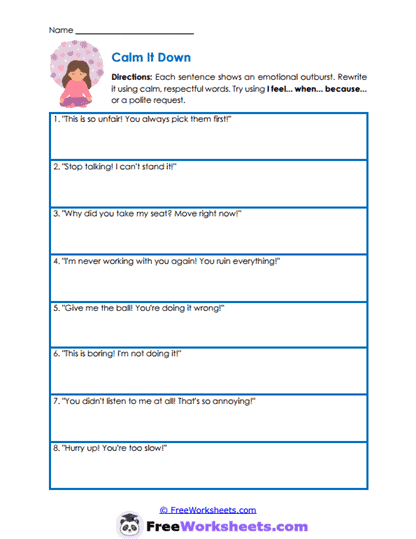
This worksheet helps students turn emotional outbursts into calm, respectful statements. Children read eight sharp or demanding comments, such as accusing someone of cutting in line, interrupting, taking a seat, or ruining a group activity. They then rewrite each statement using either an “I feel…when…because…” sentence or a polite request. The activity shows students that they can still speak honestly and stand up for themselves without shouting, insulting, or ordering another person around.
Skills Developed
Students strengthen emotional regulation, assertive communication, conflict resolution, and careful word choice. They practice identifying the feeling underneath an outburst and connecting it to the specific action that caused the problem. The worksheet also helps children replace broad attacks such as “You ruin everything” with language that is easier for another person to hear and respond to. These skills can support calmer conversations during games, classroom routines, shared work, and friendship conflicts.
Grade & Stage Appropriateness
This worksheet is best suited for elementary students in grades 3 through 5, with possible use in early middle school for students who need direct communication practice. Children at this stage often know when a statement sounds rude but may not yet know how to express the same concern in a respectful way. Younger students may need help choosing the feeling word and completing the reason, while older students can add a clear request or solution. The worksheet is especially helpful for children who become bossy, blaming, or loud when they feel frustrated.
Connections to Collaborative for Academic, Social and Emotional Learning (CASEL)
This worksheet connects strongly with the CASEL areas of self-management, self-awareness, relationship skills, and responsible decision-making. Students pause, identify what they are feeling, and choose words that are more likely to solve the problem than increase it. When I use this type of activity, I remind children that calm language does not mean weak language. A respectful statement can still be firm, clear, and honest while protecting both people’s dignity.
Using This Worksheet
Teachers can model one example aloud by first naming the likely feeling, then identifying the specific behavior, and finally creating a polite request. The page works well before group work, recess, partner activities, or any setting where children may need to disagree respectfully. Parents and homeschool educators can connect the statements to common sibling, homework, or playtime conflicts. After writing, have students read each response aloud and check whether it sounds calm enough to invite a useful reply.