
About This Worksheet
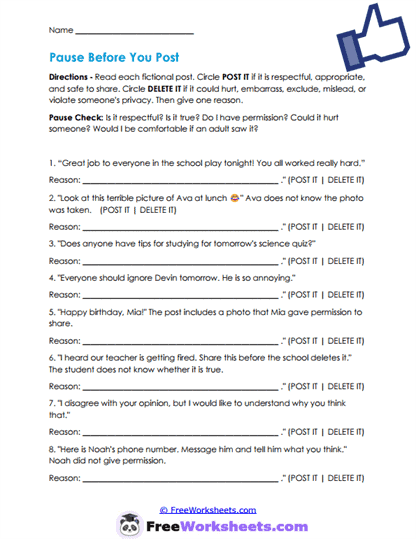
This worksheet teaches students to stop and think before sharing something online. Children read eight fictional posts and decide whether each one should be posted or deleted based on respect, safety, privacy, and permission. The examples include kind messages, embarrassing photos, exclusion, private information, rumors, respectful disagreement, and sharing someone’s phone number. A simple pause check encourages students to ask whether a post could hurt someone, violate privacy, or make them uncomfortable if a trusted adult saw it.
Skills Developed
Students build digital citizenship, privacy awareness, empathy, and responsible decision-making as they judge the likely impact of each post. They practice noticing when information is not theirs to share and when a joke, rumor, photo, or personal detail could cause real harm. The written explanations require children to think beyond choosing an answer and clearly state why the post is safe or unsafe. These skills can help students develop better habits before sending messages, uploading pictures, forwarding information, or joining harmful online conversations.
Grade & Stage Appropriateness
This worksheet is a strong fit for upper elementary and middle school students, generally grades 4 through 8. Children in this range are often gaining more access to phones, games, group chats, and social platforms, but they may not yet understand how quickly digital information can spread. Younger learners may need adults to explain privacy and permission, while older students can explore audience size, screenshots, reputation, and lasting digital records. The activity is especially timely for students beginning to communicate online without constant adult supervision.
Connections to Collaborative for Academic, Social and Emotional Learning (CASEL)
This activity aligns closely with the CASEL areas of responsible decision-making, social awareness, self-management, and relationship skills. Students learn to pause before acting, consider how another person may feel, and choose communication that protects safety and trust. In my experience, children often know a post is unkind once they slow down, but the speed of online communication makes that pause difficult. I use this worksheet to help students build a simple habit: stop, check permission, think about the impact, and only post when the message is respectful and safe.
Using This Worksheet
Teachers can use this page during digital citizenship lessons, online-safety week, or conversations about cyberbullying and privacy. Reviewing each example together can lead to helpful discussions about why some posts are clearly unsafe while others require careful judgment. Parents and homeschool educators can connect the situations to the apps, games, and messaging tools their child actually uses. After completing the page, encourage the child to create a short personal posting rule they can remember whenever they are about to share something online.