
About This Worksheet
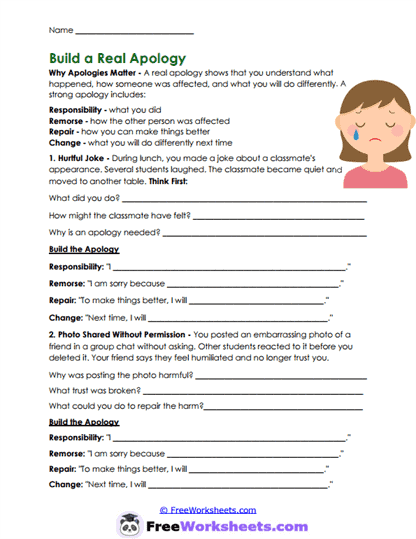
This worksheet teaches students that a real apology is more than simply saying, “I’m sorry.” Children work through situations involving a hurtful joke and an embarrassing photo shared without permission, then build an apology that includes responsibility, remorse, repair, and a plan for change. The questions help students think about what they did, how the other person may have felt, what trust was damaged, and what action could make the situation better. This thoughtful structure shows children that a strong apology should acknowledge the harm without making excuses or placing blame on the person who was hurt.
Skills Developed
Students strengthen empathy, accountability, emotional awareness, and relationship-repair skills as they examine the full effect of harmful choices. They practice naming an action clearly, recognizing another person’s feelings, and suggesting a realistic way to repair the damage. The activity also helps children understand that trust may not return immediately just because an apology was offered. These skills can support healthier responses after teasing, privacy violations, careless comments, online mistakes, and other conflicts between peers.
Grade & Stage Appropriateness
This worksheet is best suited for upper elementary through middle school students, especially grades 4 through 8. Children in this range are becoming more responsible for their words, digital choices, friendships, and the effect their behavior has on others. Younger students may need help understanding the difference between remorse and repair, while older students can think more deeply about damaged trust and lasting consequences. The open-ended format also makes the activity useful across several maturity levels because students can give answers that match their own social understanding.
Connections to Collaborative for Academic, Social and Emotional Learning (CASEL)
This worksheet connects strongly with the CASEL areas of self-awareness, social awareness, relationship skills, and responsible decision-making. Students examine their own behavior, consider another person’s emotional experience, and plan an action that may help rebuild the relationship. When I have used apology activities with children, I have found that many students want to rush straight to “sorry” without explaining what they are sorry for. I gently remind them that a meaningful apology sounds honest because it names the harm, accepts responsibility, and shows what will be done differently next time.
Using This Worksheet
Teachers can use this page after a lesson on conflict repair, digital citizenship, teasing, or personal responsibility. It works best when students first see a teacher model the difference between a weak apology and one that includes all four parts. Parents and homeschool educators can use it after emotions have settled and the child is ready to reflect without feeling attacked or embarrassed. Keep the tone calm and supportive, and focus on helping the child understand the harm and choose one repair step they can truly follow through on.