
About This Worksheet
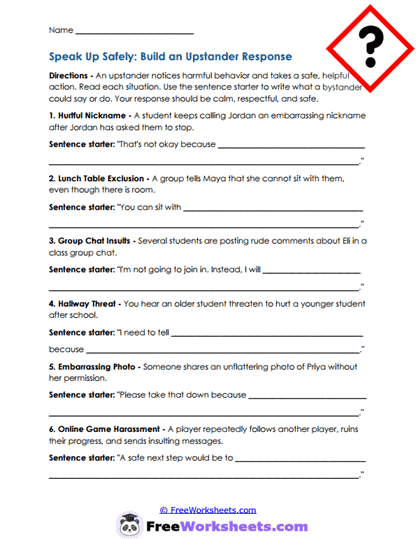
This worksheet helps students build calm, respectful, and safe responses to harmful behavior. Children read six situations involving nicknames, exclusion, group-chat insults, threats, embarrassing photos, and online game harassment. Each example provides a sentence starter that guides students toward an upstander response without asking them to argue, insult, or place themselves in danger. The activity shows that speaking up can mean setting a boundary, offering support, refusing to participate, reporting a threat, or suggesting a safer next step.
Skills Developed
Students practice assertive communication, empathy, problem-solving, and personal safety. They learn how to explain why a behavior is harmful and how to respond in a way that is clear without becoming aggressive. The sentence starters also help children organize their thoughts when they may feel nervous, angry, or unsure of what to say. These skills can make it easier for students to support a peer, protect privacy, and involve a trusted adult when a situation is too serious to handle alone.
Grade & Stage Appropriateness
This worksheet is a strong fit for upper elementary through middle school students, generally grades 4 through 8. Children in these grades are often aware that something is wrong but may freeze because they do not know the safest words to use. Younger learners can complete the sentence starters with teacher guidance, while older students can compare several possible responses and decide which one is most practical. The activity is especially appropriate for students who need direct practice turning good intentions into specific words and actions.
Connections to Collaborative for Academic, Social and Emotional Learning (CASEL)
This worksheet closely supports the CASEL areas of relationship skills, responsible decision-making, social awareness, and self-management. Students consider another person’s needs, manage their own emotional reaction, and choose a response that is helpful rather than impulsive. In my experience, children often think an upstander must give a dramatic speech or confront the person causing harm. I use this activity to show that a short statement, a supportive invitation, saving evidence, or quietly telling an adult can be just as brave and often much safer.
Using This Worksheet
Teachers can model the first response aloud and explain how to keep the wording calm, specific, and focused on safety. The page works well before role-playing, group discussion, or a lesson about the difference between tattling and reporting. Parents and homeschool educators can practice reading the responses naturally so children feel more prepared to use them in real situations. Make sure students understand that they should not directly confront someone who is threatening violence or creating an immediate danger.