
About This Worksheet
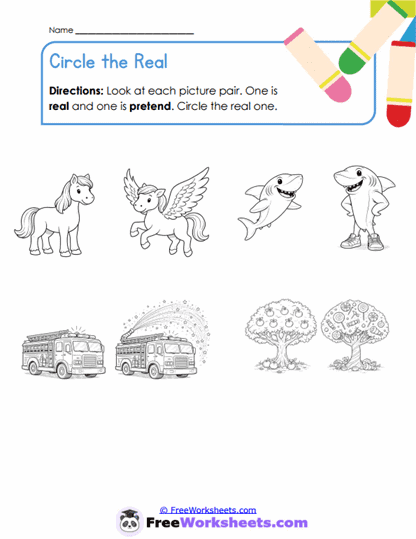
This worksheet helps preschool students identify which picture in each pair is real and which one is pretend. Comparing real and fantasy pictures teaches children how to recognize what exists in everyday life versus what belongs in imagination or stories. Students study picture pairs and circle the object that is real. For example, a horse is real, while a flying winged horse belongs in fantasy stories. This activity supports observation, reasoning, and comprehension skills.
Curriculum and Grade Alignment
This preschool literacy worksheet focuses on classification, comprehension, and fiction versus nonfiction understanding. Children practice comparing realistic objects with imaginary or magical versions of those objects. Before beginning this activity, students should recognize common animals, vehicles, and outdoor objects. Future literacy learning may include identifying fantasy elements in books and discussing realistic versus imaginary story settings. This worksheet aligns with CCSS.ELA-LITERACY.RL.K.5 and TEKS standards related to comprehension and reasoning development.
Student Tasks
On this worksheet, students will study pairs of pictures shown side by side on the page. Learners decide which picture represents something real and circle the correct answer in each pair. Children compare details carefully while discussing why one object belongs in real life and the other belongs in pretend stories. Students strengthen observation and vocabulary skills while practicing comprehension and classification. The activity also encourages thoughtful visual comparison and decision-making during literacy instruction.
Common Challenges and Misconceptions
Some preschool students may think fantasy versions are real because they have seen them in cartoons or books. Children can also choose pretend pictures simply because they seem more exciting or colorful. A few learners may overlook important visual clues when comparing the pairs too quickly. Others may need support understanding unfamiliar fantasy creatures or objects. Teachers can help by discussing the picture pairs together and reviewing examples of real versus pretend ideas before students answer.
Implementation Guidance
Teachers can use this worksheet during fiction versus nonfiction lessons, literacy center activities, or critical thinking practice. Parents may also use the worksheet at home while discussing favorite stories and real-life experiences together. Encouraging children to explain why they circled a picture can strengthen oral language and reasoning skills. Adults can ask follow-up questions like “Could you see this in real life?” to deepen comprehension. This worksheet also works well for partner work or intervention instruction.
Details and Features
The worksheet includes clear side-by-side picture comparisons that are easy for preschool students to analyze visually. Simple circling directions keep the activity manageable and developmentally appropriate for young learners. Familiar real-world objects help children connect comprehension practice to everyday experiences. Fantasy versions of the objects add creativity and engagement while reinforcing classification skills. The worksheet prints clearly for classroom instruction, homeschool use, or intervention support.