
About This Worksheet
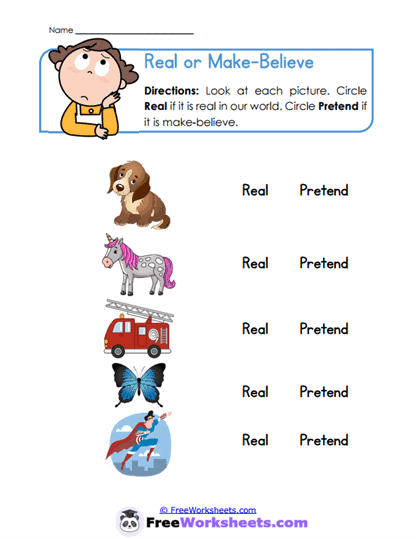
This worksheet helps preschool students learn the difference between things that are real and things that are pretend. Reality versus fiction is an important early comprehension skill that teaches children how to separate everyday life from make-believe ideas. Students look at pictures like a dog, butterfly, unicorn, and superhero, then decide whether each one is real or pretend. For example, a butterfly is something real that children can see in nature, while a superhero flying through the sky is pretend. This activity supports reasoning, vocabulary growth, and early critical thinking skills.
Curriculum and Grade Alignment
This preschool literacy worksheet focuses on comprehension, classification, and real-world understanding. Children practice recognizing familiar real-life objects while identifying fantasy or make-believe characters and ideas. Before beginning this activity, students should understand simple vocabulary connected to animals, people, and story characters. Future literacy learning may include comparing fiction and nonfiction texts and identifying fantasy elements in stories. This worksheet aligns with CCSS.ELA-LITERACY.RL.K.5 and TEKS standards related to comprehension and critical thinking development.
Student Tasks
On this worksheet, students will study each picture carefully and think about whether it exists in real life or only in pretend stories. Learners circle the correct choice beside each picture by choosing Real or Pretend. Children practice discussing why certain things are real while others belong in imagination or fantasy. Students strengthen comprehension and reasoning skills while building vocabulary connected to fiction and nonfiction ideas. The activity also encourages thoughtful observation and decision-making during literacy instruction.
Common Challenges and Misconceptions
Some preschool students may believe fantasy characters are real because they have seen them in cartoons, books, or movies. Children can also confuse costumes or pretend play with actual real-life possibilities. A few learners may answer quickly without carefully studying the picture first. Others may need extra support understanding the meaning of the word pretend. Teachers can help by discussing examples of real objects and fantasy characters together before students begin working.
Implementation Guidance
Teachers can use this worksheet during comprehension lessons, fiction versus nonfiction themes, or class discussions about imagination. Parents may also use the activity at home while talking about books, movies, and pretend play together. Encouraging children to explain why they chose real or pretend can strengthen oral language and reasoning skills. Adults can ask follow-up questions like “Have you ever seen this in real life?” to deepen understanding. This worksheet also works well for partner conversations or literacy center activities.
Details and Features
The worksheet includes colorful and familiar pictures that preschool students can easily recognize and discuss. Simple answer choices make the activity manageable and developmentally appropriate for young learners. Large spacing and uncluttered formatting help children stay focused during classification tasks. The real-versus-pretend theme encourages critical thinking while still feeling playful and engaging. The worksheet prints clearly for classroom instruction, homeschool learning, or intervention support.