
About This Worksheet
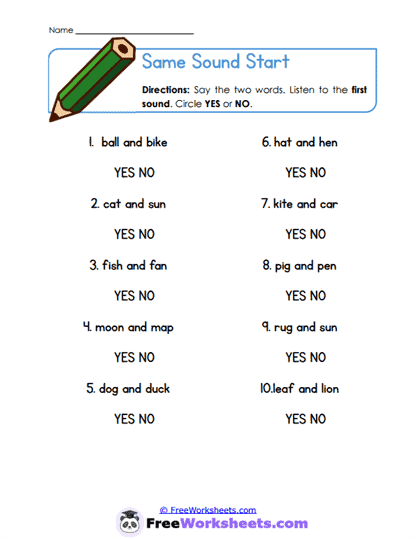
This worksheet helps preschool students compare beginning sounds in pairs of words. Sound comparison activities teach children how to listen carefully and decide whether two words start with the same sound. Students say both words aloud and circle YES or NO depending on whether the beginning sounds match. For example, dog and duck both begin with the /d/ sound, so students circle YES. This activity strengthens phonemic awareness, listening skills, and sound discrimination abilities.
Curriculum and Grade Alignment
This preschool literacy worksheet focuses on beginning sound recognition and phonological awareness. Children practice comparing spoken words and identifying matching sounds within word pairs. Before using this worksheet, students should recognize common beginning consonant sounds and basic vocabulary words. Later literacy learning may include sorting words into sound groups and blending sounds while reading simple text. This worksheet aligns with CCSS.ELA-LITERACY.RF.K.2.A and TEKS standards related to sound discrimination and early phonics instruction.
Student Tasks
On this worksheet, students will say pairs of words like fish and fan or cat and sun aloud. Learners listen carefully to the first sound in each word before deciding whether the sounds match. Children circle YES if the words begin with the same sound or NO if they do not. Students practice comparing sounds and paying close attention to spoken language. The activity also encourages thoughtful listening instead of quick guessing.
Common Challenges and Misconceptions
Some preschool students may focus on rhyming or ending sounds instead of the beginning sounds being practiced. Children might also become confused by words that sound similar but start with different letters. A few learners may rush through the worksheet without saying the words aloud carefully first. Others may struggle with hearing subtle differences between consonant sounds. Teachers can support understanding by modeling each word pair slowly and emphasizing the first sound clearly.
Implementation Guidance
Teachers can use this worksheet during phonics instruction, literacy centers, or whole-group listening activities. Parents may also use the activity at home while practicing word games and sound comparisons together. Encouraging children to repeat each beginning sound several times can improve confidence and understanding. Adults can ask students to explain why they chose YES or NO to strengthen reasoning skills. This worksheet also works well as review after introducing beginning consonant sounds.
Details and Features
This printable worksheet includes an easy YES or NO format that preschool students can follow independently. Large readable text and wide spacing support beginning readers and children developing tracking skills. Familiar vocabulary words help keep the focus on sound comparison instead of word recognition difficulties. The clean layout reduces distractions and encourages careful listening practice. The worksheet prints clearly for classroom lessons, homeschool instruction, or intervention support.