
About This Worksheet
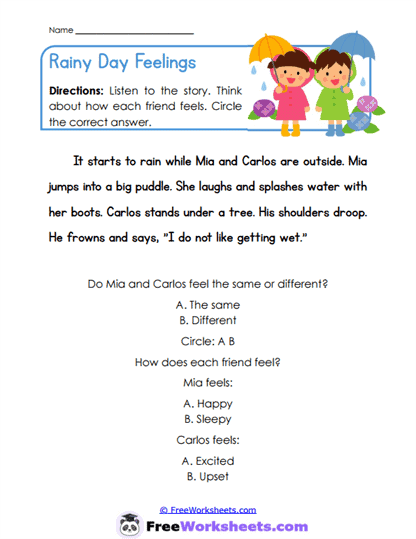
This worksheet helps preschool students understand character feelings and compare emotional reactions in a story. Children practice making simple inferences by using clues from actions, words, and expressions. Students listen to a short story about two children reacting differently to rainy weather and then decide how each character feels. For example, smiling and splashing become the feeling of happiness, while frowning and hiding from rain become feelings of discomfort or upset. This activity supports social-emotional learning, listening comprehension, and early reasoning skills.
Curriculum and Grade Alignment
This preschool literacy worksheet focuses on understanding emotions, character behavior, and comprehension skills. Children learn how actions and dialogue provide clues about feelings and attitudes. Before beginning this activity, students should recognize basic emotions such as happy, sad, excited, and upset. Later literacy instruction may include explaining character feelings using evidence from stories and illustrations. This worksheet aligns with CCSS.ELA-LITERACY.RL.K.3 and TEKS standards related to comprehension and social understanding.
Student Tasks
On this worksheet, students will listen to or read a short story about two children playing outside in the rain. Learners compare the feelings of the two characters and decide whether they feel the same or different. Children also choose the emotion that best matches each character’s actions and words from the passage. Students practice using story clues to understand emotions instead of relying on guesses alone. The activity encourages thoughtful discussion about how different people can react differently to the same situation.
Common Challenges and Misconceptions
Some preschool students may think all characters in a story should feel the same way about an event. Children can also struggle to connect actions like splashing or frowning with specific emotions. A few learners may confuse excitement with happiness or sadness with anger. Others may choose answers based on their own feelings about rain instead of the clues in the story. Teachers can support understanding by modeling facial expressions and discussing emotions before completing the worksheet.
Implementation Guidance
Teachers can use this worksheet during social-emotional learning lessons, weather themes, or reading comprehension instruction. Parents may also use this activity at home to help children talk about feelings and reactions in everyday situations. Reading the passage aloud with expressive voices can help children better understand the emotions of each character. Adults can ask simple questions like “How can you tell Mia feels happy?” to encourage deeper thinking. This worksheet works well in literacy centers, small-group discussions, or independent review practice.
Details and Features
This printable worksheet includes simple multiple-choice questions that are easy for preschool learners to understand and complete. Bright rain-themed illustrations help children connect visually to the story and emotions being discussed. Large text and uncluttered spacing support beginning readers and listening-based learners. Students answer by circling choices, keeping the task developmentally appropriate for early childhood classrooms. The worksheet prints clearly for school, homeschool, or intervention instruction.