
About This Worksheet
This worksheet focuses on identifying and organizing key story elements within a narrative. Story elements such as characters, setting, problem, events, and resolution help readers understand how a story is structured. Third-grade students strengthen comprehension when they learn to break a story into these important parts. For example, a character’s challenge often drives the events that lead to the resolution. This activity helps readers see how all parts of a story work together.
Curriculum and Grade Alignment
This worksheet is designed for Grade 3 students studying story structure and literary comprehension. The primary learning goal is identifying and organizing major story elements. Students should already understand basic narrative concepts such as characters and setting. The next progression involves analyzing how story elements interact and influence one another. This activity aligns with CCSS RL.3.3 and supports TEKS 3.8A by helping students analyze plot and character development.
Student Tasks
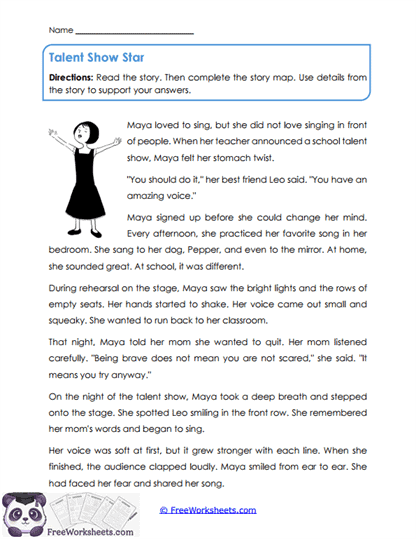
On this worksheet, students will read a story about a student overcoming stage fright before a talent show. They will identify key story elements and organize them within a story map. Learners must use evidence from the text to support their responses. Students analyze the character, problem, important events, and resolution. The activity encourages comprehension, organization, and evidence-based thinking.
Common Challenges and Misconceptions
Many students confuse the problem with an event that happens during the story. Some learners focus on minor details rather than identifying the most important story elements. Others may summarize too broadly and miss specific evidence from the text. Readers sometimes struggle to explain how events lead to the resolution. Teachers should encourage students to focus on the parts of the story that are most important to the plot.
Implementation Guidance
Teachers can use this worksheet during lessons on story structure and narrative comprehension. It works well as guided practice before students create story maps independently. Parents may discuss the beginning, middle, and end of the story before students complete the organizer. Homeschool educators can extend learning by comparing story maps from multiple texts. The worksheet provides strong foundational practice in literary analysis.
Details and Features
The worksheet includes a relatable story about courage and performing in front of others. Students complete a structured story map that organizes key literary elements. The format supports clear thinking and comprehension. The printable design is suitable for classrooms, homework assignments, intervention groups, and homeschool learning. Its focused structure helps students understand how stories are built.