
About This Worksheet
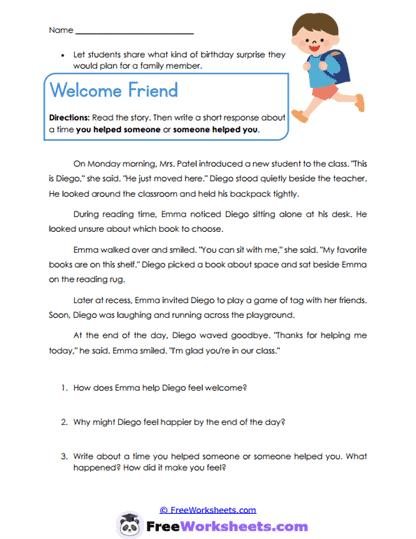
This worksheet focuses on understanding character actions, feelings, and personal connections within a literary text. Literary comprehension involves understanding not only what happens in a story but also how characters affect one another. Third-grade students strengthen reading skills when they analyze relationships and connect story events to their own experiences. For example, inviting a new student to join an activity can help that character feel welcomed and included. This activity encourages empathy, reflection, and deeper comprehension.
Curriculum and Grade Alignment
This worksheet is designed for Grade 3 students studying character relationships and response-to-text writing. The primary learning goal is analyzing character interactions and making meaningful personal connections. Students should already be able to identify characters and basic story events. The next progression involves comparing character perspectives and supporting interpretations with evidence. This activity aligns with CCSS RL.3.3 and W.3.3 while supporting TEKS 3.8A through character analysis and personal response writing.
Student Tasks
On this worksheet, students will read a story about a new student adjusting to a new classroom. They will answer questions about how one character helps another feel welcome and included. Learners must explain how specific actions affect the feelings of the characters. Students also write about a personal experience involving helping someone or receiving help from another person. The activity combines reading comprehension with reflection and written expression.
Common Challenges and Misconceptions
Many students identify helpful actions but struggle to explain their emotional impact. Some learners focus only on the events of the story instead of the relationships between characters. Others may provide personal responses that are unrelated to the themes of the passage. Readers sometimes answer questions using opinions rather than evidence from the text. Teachers should encourage students to connect character actions with character feelings.
Implementation Guidance
Teachers can use this worksheet during lessons on character relationships, empathy, and social-emotional learning. It works well as a discussion activity because students can share personal experiences related to kindness and friendship. Parents may talk about ways people make others feel welcome in everyday situations. Homeschool educators can extend learning by having students write additional examples of kindness from their own lives. The worksheet promotes both literacy development and positive character education.
Details and Features
The worksheet includes a realistic school-based story that many students can easily relate to. Comprehension questions focus on character interactions, emotions, and relationships. A personal response section encourages students to connect literature to their own experiences. The printable format is appropriate for classrooms, homework assignments, intervention groups, and homeschool learning. Its thoughtful design supports both reading comprehension and social-emotional growth.