
About This Worksheet
This worksheet focuses on tracking how a character’s feelings change throughout a story. Character emotions are important because they help readers understand motivations, reactions, and personal growth. Third-grade students strengthen comprehension when they identify emotional changes from the beginning, middle, and end of a narrative. For example, a character may begin feeling nervous but end the story feeling proud after overcoming a challenge. This activity helps students connect events in the story to character development.
Curriculum and Grade Alignment
This worksheet is designed for Grade 3 students studying character development and literary comprehension. The primary learning goal is identifying how a character’s feelings change as events unfold. Students should already be able to identify basic emotions and describe character actions. The next progression involves explaining how challenges and experiences influence character growth. This activity aligns with CCSS RL.3.3 and supports TEKS 3.8A by helping students describe characters and their responses to events.
Student Tasks
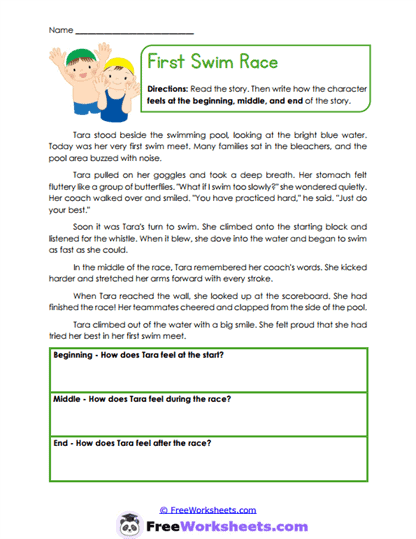
On this worksheet, students will read a story about a girl participating in her first swim race. They will identify how the main character feels at the beginning of the story. Learners must then explain her emotions during the race and describe how she feels after it ends. Students use details from the text to support their answers. The activity encourages close reading and thoughtful analysis of character emotions.
Common Challenges and Misconceptions
Many students focus only on the outcome of the story and overlook emotional changes that happen along the way. Some learners identify emotions correctly but struggle to explain why the character feels that way. Others may choose feelings based on personal assumptions rather than textual evidence. Readers sometimes confuse actions with emotions. Teachers should encourage students to look for clues in the character’s thoughts, words, and reactions.
Implementation Guidance
Teachers can use this worksheet during lessons on character development and story comprehension. It works well as a guided reading activity or independent practice assignment. Parents may discuss how the character’s feelings change and what events cause those changes. Homeschool educators can extend the lesson by comparing the character’s emotions to experiences from the student’s own life. The worksheet promotes empathy and deeper understanding of narrative texts.
Details and Features
The worksheet includes a relatable story about participating in a first swim meet. Students analyze emotions at three key points in the narrative, helping them recognize character growth. Dedicated response spaces encourage complete and organized answers. The printable format is ideal for classroom instruction, homework, intervention groups, and homeschool learning. Its focused design makes character analysis manageable and engaging for young readers.