
About This Worksheet
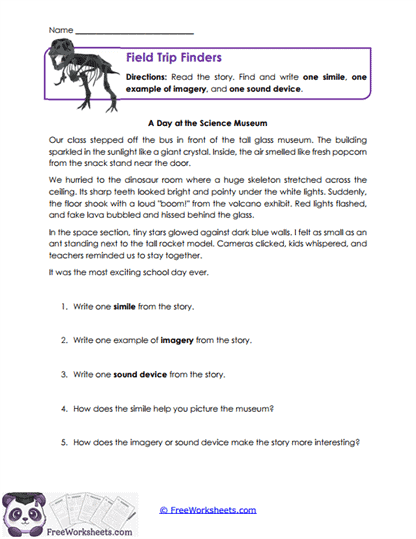
This worksheet focuses on identifying and comparing different literary devices within a narrative text. Literary devices are language techniques authors use to make writing more vivid, engaging, and memorable. Third-grade students strengthen reading comprehension when they learn to recognize multiple devices in the same passage. For example, “the building sparkled like a giant crystal” is a simile because it compares two things using the word “like.” This activity helps students understand how different literary devices work together to enhance a story.
Curriculum and Grade Alignment
This activity is intended for Grade 3 students studying figurative language and literary analysis. The primary objective is identifying similes, imagery, and sound devices within a text. Students should already be familiar with basic literary device definitions and examples. The next progression involves explaining how different devices affect meaning, mood, and reader engagement. This worksheet aligns with CCSS RL.3.4 and supports TEKS 3.10D through analysis of literary language.
Student Tasks
On this worksheet, students will read a narrative passage about a class trip to a science museum. They will locate one example of a simile, one example of imagery, and one example of a sound device. Learners must explain how each example helps the reader better understand or imagine the setting. Students also reflect on how literary devices make stories more interesting. The activity develops both identification and analysis skills.
Common Challenges and Misconceptions
Many students can identify one literary device but confuse it with another. Some learners mistake descriptive details for similes or overlook sound devices hidden within the passage. Others can find examples but struggle to explain their effect on the reader. Readers sometimes focus only on the story events instead of the author’s language choices. Teachers should encourage students to look for clues that reveal how each device functions.
Implementation Guidance
Teachers can use this worksheet as a review activity after introducing several literary devices. It works well in small groups, literacy centers, or independent practice sessions. Parents may help children discuss how different devices make the museum visit feel exciting and realistic. Homeschool educators can extend learning by having students search for additional examples in books they read independently. The worksheet provides valuable practice in comparing literary techniques.
Details and Features
The worksheet includes an engaging narrative passage with multiple literary devices woven naturally into the text. Students identify examples and explain their purpose through written responses. Open-ended questions encourage deeper thinking beyond simple recognition. The printable format supports classroom instruction, homework, tutoring, and homeschool learning. Its integrated approach helps reinforce several literary concepts in one lesson.