
About This Worksheet
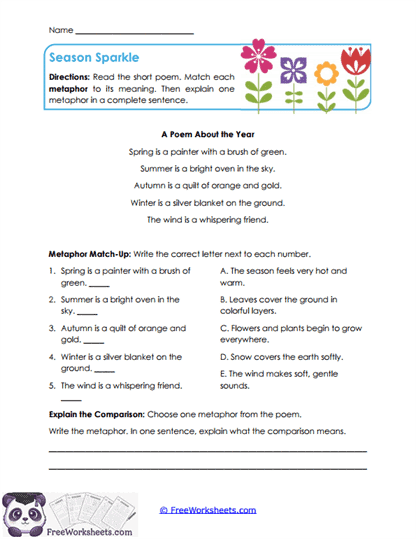
This worksheet focuses on identifying and interpreting metaphors in poetry. A metaphor is a figure of speech that directly compares two unlike things without using the words “like” or “as.” Third-grade students build deeper understanding of figurative language when they learn how metaphors create meaning and imagery. For example, “Winter is a silver blanket” compares snow-covered ground to a blanket to help readers picture its appearance. This activity strengthens both poetry comprehension and language interpretation skills.
Curriculum and Grade Alignment
This activity is intended for Grade 3 students studying literary devices in poetry. The primary goal is recognizing metaphors and understanding what they represent. Students should already be familiar with basic comparisons and descriptive language. The next progression involves analyzing how figurative language contributes to a poem’s mood and message. This worksheet aligns with CCSS RL.3.4 and supports TEKS 3.10D through interpretation of figurative language.
Student Tasks
On this worksheet, students will read a seasonal poem containing several metaphors. They will match each metaphor to the statement that best explains its meaning. Learners must think about how the comparison connects to real-world observations and experiences. Students also choose one metaphor and explain its meaning in a complete sentence. The activity combines reading comprehension with figurative language analysis.
Common Challenges and Misconceptions
Many students search for the words “like” or “as” and mistakenly classify metaphors as similes. Some learners understand the literal meaning of a phrase but struggle to interpret the figurative comparison. Others may choose answers based on individual words rather than considering the entire metaphor. Readers sometimes assume there is only one possible interpretation. Teachers should encourage students to discuss what image or idea the author is trying to create.
Implementation Guidance
Teachers can use this worksheet during poetry lessons or figurative language instruction. It works well after introducing the difference between similes and metaphors. Parents may read the poem aloud and discuss each comparison before students complete the matching activity. Homeschool educators can extend learning by asking students to create their own seasonal metaphors. The worksheet promotes both literary analysis and creative thinking.
Details and Features
The worksheet includes an original poem with multiple examples of metaphors connected to the seasons. Students complete a matching exercise and a written explanation task for deeper understanding. The layout is simple and organized, making it accessible for developing readers. The printable format supports independent work, guided practice, and review activities. Its engaging theme helps students connect figurative language to familiar experiences.