
About This Worksheet
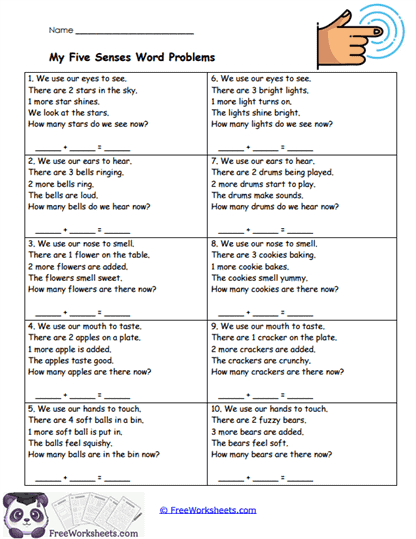
This worksheet is an early math activity that helps Kindergarten students practice addition word problems using the five senses and numbers up to 5. Children read short stories connected to seeing, hearing, smelling, tasting, and touching while adding groups together to find totals. Familiar examples such as stars, bells, flowers, apples, lights, drums, cookies, crackers, and bears help students connect math learning to everyday experiences. For example, 2 apples plus 1 more apple becomes 3 apples. The simple wording and sensory themes make the worksheet engaging and easy for young learners to understand.
Curriculum and Grade Alignment
This worksheet is designed for Kindergarten students who are learning beginning addition and simple story problem skills. The primary learning goal is helping children understand that addition combines two groups into one larger amount. Students should already know how to count objects accurately and recognize written numbers from 0-5 before completing the activity. These foundational skills support future learning with equations, subtraction readiness, and mental addition fluency in later grades. This worksheet supports Common Core Standard K.OA.A.2 and aligns with TEKS K.3.B for representing and solving addition situations using drawings and concrete objects.
Student Tasks
On this worksheet, students will read five senses-themed word problems and solve addition equations with totals up to 5. Children count groups of objects connected to sight, sound, smell, taste, and touch before writing the correct answers on the lines provided. Learners practice combining groups together while strengthening number recognition and counting fluency. Students also improve listening and reading comprehension skills by identifying the important math information in each short story. The repeated format helps children develop confidence with beginner addition concepts.
Common Challenges and Misconceptions
Some students may become distracted by the sensory details in the stories and forget to focus on the addition question. Young learners sometimes count objects too quickly and accidentally skip numbers while finding totals. A few children may understand the story but struggle to transfer the answer correctly onto the equation line. Students who are still learning number writing may also reverse numerals or write unclear answers. Teachers and parents can help by encouraging slow counting and asking children to explain how they found each total.
Implementation Guidance
Teachers can use this worksheet during math lessons, science units about the five senses, small-group instruction, or independent practice. Parents may find the real-world sensory examples helpful for making math feel more natural and conversational during home learning sessions. Students can act out the stories using classroom objects, drawings, or manipulatives before solving the problems on paper. This worksheet also works well for guided discussions where children talk through their counting strategies aloud. Adults should encourage learners to check their answers carefully before moving to the next problem.
Details and Features
This printable worksheet includes ten five senses-themed addition word problems with totals up to 5. Large equation lines and clean formatting support young learners who are still developing fine motor and handwriting skills. The black-and-white design prints clearly for classroom use, homework packets, intervention groups, or homeschool lessons. Real-world sensory examples help children stay engaged while practicing beginning addition skills. Its organized structure makes the worksheet useful for review practice, independent learning, or early math assessment activities.