
About This Worksheet
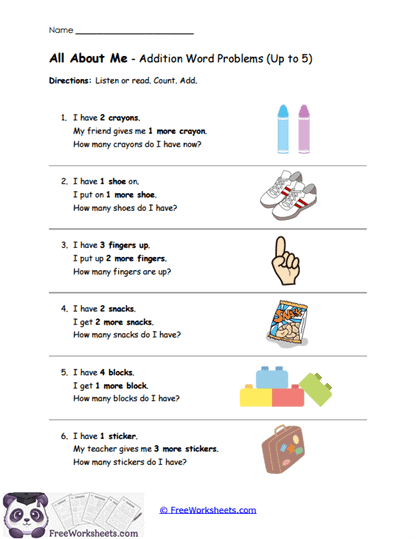
This worksheet is an early math activity that helps Kindergarten students practice simple addition word problems using numbers up to 5. Children read short personal stories about crayons, shoes, fingers, snacks, blocks, and stickers, then count and add the groups together to find the answer. The worksheet connects math to everyday experiences young learners already understand, which helps make addition feel less stressful and more natural. For example, 2 crayons plus 1 more crayon becomes 3 crayons. The simple sentences and familiar objects make this worksheet a good fit for beginner math learners at home or in the classroom.
Curriculum and Grade Alignment
This worksheet is designed for Kindergarten students who are beginning to learn addition concepts within 5. The main learning goal is helping children understand that addition means joining two groups together to make a larger group. Students should already know how to count objects and recognize numbers from 0-5 before completing this activity. This skill prepares children for future addition fluency and solving larger word problems in first grade. This worksheet supports Common Core Standard K.OA.A.2, which focuses on solving addition word problems using objects or drawings, and it also aligns with TEKS K.3.B for modeling addition situations with concrete objects.
Student Tasks
On this worksheet, students will read or listen to short addition stories and figure out how many items there are in all. Children count small groups of familiar objects like snacks, crayons, and stickers before adding the numbers together. Learners practice using counting skills to solve real-life math situations with totals up to 5. Students also build confidence by answering simple questions written in easy-to-follow language. Each problem encourages children to connect spoken math ideas with written numbers.
Common Challenges and Misconceptions
Some children may count the same object twice when adding the groups together. Young learners sometimes forget that the question is asking for the total amount after adding more items. A few students may focus only on the second number they see instead of combining both groups correctly. Children who are still learning number recognition may also mix up written numerals while solving the problems. Teachers and parents can help by having students point to each object while counting slowly out loud.
Implementation Guidance
Teachers can use this worksheet during math centers, small group lessons, independent practice, or morning work activities. Parents may find it helpful for short daily math review sessions because the problems use simple language and familiar situations. Children can solve the problems with counters, crayons, fingers, or drawings to make the math more hands-on and easier to understand. This worksheet also works well as an introduction to story problems before students move into larger addition facts. Adults should encourage students to explain their thinking aloud to strengthen math vocabulary and reasoning skills.
Details and Features
This printable worksheet includes six addition word problems with numbers up to 5. The page uses large text, clean spacing, and simple illustrations that are easy for young learners to follow. Visual supports help children stay engaged and connect the math stories to real objects they recognize from daily life. The worksheet is designed for black-and-white printing while still remaining easy to read in classrooms or homeschool settings. Its beginner-friendly format makes it useful for independent work, guided practice, or take-home review.