
About This Worksheet
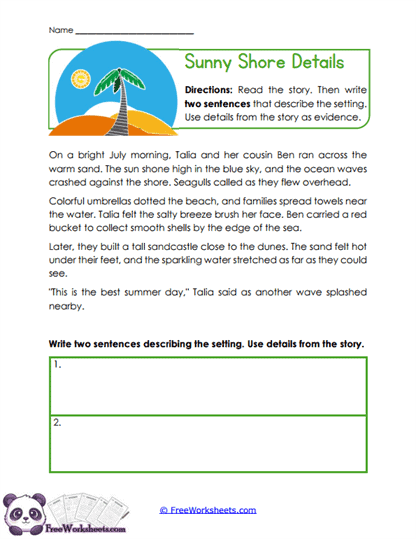
This worksheet helps students really zoom in on describing a setting using specific details, which is a key step in both reading and writing. At this level, students may understand where a story takes place, but they often need support turning those ideas into clear, descriptive sentences.
This activity asks students to go beyond just saying “at the beach.” Instead, they are encouraged to notice and use details like the warm sand, ocean waves, and bright sky. That kind of thinking strengthens both comprehension and writing at the same time.
It’s also a great bridge skill-students move from recognizing details to actually using them in their own sentences.
Curriculum and Grade Alignment
This worksheet supports Grade 2 students in describing setting using text evidence. It aligns with CCSS RL.2.1 and W.2.8.
Student Tasks
Students will read the passage and write two sentences that describe the setting using details from the text.
Common Challenges and Misconceptions
Students may write very general sentences or forget to include details from the story.
A helpful prompt is: “What can you see, hear, or feel in this place?”
Implementation Guidance
Encourage students to go back into the text and pull out exact details before writing.
Details and Features
This worksheet includes a descriptive passage rich with sensory details that help students visualize the setting. The writing task is structured but still allows for student choice, encouraging independence. The requirement to use text evidence reinforces close reading habits. The beach setting is familiar and engaging, making it easier for students to connect with the content. Overall, the activity supports both comprehension and early descriptive writing skills in a meaningful way.
Curriculum Overlap
Describing setting supports reading and writing development.
- Builds descriptive writing skills
- Strengthens comprehension
- Supports vocabulary growth
- Encourages visualization