
About This Worksheet
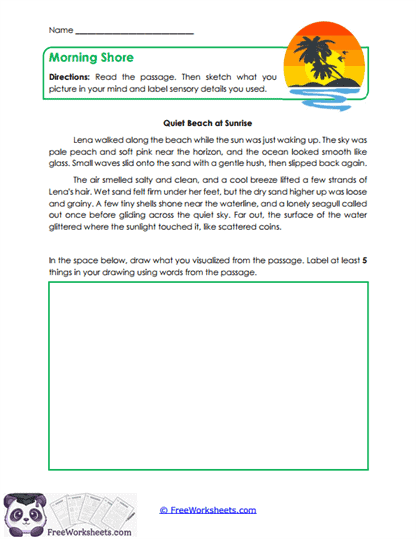
This worksheet is a visualization and sensory detail activity that builds reading comprehension and descriptive thinking. It is designed for Grade 5 students to connect text with mental imagery. Learners read a descriptive passage and translate it into a drawing using textual clues. For example, “water glittered” becomes a drawing of sparkling reflections on the ocean.
Curriculum and Grade Alignment
The worksheet targets Grade 5 reading comprehension and visualization skills. Its main goal is to help students interpret sensory language and represent it visually. Students should already be able to read short descriptive passages independently. It aligns with CCSS.ELA-LITERACY.RL.5.7, which focuses on interpreting visual representations of text. A relevant TEKS standard is 5.6.C, emphasizing visualization to understand text.
Student Tasks
On this worksheet, students will read a descriptive passage about a beach scene at sunrise. They will visualize the details and sketch what they imagine in a designated space. Students must label at least five elements in their drawing using words directly from the passage. This task connects reading comprehension with creative expression.
Common Challenges and Misconceptions
Some students may focus only on drawing without using details from the text. Others might struggle to identify which details are most important to include. There can also be confusion about labeling with exact words rather than paraphrasing. Teachers should remind students to refer back to the passage and underline key sensory clues.
Implementation Guidance
Teachers can use this worksheet as a comprehension check after a reading lesson. It works well as an independent activity or a paired discussion task. Parents can support learning by discussing the passage and helping children identify key details before drawing. This activity also integrates art with literacy for a more engaging experience.
Details and Features
The worksheet includes a rich descriptive passage focused on sensory imagery. A large blank space is provided for drawing and labeling, encouraging creativity. Clear directions guide students to connect text evidence with their illustrations. The printable format makes it easy to use in various learning environments.