
About This Worksheet
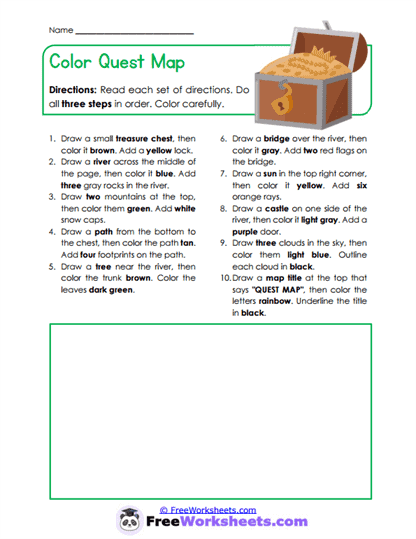
This worksheet is a multi-step drawing and coloring activity designed to strengthen students’ ability to follow detailed written directions in sequence. Students read a set of instructions to create a map scene, adding and coloring specific elements step by step. Intended for grades 2-4, it builds sequencing, spatial reasoning, and careful reading skills. The activity requires learners to interpret descriptive language accurately before acting. For example, students must draw a bridge over a river and color it gray while adding red flags. This structured map-building format reinforces sustained attention and task completion accuracy.
Curriculum and Grade Alignment
This worksheet aligns with upper elementary reading standards focused on interpreting multi-step written instructions. The primary learning objective is improving students’ ability to execute detailed tasks without skipping steps. Students should demonstrate independent reading fluency and color recognition before completing this activity. The content supports Common Core Reading Standards RI.2.3 and RI.3.3, which emphasize understanding steps in procedural texts. It also strengthens executive functioning skills such as organization and working memory. This resource promotes independence and precision in academic tasks.
Student Tasks
On this worksheet, students will read ten sequential directions describing how to create a quest-themed map. They draw and color specific elements including a treasure chest, river, mountains, castle, sun, and clouds. Students must follow placement instructions and apply correct colors as directed. Careful sequencing is required to ensure all components are included accurately. Learners must complete all steps before reviewing their final drawing. The task integrates reading comprehension with creative execution.
Common Challenges and Misconceptions
Students may begin drawing before reading all instructions fully. Some learners might overlook color details or skip small elements like labels or outlines. Others may confuse directional placement such as “top” or “bottom.” Rushing through steps can result in incomplete drawings. Confusion may also arise when multiple details are included in one direction. Teachers can encourage students to check off each step after completion to ensure accuracy.
Implementation Guidance
Teachers can use this worksheet as an engaging comprehension assessment during literacy centers. It works well as a whole-class listening activity when directions are read aloud. Small-group instruction allows clarification of spatial and descriptive vocabulary. Parents and homeschool educators may use this activity to reinforce careful reading habits. Encouraging students to reread each instruction before drawing improves precision. This worksheet also supports cross-curricular integration between art and literacy.
Details and Features
The worksheet includes a large blank drawing area for map creation. Ten clearly numbered directions guide students step by step. Instructions incorporate spatial language and descriptive color cues. The layout is organized for easy tracking and completion. The black-and-white printable format supports classroom efficiency. Its adventure theme increases engagement while reinforcing academic skills.