
About This Worksheet
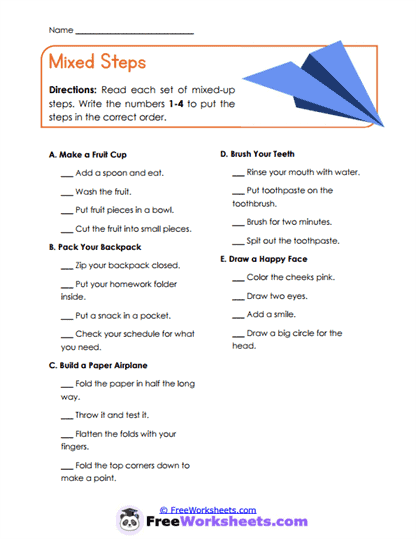
This worksheet is a sequencing and order-of-operations activity designed to strengthen students’ ability to organize mixed-up directions logically. Students read sets of scrambled steps and determine the correct sequence from beginning to end. Intended for grades 1-3, it builds executive functioning, critical thinking, and procedural reasoning skills. The activity emphasizes understanding how tasks unfold in logical order. For example, washing fruit must happen before cutting and eating it. This structured format reinforces sequencing as a foundational comprehension and life skill.
Curriculum and Grade Alignment
This worksheet aligns with early elementary reading comprehension standards focused on sequencing and understanding procedural texts. The primary learning objective is helping students identify logical order within multi-step tasks. Students should already demonstrate basic reading fluency before completing this activity. The content supports Common Core Reading Standards RI.1.3 and RI.2.3, which emphasize describing the connection between events and steps in procedures. It also reinforces executive functioning skills essential for independent learning. This resource strengthens structured thinking across subject areas.
Student Tasks
On this worksheet, students will read several sets of mixed-up directions for everyday tasks. They determine the correct order of steps and label them using numbers 1-4. Tasks include practical routines such as making fruit, brushing teeth, packing a backpack, or drawing a picture. Students must analyze the purpose of each step before assigning its sequence. Careful reasoning is required to ensure the steps flow logically. The task promotes structured thinking and attention to detail.
Common Challenges and Misconceptions
Students may rely on guesswork rather than analyzing logical order. Some learners might confuse steps that seem similar in importance. Others may overlook key clues such as preparation steps that must come first. Younger students may struggle with abstract sequencing without visual support. Additionally, rushing can lead to misordered steps. Teachers can model one set together and discuss why each step must come before or after another.
Implementation Guidance
Teachers can use this worksheet during reading comprehension lessons focused on procedural text. It works effectively as small-group practice to strengthen sequencing skills. Students benefit from discussing their reasoning before finalizing answers. Parents and homeschool educators may use this activity to connect academic sequencing with real-life routines. Encouraging students to verbalize the steps aloud improves logical reasoning. This worksheet also serves as a formative assessment of sequencing proficiency.
Details and Features
The worksheet includes multiple sets of mixed-up steps for varied practice. Each task contains four clearly written directions. Numbered blanks allow students to organize steps easily. The layout is structured and easy to follow. The black-and-white printable format supports classroom copying. Its practical scenarios make sequencing meaningful and relatable.